[HEADING=1]THE CULTURE[/HEADING]
[HEADING=2]A Utopia Primer-[/HEADING]A universe where ships are people, someone's clothing might be smarter than the one wearing it, and living on a planet is the most backwards thing you can do.
[hr]
From the Iain M. Banks Novels. The Culture is a star-spanning socialist/libertarian/anarchist "empire", achieved through technology and the guidance of the AI Minds that control the starships and space habitats the entire civilization lives on.
There is no hierarchy as such in the Culture's society every individual (machine or organic) is equal. There is no scarcity in the Culture as it can manipulate things at an atomic level. Technologies provide practically limitless material wealth and comforts to all at no cost, having all but abolished the concept of possessions(in fact, the Culture considers money to be a sign of poverty). It has overcome almost all physical constraints on life (including disease and death) and is an almost totally egalitarian, stable society without the use of any form of force or compulsion, except where necessary to protect others.
It's More Fun in the Culture.
But for some, even utopia can wear thin without a sense of purpose. Therefore, there exists people at the fringes of the Culture: diplomats, spies, or mercenaries; those who interact with other civilizations, and who do the dirty work in moving those societies closer to whatever ideal, by whatever means necessary.
[HEADING=2]
Society
[/HEADING][hr]
Although the Culture is a type of utopian anarchy, Minds most closely approach the status of leaders, and would likely be considered gods in less rational societies. As independent, sentient beings, each has its own character, and each is a Culture citizen. Minds have become an indispensable part of the Culture, enabling much of its post-scarcity amenities by controlling and driving society (using bare fractions of their enormous mental capabilities).
Culture Minds are tremendously powerful. They're millions of times more intelligent than a human, capable of running all the functions of their ship or habitat while holding potentially billions of simultaneous conversations with the citizens that live aboard them. Every Mind writes its own OS, thus continually improving itself and eliminating a potential threat of outside intrusion by ensuring every Mind's processing functions work differently. The memory storage capability of a typical GSV Mind is described in Consider Phlebas as 1030 bytes (1 million yottabytes). Research at the UC Berkeley School of Information suggests that 5 exabytes of storage space were created in 2002, 92% of it on magnetic media, mostly on hard disks. Hence, a GSV Mind has 200 billion times more storage than the total storage created by humans in 2002. The mental capabilities of Minds are described in Excession to be vast enough to run entire universe-simulations inside their own imaginations.
Using the sensory equipment available to the Culture, Minds can see inside solid objects; in principle they can also read minds by examining the cellular processes inside a living brain, but most Culture Minds regard such nonconsensual mindreading as deviant and shun those that do so. Other equipment available to them spans the whole range of the Culture's technological capabilities and its practically limitless resources. However, this equipment would more correctly be considered emplaced in the ship or orbital that acts as the AI's 'body', rather than being part of the Mind itself.
A typical Mind is described as an ellipsoid of several dozen cubic meters, but weighing many thousands of tons, due to the fact that it is made up of hyper-dense matter. Most of its 'body' only exists in the real world at the outer shell, the inner workings operating within hyperspace (thus circumventing the finite speed of light in computation).
With their almost godlike powers of reasoning and action comes a temptation to bend (or break) Cultural norms of ethical behavior, if deemed necessary for some greater good. More than any other beings in the Culture, Minds are the ones faced with ethical dilemmas. And as individual personalities they and may develop fascinations or eccentricities like other sentient beings do.
Culture Minds are tremendously powerful. They're millions of times more intelligent than a human, capable of running all the functions of their ship or habitat while holding potentially billions of simultaneous conversations with the citizens that live aboard them. Every Mind writes its own OS, thus continually improving itself and eliminating a potential threat of outside intrusion by ensuring every Mind's processing functions work differently. The memory storage capability of a typical GSV Mind is described in Consider Phlebas as 1030 bytes (1 million yottabytes). Research at the UC Berkeley School of Information suggests that 5 exabytes of storage space were created in 2002, 92% of it on magnetic media, mostly on hard disks. Hence, a GSV Mind has 200 billion times more storage than the total storage created by humans in 2002. The mental capabilities of Minds are described in Excession to be vast enough to run entire universe-simulations inside their own imaginations.
Using the sensory equipment available to the Culture, Minds can see inside solid objects; in principle they can also read minds by examining the cellular processes inside a living brain, but most Culture Minds regard such nonconsensual mindreading as deviant and shun those that do so. Other equipment available to them spans the whole range of the Culture's technological capabilities and its practically limitless resources. However, this equipment would more correctly be considered emplaced in the ship or orbital that acts as the AI's 'body', rather than being part of the Mind itself.
A typical Mind is described as an ellipsoid of several dozen cubic meters, but weighing many thousands of tons, due to the fact that it is made up of hyper-dense matter. Most of its 'body' only exists in the real world at the outer shell, the inner workings operating within hyperspace (thus circumventing the finite speed of light in computation).
With their almost godlike powers of reasoning and action comes a temptation to bend (or break) Cultural norms of ethical behavior, if deemed necessary for some greater good. More than any other beings in the Culture, Minds are the ones faced with ethical dilemmas. And as individual personalities they and may develop fascinations or eccentricities like other sentient beings do.

Drones are roughly comparable in intelligence and social status to that of the Culture's biological members. Their AI would be considered the mental equal of a biological citizen, whereas lesser drones such as the menial service units are merely proto-sentient (capable of reaction to unprogrammed events, but possessing no consciousness, and thus not considered citizens; these take care of much of the menial work in the Culture). The sentience of advanced drones has various levels of redundancy, from systems similar to that of Minds (though much reduced in capability) down to electronic, to mechanical and finally biochemical back-up brains.
Although drones are artificial, the parameters that prescribe their minds are not rigidly constrained, and sentient drones are full individuals, with their own personalities, opinions and quirks. Like biological citizens, Culture drones generally have lengthy names. They also have a form of wireless interfacing with other sympathetic drones for pleasure, called being "in thrall".
Drones built especially as Contact or Special Circumstances agents are often dozens or hundreds of times more intelligent than humans, and imbued with extremely powerful senses, powers and armaments. Despite being purpose built, these drones are still allowed individual personalities and given a choice in lifestyle. Indeed, some are eventually deemed psychologically unsuitable as agents and must choose either mental reprofiling or demilitarisation and discharge from Special Circumstances.
Physically, drones are floating units of various sizes and shapes, usually with no visible moving parts. Drones get around the limitations of this inanimation with the ability to project "fields": both those capable of physical force, which allow them to manipulate objects, as well as visible, coloured fields called "auras", which are used to enable the drone to express emotion. There is a complex code of drone body language based on aura colours and patterns.
In size drones vary substantially: the oldest still alive (eight or nine thousand years old) tend to be around the size of humans, whereas later technology allows drones to be small enough to lie in a human's cupped palm; modern drones may be any size between these extremes according to fashion and personal preference.

Subsequent interactions with other civilizations have introduced many extraterrestrial species into the Culture (including some former enemy civilizations), though the majority of the biological Culture remains pan-human. Little uniformity exists in the Culture, and its citizens are such by choice, free to change physical form and even species. All members are also free to join, leave, and rejoin, or indeed declare themselves to be, say, 80% Culture.
Techniques in genetics have advanced in the Culture to the point where bodies can be freed from biological limitation. Citizens of the Culture refer to a normal human as "human-basic" and the vast majority opt for significant augmentation; severed limbs grow back, sexual physiology can be voluntarily changed from male to female and back (though the process itself takes time), sexual stimulation and endurance are strongly heightened in both sexes, pain can be switched off, toxins can be bypassed away from the digestive system, automatic functions such as breathing or heart rate can be switched to conscious control, and bones and muscles adapt quickly to changes in gravity. Almost all Culture citizens are very sociable, through a combination of biological make-up and social conditioning. A Culture citizen who becomes dysfunctional enough to pose a serious nuisance or threat to others would be offered (voluntary) psychological adjustment therapy and might potentially find himself under constant (non-voluntary) oversight by representatives of the local Mind. In extreme cases, dangerous individuals have been known to be assigned a "slap-drone", a robotic follower who ensures that the person in question doesn't continue to endanger the safety of others.
Most Culture individuals opt to have drug glands that allow for hormonal levels and other chemical secretions to be consciously monitored, released and controlled. These allow owners to secrete on command any of a wide selection of synthetic drugs, from the merely relaxing to the mind-altering: 'Snap' is described in Use of Weapons and The Player of Games as "The Culture's favourite breakfast drug". "Sharp Blue" is described as a utility drug, as opposed to a sensory enhancer or a sexual stimulant, that helps in problem solving. "Quicken", mentioned in Excession, speeds up the user's neural processes so that time seems to slow down. "Sperk", as described in Matter, is a mood and energy enhancing drug, while other such self-produced drugs include "Calm", "Gain", "Charge", "Recall", "Diffuse", "Somnabsolute", "Softnow", "Focal", "Edge", "Drill", "Gung", and "Crystal Fugue State". The glanded substances have no permanent side-effects and are non-habit-forming.
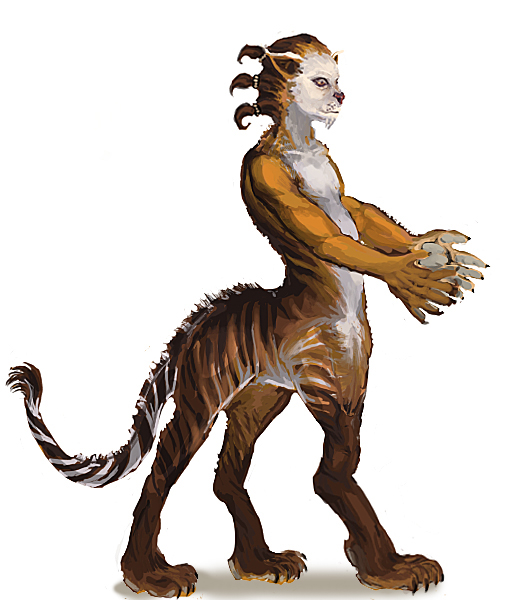
For all their genetic improvements, the Culture is by no means eugenically uniform. Human members in the Culture setting vary in phenotype, and there is natural difference in details such as the number of fingers or whether they prefer to walk as a biped or quadruped. It is mentioned that:
"the tenor of the time had generally turned against ... outlandishness and people had mostly returned to looking more like people over the last millennium", previously "as the fashions of the intervening times had ordained - people ... had resembled birds, fish, dirigible balloons, snakes, small clouds of cohesive smoke and animated bushes".
- Excession
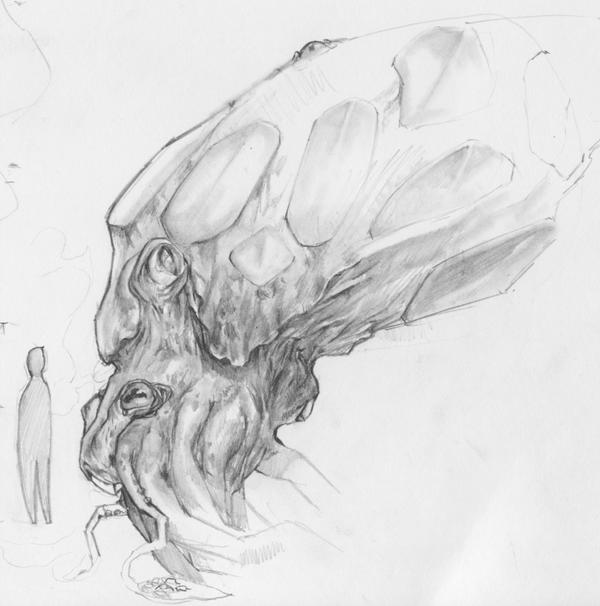
Some Culture citizens opt to leave the constraints of a human or humanoid body altogether, opting to take on the appearance of one of the myriad of other galactic sentients (perhaps in order to live with them) or even non-sentient objects (though this process can be irreversible if the desired form is too removed from the chemical structure of the human brain). Certain eccentrics have chosen to become drones or even Minds themselves, though this is considered rude and possibly even insulting by most humans and AIs alike.
Because Culture ships are always commanded by a Mind, the ships are beings in their own right. The Mind and the ship or habitat are perceived as one entity; the Mind is the ship, and a ship without a Mind would be seen as damaged or incomplete. In many novels ships are the major characters, and their relationships are central to the plot. Ships or groups of ships may belong to differing factions within or without the Culture, which compete for influence.
Almost fully space-borne, the Culture considers planets as too fragile to live on (and actually find the idea of living on a planet somewhat bizarre). Much of the population lives on orbitals- like a ringworld, an orbital is a vast ring-shaped structure with landmasses on its inner surface that rotates to provide an analog of gravity. Ships are living spaces, vehicles and ambassadors of the Culture. A proper Culture ship (as defined by FTL capability and the presence of a Mind ) may range from several hundreds of meters to several hundreds of kilometers. The latter may be inhabited by billions of beings and are artificial worlds in their own right, including whole ecosystems.
Every ship is equipped with a Grid Tap, powering the ship by drawing energy from the Grid, a region of infinite energy that separates universes, effectively submerging areas of space in a sea of energy that has been compared to the energy density of the Big Bang. A system of theoretical physics describes the ships' acceleration and travel, using such concepts as 'Infraspace' and 'Ultraspace'. An induced singularity is used to access infra or ultra space from real space; once there, 'engine fields' reach down to the Grid (which they "push off" to achieve momentum) and gain power and traction from it as they travel at high speeds. These engines do not use reaction mass and hence do not need to be mounted on the surface of the ship. They are described as being very dense exotic matter, which only reveals its complexity under a powerful microscope. Acceleration and maximum speed depend on the ratio of the mass of the ship to its engine mass. In Excession one of the largest ships of the Culture drops off its population and redesigns its multi billion ton mass to be mostly engine and reaches a speed of 233,000 times lightspeed. Within the range of the Culture's influence in the galaxy, most ships would still take years of traveling to reach the more remote spots.
Culture ships have picosecond reaction times (entire battles take place on millisecond scales, with the individual actions taking nanoseconds) and weapon ranges in the trillions of kilometers. They can wreck planets by braking too hard. Ships are able to attack from FTL hyperspace where it is impervious to enemy counterattack. Force fields can be used to reflect, trap or weaken incoming attacks, and GSVs have a system known as "Trapdoor" for dealing with internal explosions. The Trapdoor system transports any unwanted energy straight into hyperspace where it can dissipate harmlessly. Thus it is impossible to use any conventional energy weapons to kill a GSV. GCUs in the Culture-Idiran war used the tactic of hiding inside stars to escape detection. Effectors- electromagnetic manipulation technology- are able to overload or suck energy from a target, read information from, and rewire it (whether reprogramming a computer or altering the electric impulses of an organic brain) from 2,500 lightyears and cannot be blocked by anything except another effector. Displacers teleport miniature black holes and collapsed antimatter bombs into targets (and can perform tens of thousands of operations per second). Sensors are capable of detecting any energy or mass in a radius of 2,000 lightyears by their hyperspace echo.
When outside civilizations are quizzed on the topic of The Culture and warfare, the standard response is just: "Don't fuck with the Culture." In Surface Detail, it is stated that a large GSV would be able to combat a fleet of 230,000,000 simple warships - representative of the combined force of an entire lesser civilization - alone.
Systems Vehicles
A Systems Vehicle represents the full spectrum of the Culture's capabilities. Systems Vehicles are enormously magnified von Neumann probes, as their essential components are engines, multi-purpose factories and Minds (advanced artificial intelligences). Every -SV contains the sum total of the Culture's knowledge and technological base. The entire Culture could, with time, be rebuilt from a single GSV. With these capabilities a Systems Vehicle can function as anything its Mind(s) and the Culture choose.
General Systems Vehicles (GSVs) are the Culture's largest type of ship, ranging between 25 km and 200 km in each dimension (including the fields protecting them and forming the exterior of their life-support system). GSVs which provide accommodation for biological members of the Culture generally have populations in the millions or billions, and can be considered worlds in their own right.
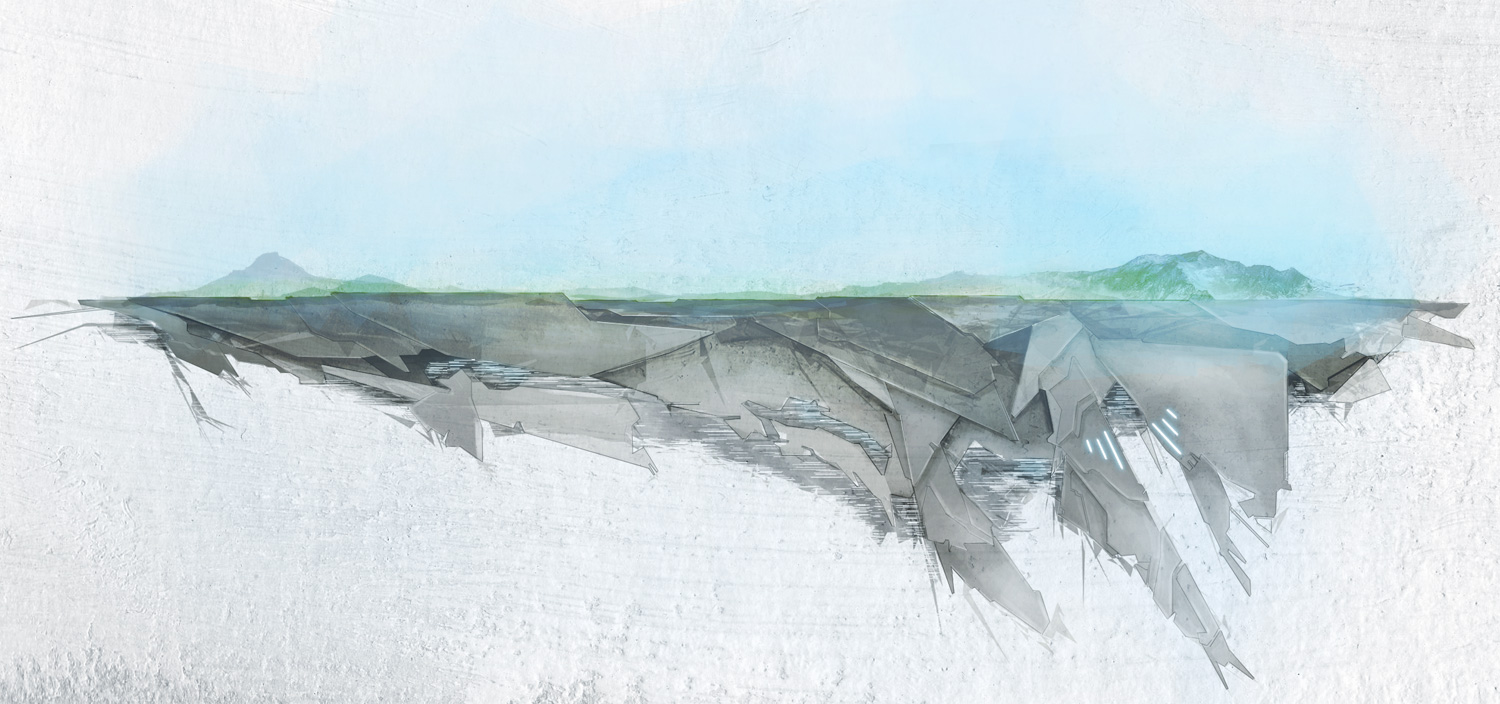
GSVs generally have little resemblance to traditional 'ship' design expectations, as they are enveloped in multitudes of fields which allow them to dispense with anything resembling an outer protective hull or shell, instead often being covered with clouds, parks and outside buildings. Their layers serve different purposes - from atmosphere containment, foreign object barriers and sensory input/signaling to traction fields for interstellar movement.
Medium Systems Vehicles (MSVs) are similar to GSVs but smaller. Limited Systems Vehicles (LSVs) are smaller still.
Contact Units
General Contact Vehicles (GCVs) are ambassador/scout ships, presumed to be a Contact-only Systems Vehicle, or a larger version of a General Contact Unit if one follows the usual naming conventions in the Culture.
General Contact Units (GCUs) are fast, independent, general-purpose vessels which the Culture's Contact group uses for diplomacy, espionage, subversion and sabotage. The GCUs typically have a population of Contact members, numbering several hundred. GCUs' Minds are commonly somewhat eccentric. GCUs are much smaller than GSVs (though small only by comparison), and are routinely carried within GSVs on long journeys.

Limited Contact Units (LCUs) are mentioned in Excession, and are presumed to be smaller or earlier versions of GCUs.
One of the best known GCUs in Banks' stories is GCU Grey Area, known widely by the other Minds as Meatfucker because it breaches the taboo against looking inside the minds of living creatures.
Offensive Units
Offensive Units' Minds are usually aggressive and macho (particularly by the Culture's normal standards), and most non-combat ships regard Offensive Units with a mixture of respect and unease verging on mild contempt.
OUs frequently store a copy of their Mind state with another ship before going into action, and these backups are installed in new ships if the -OU does not survive. This is in part a reward for the self sacrifice of the ships, and a motivation for bravery in combat. It is also a tacit admission by the Culture that it prefers peace over war?the number of warships required is small, and the creation of new warship Minds is also undesirable over the birth of peace-loving Minds.
General Offensive Units (GOUs) are the main warships of the culture, the epitome of the Culture's technology as applied (reluctantly) to warfare. A GOU is essentially a war-equipped GCU.
Rapid Offensive Units (ROUs) are basically a can full of weaponry on top of a big engine, with a Mind controlling it. While some ROUs are crewed, the crew complement on such vessels is much smaller than those of the more general purpose ships of the Culture, such as General Contact Units and General Systems Vehicles. ROUs and their demilitarised versions, Very Fast Pickets, are the Culture's fastest ships.

Limited Offensive Units (LOUs) are a smaller type of warship along the line of GOUs. During peaceful times some ROUs have most or all of their weapons systems removed, and are known as demilitarized Rapid Offensive Units / (d)ROUs, or by their euphemism Very Fast Picket.
Almost fully space-borne, the Culture considers planets as too fragile to live on (and actually find the idea of living on a planet somewhat bizarre). Much of the population lives on orbitals- like a ringworld, an orbital is a vast ring-shaped structure with landmasses on its inner surface that rotates to provide an analog of gravity. Ships are living spaces, vehicles and ambassadors of the Culture. A proper Culture ship (as defined by FTL capability and the presence of a Mind ) may range from several hundreds of meters to several hundreds of kilometers. The latter may be inhabited by billions of beings and are artificial worlds in their own right, including whole ecosystems.
Every ship is equipped with a Grid Tap, powering the ship by drawing energy from the Grid, a region of infinite energy that separates universes, effectively submerging areas of space in a sea of energy that has been compared to the energy density of the Big Bang. A system of theoretical physics describes the ships' acceleration and travel, using such concepts as 'Infraspace' and 'Ultraspace'. An induced singularity is used to access infra or ultra space from real space; once there, 'engine fields' reach down to the Grid (which they "push off" to achieve momentum) and gain power and traction from it as they travel at high speeds. These engines do not use reaction mass and hence do not need to be mounted on the surface of the ship. They are described as being very dense exotic matter, which only reveals its complexity under a powerful microscope. Acceleration and maximum speed depend on the ratio of the mass of the ship to its engine mass. In Excession one of the largest ships of the Culture drops off its population and redesigns its multi billion ton mass to be mostly engine and reaches a speed of 233,000 times lightspeed. Within the range of the Culture's influence in the galaxy, most ships would still take years of traveling to reach the more remote spots.
Culture ships have picosecond reaction times (entire battles take place on millisecond scales, with the individual actions taking nanoseconds) and weapon ranges in the trillions of kilometers. They can wreck planets by braking too hard. Ships are able to attack from FTL hyperspace where it is impervious to enemy counterattack. Force fields can be used to reflect, trap or weaken incoming attacks, and GSVs have a system known as "Trapdoor" for dealing with internal explosions. The Trapdoor system transports any unwanted energy straight into hyperspace where it can dissipate harmlessly. Thus it is impossible to use any conventional energy weapons to kill a GSV. GCUs in the Culture-Idiran war used the tactic of hiding inside stars to escape detection. Effectors- electromagnetic manipulation technology- are able to overload or suck energy from a target, read information from, and rewire it (whether reprogramming a computer or altering the electric impulses of an organic brain) from 2,500 lightyears and cannot be blocked by anything except another effector. Displacers teleport miniature black holes and collapsed antimatter bombs into targets (and can perform tens of thousands of operations per second). Sensors are capable of detecting any energy or mass in a radius of 2,000 lightyears by their hyperspace echo.
When outside civilizations are quizzed on the topic of The Culture and warfare, the standard response is just: "Don't fuck with the Culture." In Surface Detail, it is stated that a large GSV would be able to combat a fleet of 230,000,000 simple warships - representative of the combined force of an entire lesser civilization - alone.
Systems Vehicles
A Systems Vehicle represents the full spectrum of the Culture's capabilities. Systems Vehicles are enormously magnified von Neumann probes, as their essential components are engines, multi-purpose factories and Minds (advanced artificial intelligences). Every -SV contains the sum total of the Culture's knowledge and technological base. The entire Culture could, with time, be rebuilt from a single GSV. With these capabilities a Systems Vehicle can function as anything its Mind(s) and the Culture choose.
General Systems Vehicles (GSVs) are the Culture's largest type of ship, ranging between 25 km and 200 km in each dimension (including the fields protecting them and forming the exterior of their life-support system). GSVs which provide accommodation for biological members of the Culture generally have populations in the millions or billions, and can be considered worlds in their own right.
GSVs generally have little resemblance to traditional 'ship' design expectations, as they are enveloped in multitudes of fields which allow them to dispense with anything resembling an outer protective hull or shell, instead often being covered with clouds, parks and outside buildings. Their layers serve different purposes - from atmosphere containment, foreign object barriers and sensory input/signaling to traction fields for interstellar movement.
Medium Systems Vehicles (MSVs) are similar to GSVs but smaller. Limited Systems Vehicles (LSVs) are smaller still.
Contact Units
General Contact Vehicles (GCVs) are ambassador/scout ships, presumed to be a Contact-only Systems Vehicle, or a larger version of a General Contact Unit if one follows the usual naming conventions in the Culture.
General Contact Units (GCUs) are fast, independent, general-purpose vessels which the Culture's Contact group uses for diplomacy, espionage, subversion and sabotage. The GCUs typically have a population of Contact members, numbering several hundred. GCUs' Minds are commonly somewhat eccentric. GCUs are much smaller than GSVs (though small only by comparison), and are routinely carried within GSVs on long journeys.
Limited Contact Units (LCUs) are mentioned in Excession, and are presumed to be smaller or earlier versions of GCUs.
One of the best known GCUs in Banks' stories is GCU Grey Area, known widely by the other Minds as Meatfucker because it breaches the taboo against looking inside the minds of living creatures.
Offensive Units
Offensive Units' Minds are usually aggressive and macho (particularly by the Culture's normal standards), and most non-combat ships regard Offensive Units with a mixture of respect and unease verging on mild contempt.
OUs frequently store a copy of their Mind state with another ship before going into action, and these backups are installed in new ships if the -OU does not survive. This is in part a reward for the self sacrifice of the ships, and a motivation for bravery in combat. It is also a tacit admission by the Culture that it prefers peace over war?the number of warships required is small, and the creation of new warship Minds is also undesirable over the birth of peace-loving Minds.
General Offensive Units (GOUs) are the main warships of the culture, the epitome of the Culture's technology as applied (reluctantly) to warfare. A GOU is essentially a war-equipped GCU.
Rapid Offensive Units (ROUs) are basically a can full of weaponry on top of a big engine, with a Mind controlling it. While some ROUs are crewed, the crew complement on such vessels is much smaller than those of the more general purpose ships of the Culture, such as General Contact Units and General Systems Vehicles. ROUs and their demilitarised versions, Very Fast Pickets, are the Culture's fastest ships.
Limited Offensive Units (LOUs) are a smaller type of warship along the line of GOUs. During peaceful times some ROUs have most or all of their weapons systems removed, and are known as demilitarized Rapid Offensive Units / (d)ROUs, or by their euphemism Very Fast Picket.
There are no laws in the Culture. As it is non-hierarchical and individualistic, there is no way to sum up the "direction" of the Culture civilization- there is no government or king to control the society, or to create any kind of general Culture policy. If there is a disagreement amongst the Minds, they simply gather support from Minds who agree until one opinion outnumbers the other to make an "agreed upon course of action."
Social norms are enforced by convention (personal reputation, 'good manners' and possible ostracism and involuntary supervision for more serious crimes). The only serious prohibitions that seem to exist are against harming sentient beings, or forcing them into undertaking any act (another concept that seems unnatural to and is, in fact, almost unheard of by Culture citizens). As described in Player of Games The Culture does have the occasional "crime of passion" and the punishment is to be 'slap-droned', which is having a drone follow them around forever so that they are unable to harm anyone again. Worse though would be the social reaction; no one would want to talk to you.
While the enforcement could lead to a surveillance society, social convention among the Minds prohibits them from watching, or interfering in, citizens' lives unless requested, or unless they perceive severe risk. The practice of reading a sentient's mind without permission (something the Culture is technologically easily capable of) is also strictly taboo, and Minds that do so are considered deviant and shunned by other Minds (see GCU Grey Area). At one point it is said that if the Culture actually had written laws, the sanctity of one's own thoughts against the intrusion of others would be the first on the books. This gives some measure of privacy and protection; though the very nature of Culture society would, strictly speaking, make keeping secrets irrelevant.
Social norms are enforced by convention (personal reputation, 'good manners' and possible ostracism and involuntary supervision for more serious crimes). The only serious prohibitions that seem to exist are against harming sentient beings, or forcing them into undertaking any act (another concept that seems unnatural to and is, in fact, almost unheard of by Culture citizens). As described in Player of Games The Culture does have the occasional "crime of passion" and the punishment is to be 'slap-droned', which is having a drone follow them around forever so that they are unable to harm anyone again. Worse though would be the social reaction; no one would want to talk to you.
While the enforcement could lead to a surveillance society, social convention among the Minds prohibits them from watching, or interfering in, citizens' lives unless requested, or unless they perceive severe risk. The practice of reading a sentient's mind without permission (something the Culture is technologically easily capable of) is also strictly taboo, and Minds that do so are considered deviant and shunned by other Minds (see GCU Grey Area). At one point it is said that if the Culture actually had written laws, the sanctity of one's own thoughts against the intrusion of others would be the first on the books. This gives some measure of privacy and protection; though the very nature of Culture society would, strictly speaking, make keeping secrets irrelevant.


The Culture refused to place trust in symbols. It maintained that it had no need for such outward representation. The Culture was every single individual human and machine in it, not one thing. Just as it could not imprison itself with laws, impoverish itself with money or misguide itself with leaders, so it would not misrepresent itself with signs.
All the same, the Culture did have one set of symbols it was very proud of. Marain is the Culture's shared language. Designed to be represented either in binary or symbol-written form, the symbols of the Marain alphabet can be displayed in three-by-three grids of binary (yes/no, black/white) dots and thus correspond to nine-bit wide binary numbers. Created by early Minds, the Culture believes (or perhaps has proved, or else actively made true) the Sapir-Whorf hypothesis that language influences thought, and Marain was designed to exploit this effect, while also "appealing to poets, pedants, engineers and programmers".
The language is intentionally engineered so that it lacks concepts like possession and ownership, dominance and submission, and aggression. Many of these would in fact be difficult to explain to the average Culture citizen. Indeed, the presence of these concepts in other civilizations signify the brutality and hierarchy that the Culture strives to avoid.
---
[HEADING=2]
Contact
[/HEADING][hr]
The Culture has no policy of non-interference (such as the Prime Directive in Star Trek) and, to the contrary, often tries to change the course of civilizations of whose behavior it disapproves or which it considers in need of advancement. Therefore, the Culture gleefully throws its weight behind Contact - an agency/program/conspiracy that exists to "help" other species and governments in the galaxy reach the Culture's standard of living without being too disruptive of their societies. And for the cases where standard diplomacy, or even open warfare, would not help, there exist Special Circumstances, the Special Ops wing of Contact that intervenes as discreetly as possible (but as messily as needed) to make the universe a better place, at least by the Culture's standards.
Contact's role within the Culture is to coordinate interactions with other civilizations: equivalent to a Foreign Office and Ministry of Defense combined. In the case of less-developed civilizations, Contact normally acts to minimize the potential culture shock resulting from the revelation of intelligent life elsewhere in the universe.
Contact's role within the Culture is to coordinate interactions with other civilizations: equivalent to a Foreign Office and Ministry of Defense combined. In the case of less-developed civilizations, Contact normally acts to minimize the potential culture shock resulting from the revelation of intelligent life elsewhere in the universe.
"... in Special Circumstances we deal in the moral equivalent of black holes, where the normal laws - the rules of right and wrong that people imagine apply everywhere else in the universe - break down; beyond those metaphysical event-horizons... That's us. That's our territory; our domain."
- Use of Weapons
Where these interventions require actions that exceed the moral and knowledge capacity of Contact, a branch of it, known as Special Circumstances, is involved. Special Circumstances is to Contact what a Secret Service is to a Foreign Office. This organization comprises some of the very best Contact members, and frequently makes use of third-party agents to accomplish its aims (Use of Weapons). These agents operate "in the field" to support or suppress elements of other civilizations that the Culture deems important (normally to the citizens of the civilization concerned, but potentially to the Culture itself).
In the context of interactions with comparably advanced civilizations, Contact ordinarily has more of a diplomatic function. However, during the Idiran-Culture War (Consider Phlebas), it played the role of the Culture's military arm, and Special Circumstances took the position of military intelligence.
- Use of Weapons
Where these interventions require actions that exceed the moral and knowledge capacity of Contact, a branch of it, known as Special Circumstances, is involved. Special Circumstances is to Contact what a Secret Service is to a Foreign Office. This organization comprises some of the very best Contact members, and frequently makes use of third-party agents to accomplish its aims (Use of Weapons). These agents operate "in the field" to support or suppress elements of other civilizations that the Culture deems important (normally to the citizens of the civilization concerned, but potentially to the Culture itself).
In the context of interactions with comparably advanced civilizations, Contact ordinarily has more of a diplomatic function. However, during the Idiran-Culture War (Consider Phlebas), it played the role of the Culture's military arm, and Special Circumstances took the position of military intelligence.
---