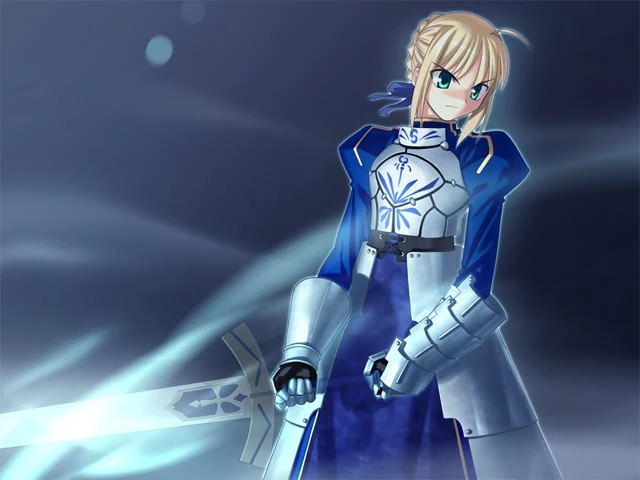
It had all happened so quickly...
It felt like only yesterday you had been safe at home, pouring over a selection of aged texts, trying to glean something hidden and wonderful from their sage words. It was there you had been offered a chance at something grander than anything you could have imaged. You had always fantasized of being granted the chance to make your dream a reality but this was something altogether more than one could have hoped for. A behemoth of a man clad in pearlescent green armour, scars glowing a matching colour streaking down the left side of his face, had given you your invitation in the form of three seals. They were the symbols of a true master. You had been chosen to fight in the war to end all wars.
The Holy Grail War...
Now your only companion is the soft crunching of your footsteps against the gravel path as you march forwards. Three days of scrambling preparation have left you exhausted but the knowledge that there will be hardships that will far outstrip a little fatigue keep you awake and focused. You chance a glance down at your trembling hands; whether from fear or exhilaration you can't tell. In them a relic, centuries old, from times long past and from hands that far surpass any deeds you could accomplish into your own. It's a gift, a treasure from the past of an ancient hero to ask for their aid in the trials ahead. Ever since you started training for this very moment you've held this relic in hopes to summon the very hero it represents. You can feel the excitement begin to overwhelm you as your hard work is finally coming to fruition.
From the corner of you eyes you see six figures converging onto one place: the church. Your seals glow white hot, sending a burning sensation through your body the likes of which you've never experienced before. You can see the same glow radiate from each person, undoubtedly the allies Ruler spoke of. You had thought it impossible that fourteen masters would be fighting for the Grail but here was living proof that the war had taken a turn for the stranger. As each member slowly trekked towards the large oaken doors of the edifice before them you can't help but reflect on the premise of this entire conflict. The Grail had been corrupted and it was up to a chosen few in order to fight for the righteousness it once stood for to lift the curse and free the Third Magic from disaster. You shake your head to clear it of all thoughts, knowing that it was no use doubting the words of the servant now that you were here.
As you approach the gothic structure, you begin to see its age coming through sedimentary cracks and faded paint. The building was most likely from the very first Christians to land in Fuyuki, having weathered centuries to keep itself standing. Before you could scrutinize the architecture any further the doors slowly creaked open and a singular aging man appeared from the darkness within. His formal dress gave the impression of being the priest of the church, his gaze sweeping across the seven with a practiced studying look. After a few moments he exhaled and smiled, greeting the group with open arms.
"Very well then," he said, "let us begin..."
[hr]

Welcome everyone to Fate/Final Dark. My name is HellsingerAngel and I'll be your GM for the duration of the RP. If you haven't already guessed, this game is based upon one of the most popular Type-Moon franchises Fate and will follow a similar style to the Fate/Apocrypha series. Each player will control a master and a servant in a team versus team battle against seven NPC villains. So without further ado, let's get some basic rules out of the way...
0. My word is law. I don't mean to sound intimidating but there needs to be a line in the sand drawn in this case. I can certainly appreciate players wanting to discuss actions and rules but once a ruling has been made I expect everyone to follow it, regardless of how you personally feel about the outcome. This is a zero tolerance policy. We're all mature people here and I expect everyone to act as such.
1. No god-modding, mary sues or trenchcoaters. This should go without saying but the sheets are set up so that people aren't perfect. Everyone has flaws and everyone loses sometimes. Please refrain from controlling other character without permission being given and please make sure you follow the flaws you outline for your characters.
2. There will be combat. This is a war after all so masters and servants will be clashing from time to time. Luckily most of those interactions will be with NPCs but some altercations might break out between players as well. There is only one rule to combat I want everyone to obey and that is the rule of 25%. Essentially what this means is that at least 25% of all attacks made against you should hit, or that you can dodge three attacks before you're forced to take a hit. If you elect to take a hit your counter of three dodges resets, so to speak. Use this to your advantage and plan powerful strikes on attacks you know will have to hit!
3. Death is inevitable. Again, this is a war and people die when they are killed! A player must be prepared to watch their masters and servants make the ultimate sacrifice at all times within this RP. I am not going to coddle players and if you continue to make foolish or brash moves be prepared for consequences.
4. There are no reserved spots. Just thought I'd make this clear as I have been working with a few players who wanted to get their sheets done in advanced. I want to encourage people to apply for the servant classes they want to. If you end up getting beaten out, make sure to have a back up sheet as I most likely won't accept all seven sheets instantly unless I really like a particular hero or concept. This also being said, if there's enough interest I will find roles for people to play in this war so please don't think I'm going to exclude you if you don't make the final seven cut.
5. Have fun! This is a game after all so I want everyone to make sure they're having a good time. While I understand people have bad days, continuous negativity is not conducive to play. Please keep an open mind and an open heart to those you're playing with and understand that we're all just trying to have a good time here.
6. I will most likely be creating a Skype group for this thread so we can communicate much more easily. While it is not necessary it is highly recommended you join in the joy of chating with your fellow RPers for scheming and general shenanigans. The program in question can be downloaded here: Skype! [http://www.skype.com/en/download-skype/skype-for-computer/]
Below is some general information you should equate yourself with if you're not familiar with the Nasuverse or use to brush up on the basics.
Masters are those who have been granted a chance to make a wish upon the Holy Grail. The Grail chooses masters based upon what sort of wish a person wants and how badly they wish to make it a reality. The majority of these individuals are magi though anyone can qualify if their belief in their wish is strong enough. The only guarantee in the selection is that a representative must be chosen from the three founding families of the Grail: the Tohsaka, the Matou and the Einzburns. The remaining masters are those who may be invited by the three founding families or those chosen randomly by the Grail itself. It is important to remember that those of the three families and any individuals invited to participate must all meet the criteria of a wish that may only be granted by something as powerful as the Grail.
A master has two distinct responsibilities within a Grail War. Above all else, they must preserve the secrecy of magic within the mortal world. This supersedes all rules within the Grail War and is upheld with zero tolerance by the Association of Magi ? the governing body for most practitioners of magecraft. The second responsibility is that to their servant as a master must keep them adequately supplied with prana to continue to live and fight. Because of this, most masters tend to be practiced magi, bred for the hardships of the Grail War as the only other source of prana for a servant are the souls of living humans.
A master has two distinct responsibilities within a Grail War. Above all else, they must preserve the secrecy of magic within the mortal world. This supersedes all rules within the Grail War and is upheld with zero tolerance by the Association of Magi ? the governing body for most practitioners of magecraft. The second responsibility is that to their servant as a master must keep them adequately supplied with prana to continue to live and fight. Because of this, most masters tend to be practiced magi, bred for the hardships of the Grail War as the only other source of prana for a servant are the souls of living humans.
An Origin is the orientation one is given at the time of its creation. It is their driving force ? the one goal above all others that they aim to accomplish. Most would describe this compulsion as instinct or intuition. A mage?s power is centered on this power, their most powerful mysteries being extensions of their Origins. Those who are awakened to their Origin are far more cognizant of their path and are irreversibly drawn towards it, obeying their Origin like a command rather than an urge. While those who are aware of their Origin can never escape it, those who have yet to have theirs revealed may have several Origins over time, being changed by life altering events that grant a new perspective.
Elements are a much broader stroke in defining a mage?s power. While an Origin is often the source of a mystery a person?s elemental affinity determines how it will be manifested. A magus normally has the ability to control at least one of the five elements: fire, water, earth, wind and void. Each element is associated with particular results such as fire being affiliated with consumption, energy transfer and entropy. This forms a two way relationship with a mage?s Origin; as much as an element effects how an Origin may manifest mysteries, the Origin influences what affinity a mage has. More naturally gifted mages may have multiple affinities and those who have five are regarded highly within the Association. There are also unique cases of magi having their Origin also be their elemental affinity. These mages are very limited in the mysteries they wield but can achieve great power through specialization. While a mage is not bound to cast mysteries within their affinity they cannot hope to achieve the same efficiency and power.
Mysteries are the spells that mages wield in combat. They are not true magic, something that was lost long ago when the Age of Gods died out, but rather reflections of such reality bending miracles. A mystery is the ability to manipulate the world around the mage to achieve something improbable. Lighting a fire with the snap of some fingers to cushioning a fall with a pocket of wind to break your fall are both spells that would be considered mysteries. The closer to the impossible a mystery gets, the closer it becomes to the true magic of the past and the greater the strain it places on the mage to cast. Only a select few have ever had a taste of true magic and their ability to wield it is sporadic and involuntary at best.
A master?s prowess in the thaumaturgical arts is measured in five ranks: neophyte, apprentice, magus, prodigy and master. Each level allows access to more powerful and more diverse magecraft, as well as a deeper pool of prana to draw from. Mysteries are ranked on a scale of E to A as a determination of their overall strength. A magus can generally cast mysteries equal to their rank. Affinities follow a similar pattern with mages of a higher rank having a larger amount of elements they excel at casting - typically one affinity for every rank a magus has.
Elements are a much broader stroke in defining a mage?s power. While an Origin is often the source of a mystery a person?s elemental affinity determines how it will be manifested. A magus normally has the ability to control at least one of the five elements: fire, water, earth, wind and void. Each element is associated with particular results such as fire being affiliated with consumption, energy transfer and entropy. This forms a two way relationship with a mage?s Origin; as much as an element effects how an Origin may manifest mysteries, the Origin influences what affinity a mage has. More naturally gifted mages may have multiple affinities and those who have five are regarded highly within the Association. There are also unique cases of magi having their Origin also be their elemental affinity. These mages are very limited in the mysteries they wield but can achieve great power through specialization. While a mage is not bound to cast mysteries within their affinity they cannot hope to achieve the same efficiency and power.
Mysteries are the spells that mages wield in combat. They are not true magic, something that was lost long ago when the Age of Gods died out, but rather reflections of such reality bending miracles. A mystery is the ability to manipulate the world around the mage to achieve something improbable. Lighting a fire with the snap of some fingers to cushioning a fall with a pocket of wind to break your fall are both spells that would be considered mysteries. The closer to the impossible a mystery gets, the closer it becomes to the true magic of the past and the greater the strain it places on the mage to cast. Only a select few have ever had a taste of true magic and their ability to wield it is sporadic and involuntary at best.
A master?s prowess in the thaumaturgical arts is measured in five ranks: neophyte, apprentice, magus, prodigy and master. Each level allows access to more powerful and more diverse magecraft, as well as a deeper pool of prana to draw from. Mysteries are ranked on a scale of E to A as a determination of their overall strength. A magus can generally cast mysteries equal to their rank. Affinities follow a similar pattern with mages of a higher rank having a larger amount of elements they excel at casting - typically one affinity for every rank a magus has.
Mystic codes are artifacts that have been crafted for the sole purpose of being used as support weapons for a magus. Oftentimes being family heirlooms or personalized keepsakes, they are designated under the two types of amplifier and specialized. Amplifiers do just that, strengthening any spell of the magus' choosing. These can work by simply storing prana within the Mystic Code for later use to filtering prana into a more efficient form. Specialized codes serve some sort of specific purpose, often times casting powerful mysteries when prana is injected into them. Because of the training needed to master these artifacts and devices a magus often has to put their studies aside to master the intricacies of their Mystic Codes, effectively lowering their rank to a minimum of neophyte.
Those that were inducted into the world of magi and magecraft late or simply focused on other things in their lives may not have the greatest of magical powers. Individuals with these sorts of backgrounds have accrued other resources within their lives to better prepare themselves for the trials ahead. These can range from a safehouse guarded with magical traps to a library filled to the brim with research material for discovering heroes names' to a stockpile of weapons used instead of magic. These resources fall outside of a character's personal ability but have consumed enough time and are powerful enough to have warranted sidetracking their studies to acquire them. For each outside resource a character has they fall one rank to a minimum of neophyte.
Those that were inducted into the world of magi and magecraft late or simply focused on other things in their lives may not have the greatest of magical powers. Individuals with these sorts of backgrounds have accrued other resources within their lives to better prepare themselves for the trials ahead. These can range from a safehouse guarded with magical traps to a library filled to the brim with research material for discovering heroes names' to a stockpile of weapons used instead of magic. These resources fall outside of a character's personal ability but have consumed enough time and are powerful enough to have warranted sidetracking their studies to acquire them. For each outside resource a character has they fall one rank to a minimum of neophyte.
A set of three temporary magical crests, Command Seals are a master's undeniable proof of being a competitor in the Holy Grail War. These seals are a symbol of authority to the heroic spirits that masters summon to fight on their behalf. Being made of unadulterated prana they are a powerful tool that can be used as a individual sees fit. While the wiles of momentary omnipotence are compelling, once all three seals are expended nothing holds a servant to obey their master's wishes. This often means a wise master will keep at least one of their command seals to ensure loyalty - whether it is earned or forced.
Command seals have three main purposes to a master when used in the Grail War. The first and most obvious is the unquestionable authority they hold over their heroic spirits. If a master chooses they may expend a seal to give a servant an order that may not be disobeyed. A servant may resist this order, halting the end result for a time as they experience excruciating pain but ultimately will succumb to the binding spell. The second follows the first in that a master can command a heroic spirit to achieve the impossible. These tend to be fairly basic such as moving at blinding speeds to being summoned to their master's side but are examples of true magic at work. The third use is to use the prana of a seal to bend reality to their will and cast a spell at the level of true magic.
Command seals have three main purposes to a master when used in the Grail War. The first and most obvious is the unquestionable authority they hold over their heroic spirits. If a master chooses they may expend a seal to give a servant an order that may not be disobeyed. A servant may resist this order, halting the end result for a time as they experience excruciating pain but ultimately will succumb to the binding spell. The second follows the first in that a master can command a heroic spirit to achieve the impossible. These tend to be fairly basic such as moving at blinding speeds to being summoned to their master's side but are examples of true magic at work. The third use is to use the prana of a seal to bend reality to their will and cast a spell at the level of true magic.
Servants, or heroic spirits, are the legends and historical figures that are summoned by masters to fight the Holy Grail War. Super human in every facet of the word physically, a servant far outstrips humanity by leaps and bounds even when compared to some of the most prestigious magi. They are given forms constructed by the grail itself, being comprised mostly of vast amounts of prana that holds a temporary physical shell together. Unlike humans, heroic spirits are constantly burning prana simply to exist and require a master to nearby to replenish themselves. Exerting themselves expedites this process and using their special skills and abilities can drain a servant to death after prolonged use.
To be able to create appropriate forms for each hero, the grail must separate them into seven specialties. Also known as classes, each servant summoned to compete in the Grail War will assume the form of one of the seven classes, each different until all seven classes have been claimed. This aids in masking their identities and masters often refer to their heroes by their class' name. The classes are as follows:
Saber - Servants considered to be of this class are strong and agile warriors who brandish powerful blades to subdue their foes. It is commonly referred to as the best class because of its high base parameters and overall strong pool of heroes to choose from. One of the three knight classes they are the only one bound by two requirements: they must have been of noble lineage and have used some sort of prolific blade. Saber's class skill is enhanced Magic Resistance, giving them impeccable defenses against mysteries and magic spells.
Lancer - The second of the knight classes, these heroes are skilled in hafted weaponry. The Lancer class is very agile and often have the most passive skills out of all classes, making them very formidable combatants. The requirement to qualify is to have been a master of spears and polearms alike. Their class skill is Battle Continuation, enabling them to fight even with the most grievous of wounds.
Archer - Those of the Archer class are master marksmen and use projectile based weaponry to keep their foes at bay. Though not having the greatest of base parameters and an independent streak that makes them difficult to control at times, they are still considered the third knight class due to their numerous and unique phantasms, making them difficult opponents to fight head-on. Their requirement is for the hero to have used ranged weaponry as their signature arm. The skill Independent Action belongs to the Archer class, allowing them to stray farther from their masters than other servants as well as continuing their fight long after their masters have been defeated.
Berserker - Straddling the line between combatant and strategist, the Berserker class is an odd mixture of the two dichotomies of combat in the Grail War. They are tough and durable servants that begin their campaign with a strategic approach to their goals and eventually finish as a raw combatant like the knight classes. Their requirement is that the hero must have lost their consciousness to some form of madness. The class skill Mad Enhancement allows Berserker to use this rage to permanently increase their parameters at the cost of intelligent thought.
Rider - Masters of mobility, the Rider class gathers intelligence through quick deployment and constant shifting of position. This class is also regarded as having the strongest noble phantasms, striking quick and hard to take down opponents before they have a chance to retaliate. Their prerequisite is having a named mount or vehicle that was significant to their legend. The Riding class skill allows Rider to utilize their mounts to their fullest potential and even field legendary beasts that few have ever seen.
Caster - Wielders of arts that have not been seen for generations, Casters are not just simply powerful magi, they are high thaumaturgists that can begin to warp the cosmos themselves. They often have extensive lists of magecraft from the Age of Gods and are very versatile in their tactics. There are those who could even be considered to have dabbled in true magic itself. A Caster must have studied magic, magecraft or the occult at some point in their lives as well as having attempted at least one spell or ritual. The class skill Territory Creation allows these servants to form a base of operations in which their powers are magnified by the laylines they create.
Assassin - Considered to be the weakest of the servant classes, Assassins are experts at espionage and field craft. Their normally poor combat skills offset these fountains of information, requiring a tactful master to take advantage of their strengths. A hero must have killed an important figure in history or have made a living of murdering others to qualify for this class. The skill Presence Concealment permits the Assassin class to remain undetected through magical scrying and the sharper senses of other heroic spirits while actively remaining hidden.
To be able to create appropriate forms for each hero, the grail must separate them into seven specialties. Also known as classes, each servant summoned to compete in the Grail War will assume the form of one of the seven classes, each different until all seven classes have been claimed. This aids in masking their identities and masters often refer to their heroes by their class' name. The classes are as follows:
Saber - Servants considered to be of this class are strong and agile warriors who brandish powerful blades to subdue their foes. It is commonly referred to as the best class because of its high base parameters and overall strong pool of heroes to choose from. One of the three knight classes they are the only one bound by two requirements: they must have been of noble lineage and have used some sort of prolific blade. Saber's class skill is enhanced Magic Resistance, giving them impeccable defenses against mysteries and magic spells.
Lancer - The second of the knight classes, these heroes are skilled in hafted weaponry. The Lancer class is very agile and often have the most passive skills out of all classes, making them very formidable combatants. The requirement to qualify is to have been a master of spears and polearms alike. Their class skill is Battle Continuation, enabling them to fight even with the most grievous of wounds.
Archer - Those of the Archer class are master marksmen and use projectile based weaponry to keep their foes at bay. Though not having the greatest of base parameters and an independent streak that makes them difficult to control at times, they are still considered the third knight class due to their numerous and unique phantasms, making them difficult opponents to fight head-on. Their requirement is for the hero to have used ranged weaponry as their signature arm. The skill Independent Action belongs to the Archer class, allowing them to stray farther from their masters than other servants as well as continuing their fight long after their masters have been defeated.
Berserker - Straddling the line between combatant and strategist, the Berserker class is an odd mixture of the two dichotomies of combat in the Grail War. They are tough and durable servants that begin their campaign with a strategic approach to their goals and eventually finish as a raw combatant like the knight classes. Their requirement is that the hero must have lost their consciousness to some form of madness. The class skill Mad Enhancement allows Berserker to use this rage to permanently increase their parameters at the cost of intelligent thought.
Rider - Masters of mobility, the Rider class gathers intelligence through quick deployment and constant shifting of position. This class is also regarded as having the strongest noble phantasms, striking quick and hard to take down opponents before they have a chance to retaliate. Their prerequisite is having a named mount or vehicle that was significant to their legend. The Riding class skill allows Rider to utilize their mounts to their fullest potential and even field legendary beasts that few have ever seen.
Caster - Wielders of arts that have not been seen for generations, Casters are not just simply powerful magi, they are high thaumaturgists that can begin to warp the cosmos themselves. They often have extensive lists of magecraft from the Age of Gods and are very versatile in their tactics. There are those who could even be considered to have dabbled in true magic itself. A Caster must have studied magic, magecraft or the occult at some point in their lives as well as having attempted at least one spell or ritual. The class skill Territory Creation allows these servants to form a base of operations in which their powers are magnified by the laylines they create.
Assassin - Considered to be the weakest of the servant classes, Assassins are experts at espionage and field craft. Their normally poor combat skills offset these fountains of information, requiring a tactful master to take advantage of their strengths. A hero must have killed an important figure in history or have made a living of murdering others to qualify for this class. The skill Presence Concealment permits the Assassin class to remain undetected through magical scrying and the sharper senses of other heroic spirits while actively remaining hidden.
Parameters are the statistics all heroic spirits are governed by. They are each ranked from E to A in respect to how many times greater they are from the average human in multiples of ten. These parameters may also have pluses or minuses added to their ranks to indicate temporary increases or decreases when certain circumstances are met, effectively doubling or halving the base rank. Each parameter rank may have no more than three pluses or minuses and these symbols are mutually exclusive within each given parameter. The overall strength of a servant is determined by the rank of the hero's master - the higher the rank the greater a servant's parameters. These parameters are also able to be seen by any master that encounters another heroic spirit simply by looking at them to compare with their own to better assess the tactical situation of confronting a particular servant.
Strength:STR - Overall physical might, this effects how hard a servant hits
Agility:AGI - How fast and nimble a servant is, effecting their speed and finesse
Endurance:END - Measures the amount of punishment a servant can withstand
Magical Ability:MAN - How efficiently prana is used
Good Luck:LUK - The quality of a servant's good luck
Noble Phantasm:NPH - A general strength of a servant's noble phantasm(s)
Skills are unique traits that reflect the sorts of abilities and qualities a hero had while still living. They are generally passive abilities that a heroic spirit has active either all the time or while in battle. These skills further drain a servant of prana though only to an extent that could be comparable to a normal human exerting themselves. The amount of skills and strengths of those skills are determined by both the class a hero is taking and the rank of their master.
Noble Phantasms represent a servant's ultimate technique - their greatest and most powerful tools as combatants. They are the embodiment of a hero's legacy, something that perfectly defines them and their place in the analogues of history and legend. Devastatingly powerful and unique to each and every heroic spirit, a noble phantasm is that of true magic and can make the impossible a reality. Most servants will have two phantasms - one for offensive strikes and another that will help defend or support them. To activate a phantasm, an evocation must be given, whether it be invoking the true name of the noble phantasm or a set of phrases that bring forth the power within. There are two distinct drawbacks that must be considered when a servant is using one of their noble phanatsms. The first is that any of these techniques drains a significant amount of prana from the hero and must all but assuredly be successful for the risk to be worthwhile. The second is that each phantasm is a key to unlocking the identity of the hero and will most likely reveal any weaknesses they may have through the reknown of their legend.
Phantasms are ranked similarly to magecraft from E to A in strength and utility though unlike magecraft have areas that they effect. They are as follows:
Anti-Unit - An effect that focuses its power on one or only a handful of individuals. These techniques are often pinpoint strikes that waste as little energy as possible by focusing their strength into a small area. They are often the most efficient to use and can be brought to bare far more often than other phantasms.
Anti-Army - These phantasms are much broader is scope, built to combat large groups of foes. They often have large areas of effect to encompass hundreds of men and scale their power accordingly to combat such a threat. Against a single target these abilities are often too easily dodged or simply too inefficient in prana to be worthwhile.
Anti-Fortress - Some of the most powerful techniques a servant can know are of the anti-fortess qualification. These phantasms are built to destroy large fortifications comprising of thousands of men. Their effects are astoundingly destructive and will engulf large structures within their radius. Weapons such as these are only good at taking out the most powerful of foes because of their horribly steep cost.
Defense - Phantasms that fall within defense are used just for that. They most often effect a single person or small group to shield them from other phantasms and even reflect or absorb the energy. They are difficult to use as they require an equally strong ability to be used against them for any sort of success within their prana ratio.
Support - Almost any other phantasm will fall into this category if it doesn't sit within the first four. This gives support phantasms a wide variety of uses and areas they effect. They will, however, assuredly help boost some aspect your servant's usefulness.
Strength:STR - Overall physical might, this effects how hard a servant hits
Agility:AGI - How fast and nimble a servant is, effecting their speed and finesse
Endurance:END - Measures the amount of punishment a servant can withstand
Magical Ability:MAN - How efficiently prana is used
Good Luck:LUK - The quality of a servant's good luck
Noble Phantasm:NPH - A general strength of a servant's noble phantasm(s)
Skills are unique traits that reflect the sorts of abilities and qualities a hero had while still living. They are generally passive abilities that a heroic spirit has active either all the time or while in battle. These skills further drain a servant of prana though only to an extent that could be comparable to a normal human exerting themselves. The amount of skills and strengths of those skills are determined by both the class a hero is taking and the rank of their master.
Noble Phantasms represent a servant's ultimate technique - their greatest and most powerful tools as combatants. They are the embodiment of a hero's legacy, something that perfectly defines them and their place in the analogues of history and legend. Devastatingly powerful and unique to each and every heroic spirit, a noble phantasm is that of true magic and can make the impossible a reality. Most servants will have two phantasms - one for offensive strikes and another that will help defend or support them. To activate a phantasm, an evocation must be given, whether it be invoking the true name of the noble phantasm or a set of phrases that bring forth the power within. There are two distinct drawbacks that must be considered when a servant is using one of their noble phanatsms. The first is that any of these techniques drains a significant amount of prana from the hero and must all but assuredly be successful for the risk to be worthwhile. The second is that each phantasm is a key to unlocking the identity of the hero and will most likely reveal any weaknesses they may have through the reknown of their legend.
Phantasms are ranked similarly to magecraft from E to A in strength and utility though unlike magecraft have areas that they effect. They are as follows:
Anti-Unit - An effect that focuses its power on one or only a handful of individuals. These techniques are often pinpoint strikes that waste as little energy as possible by focusing their strength into a small area. They are often the most efficient to use and can be brought to bare far more often than other phantasms.
Anti-Army - These phantasms are much broader is scope, built to combat large groups of foes. They often have large areas of effect to encompass hundreds of men and scale their power accordingly to combat such a threat. Against a single target these abilities are often too easily dodged or simply too inefficient in prana to be worthwhile.
Anti-Fortress - Some of the most powerful techniques a servant can know are of the anti-fortess qualification. These phantasms are built to destroy large fortifications comprising of thousands of men. Their effects are astoundingly destructive and will engulf large structures within their radius. Weapons such as these are only good at taking out the most powerful of foes because of their horribly steep cost.
Defense - Phantasms that fall within defense are used just for that. They most often effect a single person or small group to shield them from other phantasms and even reflect or absorb the energy. They are difficult to use as they require an equally strong ability to be used against them for any sort of success within their prana ratio.
Support - Almost any other phantasm will fall into this category if it doesn't sit within the first four. This gives support phantasms a wide variety of uses and areas they effect. They will, however, assuredly help boost some aspect your servant's usefulness.
Last but not least are the character sheets for the thread. When submitting your characters, please put them into spoiler tags like the articles above to not overcrowd the sign-up thread. Each player at this time must submit both a master and a servant.
Master
Name: The character's name.
Sex: Their gender/species.
Age: How old your character is. Please keep in mind that this is a war, so children aren't generally running about.
Appearance: The physical description of the character, including any remarkable features and typical style of dress. Please be as detailed as possible as I'm looking for a minimum of around two paragraphs. No pictures, please.
Personality: Looking for a run down of quirks, habits and general demeanor. Again, two paragraphs minimum.
Rank: Your character's rank within the magecraft system.
Origin: The driving force of your master and the origin of their mysteries. If you can provide what elements their spells fall under as well as a few signature spells as examples I would be most appreciative.
Mystic Code: An artifact or heirloom crafted to perform a mystery or alternate task. If you've got any please place them here.
Outside Resources: If your character has any, please list them here in detail.
Backstory: Your character's relevant history. Even if your character is unaware of said history it still needs to be placed here.
Name: The character's name.
Sex: Their gender/species.
Age: How old your character is. Please keep in mind that this is a war, so children aren't generally running about.
Appearance: The physical description of the character, including any remarkable features and typical style of dress. Please be as detailed as possible as I'm looking for a minimum of around two paragraphs. No pictures, please.
Personality: Looking for a run down of quirks, habits and general demeanor. Again, two paragraphs minimum.
Rank: Your character's rank within the magecraft system.
Origin: The driving force of your master and the origin of their mysteries. If you can provide what elements their spells fall under as well as a few signature spells as examples I would be most appreciative.
Mystic Code: An artifact or heirloom crafted to perform a mystery or alternate task. If you've got any please place them here.
Outside Resources: If your character has any, please list them here in detail.
Backstory: Your character's relevant history. Even if your character is unaware of said history it still needs to be placed here.
Servant
Name: The name of your character.
Sex: Their gender/species.
Class: The class they?re being summoned as.
Appearance: The physical description of the character, including any remarkable features and typical style of dress. Please be as detailed as possible as I'm looking for a minimum of around two paragraphs. No pictures, please.
Personality: Looking for a run down of quirks, habits and general demeanor. Again, two paragraphs minimum
Parameters: These are the statistics that govern a servant's capabilities. The parameters are STR, AGI, END, MAN, LUK and NPH.
Skills: These are the extraordinary skills a servant possesses related to legend.
Phantasms: This is for the legendary level items and abilities that only a heroic spirit would possess.
Strengths: A place to showcase what the character excels at. These will generally tie into your parameters or skills - a good leader will often have the Charisma skill - but can certainly reach beyond them.
Weaknesses: A list of drawbacks or difficulties that could potentially be exploited. I'm looking for at least two weaknesses and at least one must be a physical weakness (bad agility/slow, weak attacks, weakness to a metal, weak point on their body, etc.). These will be revealed to your enemy if they figure out your name.
Name: The name of your character.
Sex: Their gender/species.
Class: The class they?re being summoned as.
Appearance: The physical description of the character, including any remarkable features and typical style of dress. Please be as detailed as possible as I'm looking for a minimum of around two paragraphs. No pictures, please.
Personality: Looking for a run down of quirks, habits and general demeanor. Again, two paragraphs minimum
Parameters: These are the statistics that govern a servant's capabilities. The parameters are STR, AGI, END, MAN, LUK and NPH.
Skills: These are the extraordinary skills a servant possesses related to legend.
Phantasms: This is for the legendary level items and abilities that only a heroic spirit would possess.
Strengths: A place to showcase what the character excels at. These will generally tie into your parameters or skills - a good leader will often have the Charisma skill - but can certainly reach beyond them.
Weaknesses: A list of drawbacks or difficulties that could potentially be exploited. I'm looking for at least two weaknesses and at least one must be a physical weakness (bad agility/slow, weak attacks, weakness to a metal, weak point on their body, etc.). These will be revealed to your enemy if they figure out your name.
Please feel free to ask any questions if I missed anything you need to know and I look forward to playing with you all!