

I am looking for Sci-Fi book recommendations.
- Thread starter Mister K
- Start date
Recommended Videos

Ian M Banks and his culture series is pretty well regarded. The stories are pretty standalone but i would recommend starting with player of games.


"Altered Carbon" by Richard K. Morgan is one of my favorite books of all time. Very interesting concept done extremely well.

Chronologically, Consider Phlebas is the first Culture Novel. Player of games is damn cool too, but my favourite Culture novel so far (haven't read them all) is Use of Weapons. It's a weird book with a brutal revelation towards the end.Chris Mosher said:Ian M Banks and his culture series is pretty well regarded. The stories are pretty standalone but i would recommend starting with player of games.
Inside the cover of all Banks' books is an illustrated list of the books released so far; I was advised to read the Culture novels in that order, because the later ones (like Excession) has references to The Culture itself, that's explained in earlier books (for example, in Consider Phlebas it is explained what the Minds are). The non-Culture novels are also worth reading (Against a dark background was the first Banks-book I read, and the one that got me hooked in the first place).
I know that Player of Games isn't the first chronologically but I found it the most accessible. I had a couple of irl friends recommend I start with Player of games so I am biased because that's where I started with the Culture. My actual first Banks book The Wasp Factory which was rather chilling.Twinrehz said:Chronologically, Consider Phlebas is the first Culture Novel. Player of games is damn cool too, but my favourite Culture novel so far (haven't read them all) is Use of Weapons. It's a weird book with a brutal revelation towards the end.
Inside the cover of all Banks' books is an illustrated list of the books released so far; I was advised to read the Culture novels in that order, because the later ones (like Excession) has references to The Culture itself, that's explained in earlier books (for example, in Consider Phlebas it is explained what the Minds are). The non-Culture novels are also worth reading (Against a dark background was the first Banks-book I read, and the one that got me hooked in the first place).
Btw how was the Expanse vs the TV series. I was super impressed with the series so i have been avoiding the books.
Honestly I haven't read the book, and I started watching the series because it was recommended by my friends. I have the book, though. There's a previous post a bit further up that details some of the differences.Chris Mosher said:Btw how was the Expanse vs the TV series. I was super impressed with the series so i have been avoiding the books.

Yeah, The Player of Games is what is normally recommended as the start off point to his sci fi universe. It's quite short and introduces the reader to The Culture well. Also, a really great read.Twinrehz said:Chronologically, Consider Phlebas is the first Culture Novel. Player of games is damn cool too, but my favourite Culture novel so far (haven't read them all) is Use of Weapons. It's a weird book with a brutal revelation towards the end.Chris Mosher said:Ian M Banks and his culture series is pretty well regarded. The stories are pretty standalone but i would recommend starting with player of games.
Inside the cover of all Banks' books is an illustrated list of the books released so far; I was advised to read the Culture novels in that order, because the later ones (like Excession) has references to The Culture itself, that's explained in earlier books (for example, in Consider Phlebas it is explained what the Minds are). The non-Culture novels are also worth reading (Against a dark background was the first Banks-book I read, and the one that got me hooked in the first place).
And as an interesting snippet to gamers, he wrote it after playing Sid Meier's Civilisation. Blurb below.
I think you could happily have any Culture book as your entrance to the universe, my own was Matter, except for Excession.The Culture - a human/machine symbiotic society - has thrown up many great Game Players, and one of the greatest is Gurgeh. Jernau Morat Gurgeh. The Player of Games. Master of every board, computer and strategy.
Bored with success, Gurgeh travels to the Empire of Azad, cruel and incredibly wealthy, to try their fabulous game . . . a game so complex, so like life itself, that the winner becomes emperor. Mocked, blackmailed, almost murdered, Gurgeh accepts the game, and with it the challenge of his life - and very possibly his death.
WEll, with a cursory glance at one of my bookshelves, and avoiding some obvious ones people have covered already.
CS Friedman's Black Sun trilogy. Space Fantasy. It is more character driven then a lot of the genre though. Also the sci-fi is a bit more of a backstory then central to the plot, which delves more into fantasy standards. The "magic" system in it was always sort of intriguing to me though. Can't really say too much without spoilering though.
CS Friedman's Black Sun trilogy. Space Fantasy. It is more character driven then a lot of the genre though. Also the sci-fi is a bit more of a backstory then central to the plot, which delves more into fantasy standards. The "magic" system in it was always sort of intriguing to me though. Can't really say too much without spoilering though.

I thought The Journeys of McGill Feighan was pretty good. It's been a long time so I'll just post the first summary I find on Google.
One of the things that is unfortunate about the series is that the author gave up and then died before writing the fifth book. So that sucks."Caverns" is the first book in a (currently) four book series by Mr. O'Donnell. As the title implies, the focus is on a character named McGill Feighan. In this first book, the origin of McGill and the start of his adventerous life is revealed. "Caverns" is at first a light-hearted read, but you soon find yourself drawn into the life of the hero, his triumphs and despair. McGill is a "flinger", a person who can teleport anything (himself, other people, things) anywhere that he's been before. But even for a flinger, he does not lead a normal life due to unusual events in his life, when he was a newborn. Much of the story revolves around McGill's growing-up and learning to deal with his powers, as well as the assortment of people and aliens that take an interest in his life (both good and bad)
https://www.goodreads.com/book/show/1112535.Caverns
Wow, so many recommendations! Thanks you very much!
You know, I though that I'd like to do something more than write a simple "Thank you", so I am also going to give a recommendation of my own to other people that may read this thread.
I'd like to recommend three works by the best Soviet Sci-Fi duo, The Strugatsky Brothers:
1. Monday Begins on Saturday. It is a light Sci-Fi satire on Soviet research institutes, that tells us a story about a young programmer who met two people, go a job offer and is now working in basically fairy tale/mythology Institute.
2. Hard to be a God. This book tells a story of a member of a group that is researching underdeveloped alien worlds, who during events of the book is posing as a duke on a planet, that is on a level of our Middle Ages.
3. Roadside Picnic. You know S.T.A.L.K.E.R. games? Well this book served as an inspiration for these games. Basically, The Event happened, during which Alien species landed on Earth in certain locations and shortly thereafter left our planet. Places where they've landed now possess supernatural characteristics and in these Zones aliens have left a lot of their stuff. Some of it is harmless/useful, some of it is deadly. The novel tells us a story of a young Stalker, who goes to the Zone to hunt down these relics.
You know, I though that I'd like to do something more than write a simple "Thank you", so I am also going to give a recommendation of my own to other people that may read this thread.
I'd like to recommend three works by the best Soviet Sci-Fi duo, The Strugatsky Brothers:
1. Monday Begins on Saturday. It is a light Sci-Fi satire on Soviet research institutes, that tells us a story about a young programmer who met two people, go a job offer and is now working in basically fairy tale/mythology Institute.
2. Hard to be a God. This book tells a story of a member of a group that is researching underdeveloped alien worlds, who during events of the book is posing as a duke on a planet, that is on a level of our Middle Ages.
3. Roadside Picnic. You know S.T.A.L.K.E.R. games? Well this book served as an inspiration for these games. Basically, The Event happened, during which Alien species landed on Earth in certain locations and shortly thereafter left our planet. Places where they've landed now possess supernatural characteristics and in these Zones aliens have left a lot of their stuff. Some of it is harmless/useful, some of it is deadly. The novel tells us a story of a young Stalker, who goes to the Zone to hunt down these relics.
It's an old one and doesn't feel particularly sci-fi compared to more modern examples but I read H.G. Wells "Invisible Man" recently and loved it. The character is delightfully insane and it's a fun read that's pretty easy going compared to many things from that era.
Good recommendation, though regarding Roadside Picnic, it was not so much that the aliens landed, rather they sort of orbital bombarded earth with their junk, least that is the main theory in the book.Mister K said:snip.
In addition, I would recommend basically the entirety of the 'Noon Universe' books and since you are apparently Ukranian, getting a hold of those should not be extremely difficult as many of their works were part of the Mirabilia serialization durig the soviet era.
Also part of the mirabila were Dirac Sea/More Diraca by Jemtsev and Parnov (if i got those names right) Solaris by Stanislaw Lem
Stuff by C.D Simak and M.Crichton
The Shoal Sequence by Gary Gibson is pretty decent.
And again i am sad that i am not near my book shelf as i am certainly forgetting some.
Hawki said:-Jules Verne (specifically Journey to the Centre of the Earth, War of the Worlds, and 20,000 Leagues Under the Sea. Journey is more fantasy than sci-fi now, due to how our understanding of the Earth's interior has changed, and War is a bit of a dry read, but they still get my stamp of approval)
Um... What? War of the Worlds was most certainly written by H.G. Wells. Not Jules Verne. :/
ANYWAY! I recommend Arthur C. Clarke and 2001 A Space Odyssey. That book is great, and easily one of the best science fiction stories ever written. I would also recommend H.G. Wells (War of the Worlds is one of my all time favorite sci-fi stories.)
I don't know, as far as I remember during prologue interview with The Scientist (forgot his name, damnit) he says that aliens actually landed and later in the book he said that aliens stayed on Earth for a few days and had their "roadside picnic" here.Old Father Eternity said:Good recommendation, though regarding Roadside Picnic, it was not so much that the aliens landed, rather they sort of orbital bombarded earth with their junk, least that is the main theory in the book.Mister K said:snip.
Maybe I am wrong, though. But whatever, whether they've landed or were just passing by doesn't play major role in the story.

Let's see... well, I don't have anything that's particularly current, but the Dragonback series by Timothy Zahn is pretty good, and he's also written a few Star Wars books that I hear are also pretty good, though I've only read a couple so far they hold up. I'm actually working my way from the earliest in the Legends chronology to the latest and I've managed to get to the the Empire Era, though I've only really read books that heavily feature Jedi and/or Sith. Of those, I'd say anything that was written by Jude Watson are among my favorites, the Jedi Apprentice, Jedi Quest, and Last of the Jedi series are all very good series written by Jude Watson despite or perhaps even because of being young adult books.
Aside from Star Wars stuff there isn't much in my library of Sci-Fi books.
Aside from Star Wars stuff there isn't much in my library of Sci-Fi books.
The Warhammer 40.000 universe is incredibly rich in lore and well worth getting into. Instead of throwing hundreds of the Black Library's titles at you, I'll just give you one solid recommendation - the very series that reeled me in.
Dan Abnett, one of the best W40k authors there is, penned a trilogy about inquisitor Gregor Eisenhorn. The whole thing is available in a handy omnibus edition, simply titled "Eisenhorn". The series mixes action and suspense expertly, creating an atmosphere that's somewhere between grim dystopian warfare and a science-fantasy detective novel.
And if you end up liking the series, Abnett also wrote a follow-up trilogy about Eisenhorn's proteg?, "Ravenor". Same deal in terms of publication, and also an excellent read.
Dan Abnett, one of the best W40k authors there is, penned a trilogy about inquisitor Gregor Eisenhorn. The whole thing is available in a handy omnibus edition, simply titled "Eisenhorn". The series mixes action and suspense expertly, creating an atmosphere that's somewhere between grim dystopian warfare and a science-fantasy detective novel.
And if you end up liking the series, Abnett also wrote a follow-up trilogy about Eisenhorn's proteg?, "Ravenor". Same deal in terms of publication, and also an excellent read.
Eisenhorn is quite good, so I'll definitely second that.Sonicron said:The Warhammer 40.000 universe is incredibly rich in lore and well worth getting into. Instead of throwing hundreds of the Black Library's titles at you, I'll just give you one solid recommendation - the very series that reeled me in.
Dan Abnett, one of the best W40k authors there is, penned a trilogy about inquisitor Gregor Eisenhorn. The whole thing is available in a handy omnibus edition, simply titled "Eisenhorn". The series mixes action and suspense expertly, creating an atmosphere that's somewhere between grim dystopian warfare and a science-fantasy detective novel.
And if you end up liking the series, Abnett also wrote a follow-up trilogy about Eisenhorn's proteg?, "Ravenor". Same deal in terms of publication, and also an excellent read.
The Ciaphas Cain series is also a lot of fun. It's actually a comedy series that treats the 40k setting like the silly thing it inherently is.
Basically, the general rule with 40k novels is to avoid the ones that are actually about space marines (which I think is the majority of 40k literature at this point). Space marines can be fine as supporting characters in other books, but as main characters, there's just not a lot of ways to make them interesting. They're just big dumb guys who live to beat aliens/demons/heretics over the head while yelling about how holy they are


Some really good suggestions in this thread so far, so they should keep you going for a while.
When you get a chance you might want to check out the Long Earth series by Terry Pratchett and Stephen Baxter.
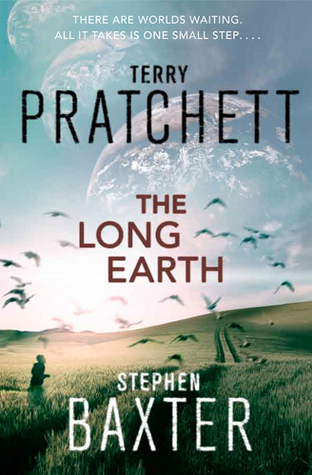
1916: the Western Front, France. Private Percy Blakeney wakes up. He is lying on fresh spring grass. He can hear birdsong, and the wind in the leaves in the trees. Where has the mud, blood and blasted landcape of No man's Land gone?
2015: Madison, Wisconsin. Cop Monica Jansson has returned to the burned-out home of one Willis Linsay, a reclusive and some said mad, others dangerous, scientist. It was arson but, as is often the way, the firemen seem to have caused more damage than the fire itself. Stepping through the wreck of a house, there's no sign of any human remains but on the mantelpiece Monica finds a curious gadget - a box, containing some wiring, a three-way switch and a...potato. It is the prototype of an invention that Linsay called a 'Stepper'. An invention he put up on the web for all the world to see, and use, an invention that would to change the way mankind viewed his world Earth for ever.
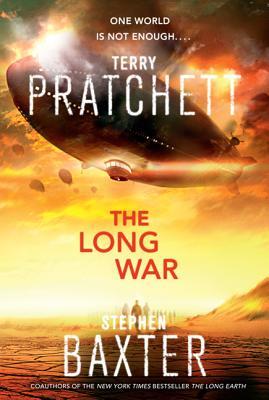
A generation after the events of The Long Earth, mankind has spread across the new worlds opened up by Stepping. Where Joshua and Lobsang once pioneered, now fleets of airships link the stepwise Americas with trade and culture. Mankind is shaping the Long Earth. But in turn the Long Earth is shaping mankind ... A new 'America', called Valhalla, is emerging more than a million steps from Datum Earth, with core American values restated in the plentiful environment of the Long Earth and Valhalla is growing restless under the control of the Datum government...
Meanwhile the Long Earth is suffused by the song of the trolls, graceful hive-mind humanoids. But the trolls are beginning to react to humanity?s thoughtless exploitation ... Joshua, now a married man, is summoned by Lobsang to deal with a gathering multiple crisis that threatens to plunge the Long Earth into a war unlike any mankind has waged before.
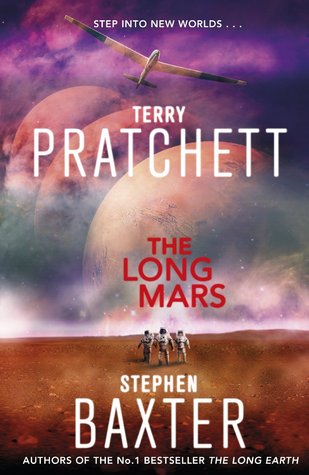
2040-2045: In the years after the cataclysmic Yellowstone eruption there is massive economic dislocation as populations flee Datum Earth to myriad Long Earth worlds. Sally, Joshua, and Lobsang are all involved in this perilous rescue work when, out of the blue, Sally is contacted by her long-vanished father and inventor of the original Stepper device, Willis Linsay. He tells her he is planning a fantastic voyage across the Long Mars and wants her to accompany him. But Sally soon learns that Willis has an ulterior motive for his request...
Meanwhile U. S. Navy Commander Maggie Kauffman has embarked on an incredible journey of her own, leading an expedition to the outer limits of the far Long Earth.
For Joshua, the crisis he faces is much closer to home. He becomes embroiled in the plight of the Next: the super-bright post-humans who are beginning to emerge from their 'long childhood' in the community called Happy Landings, located deep in the Long Earth. Ignorance and fear have caused 'normal' human society to turn against the Next. A dramatic showdown seems inevitable...
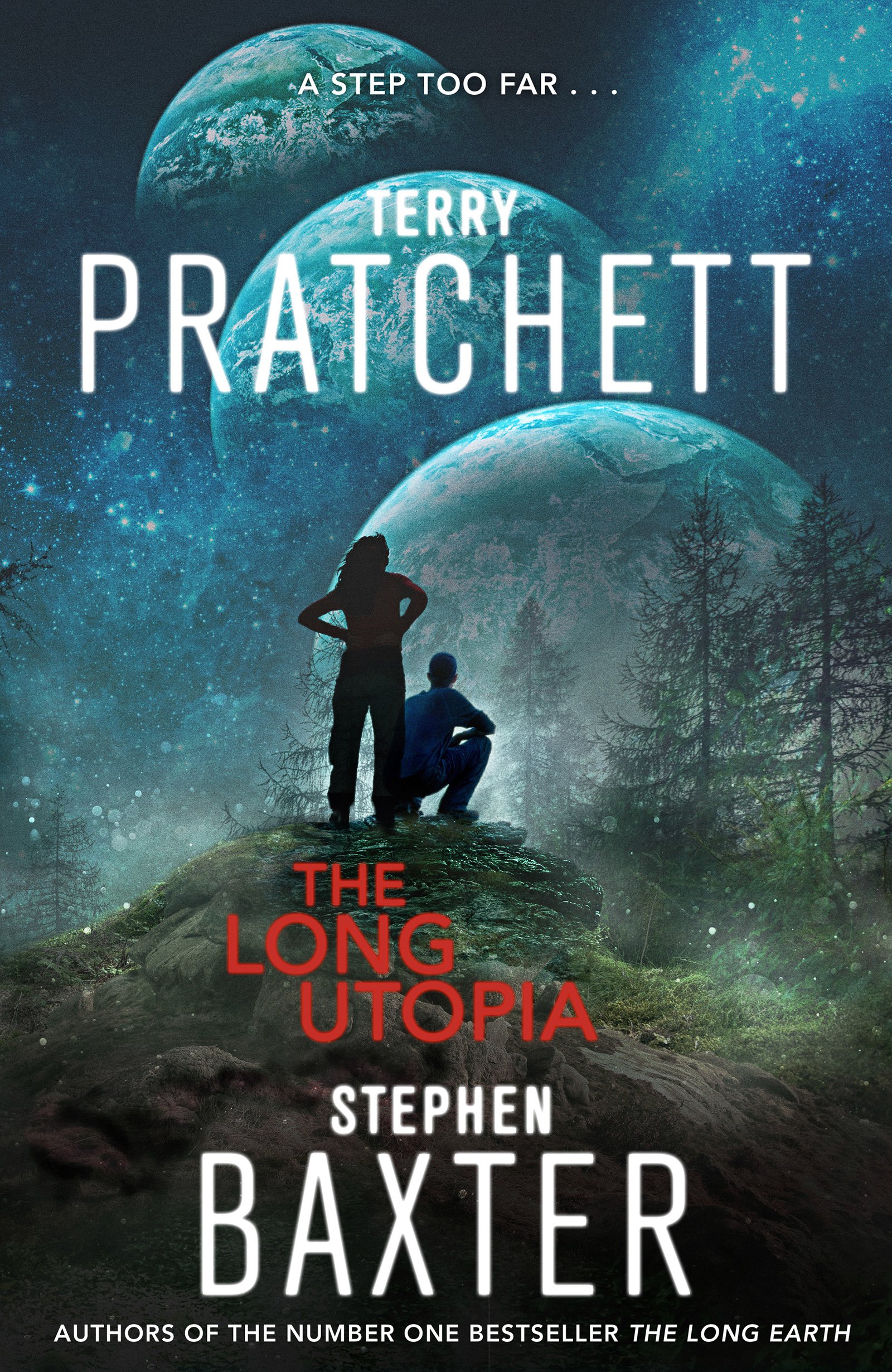
2045-2059. Human society continues to evolve on Datum Earth, its battered and weary origin planet, as the spread of humanity progresses throughout the many Earths beyond.
Lobsang, now an elderly and complex AI, suffers a breakdown, and disguised as a human attempts to live a 'normal' life on one of the millions of Long Earth worlds. His old friend, Joshua, now in his fifties, searches for his father and discovers a heretofore unknown family history. And the super-intelligent post-humans known as 'the Next' continue to adapt to life among 'lesser' humans.
But an alarming new challenge looms. An alien planet has somehow become 'entangled' with one of the Long Earth worlds and, as Lobsang and Joshua learn, its voracious denizens intend to capture, conquer, and colonize the new universe they have inadvertently discovered.
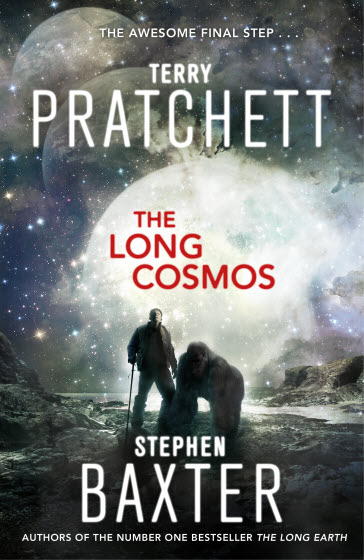
2070-71. Nearly six decades after Step Day and in the Long Earth, the new Next post-human society continues to evolve.
For Joshua Valiente, now in his late sixties, it is time to take one last solo journey into the High Meggers: an adventure that turns into a disaster. Alone and facing death, his only hope of salvation lies with a group of trolls. But as Joshua confronts his mortality, the Long Earth receives a signal from the stars. A signal that is picked up by radio astronomers but also in more abstract ways by the trolls and by the Great Traversers. Its message is simple but ts implications are enormous:
JOIN US.
The super-smart Next realise that the Message contains instructions on how to develop an immense artificial intelligence but to build it they have to seek help from throughout the industrious worlds of mankind. Bit by bit, byte by byte, they assemble a computer the size of a continent, a device that will alter the Long Earth's place within the cosmos and reveal the ultimate, life-affirming goal of those who sent the Message. Its impact will be felt by and resonate with all mankind and other species, young and old, communities and individuals who inhabit the Long Earths
When you get a chance you might want to check out the Long Earth series by Terry Pratchett and Stephen Baxter.
1916: the Western Front, France. Private Percy Blakeney wakes up. He is lying on fresh spring grass. He can hear birdsong, and the wind in the leaves in the trees. Where has the mud, blood and blasted landcape of No man's Land gone?
2015: Madison, Wisconsin. Cop Monica Jansson has returned to the burned-out home of one Willis Linsay, a reclusive and some said mad, others dangerous, scientist. It was arson but, as is often the way, the firemen seem to have caused more damage than the fire itself. Stepping through the wreck of a house, there's no sign of any human remains but on the mantelpiece Monica finds a curious gadget - a box, containing some wiring, a three-way switch and a...potato. It is the prototype of an invention that Linsay called a 'Stepper'. An invention he put up on the web for all the world to see, and use, an invention that would to change the way mankind viewed his world Earth for ever.
A generation after the events of The Long Earth, mankind has spread across the new worlds opened up by Stepping. Where Joshua and Lobsang once pioneered, now fleets of airships link the stepwise Americas with trade and culture. Mankind is shaping the Long Earth. But in turn the Long Earth is shaping mankind ... A new 'America', called Valhalla, is emerging more than a million steps from Datum Earth, with core American values restated in the plentiful environment of the Long Earth and Valhalla is growing restless under the control of the Datum government...
Meanwhile the Long Earth is suffused by the song of the trolls, graceful hive-mind humanoids. But the trolls are beginning to react to humanity?s thoughtless exploitation ... Joshua, now a married man, is summoned by Lobsang to deal with a gathering multiple crisis that threatens to plunge the Long Earth into a war unlike any mankind has waged before.
2040-2045: In the years after the cataclysmic Yellowstone eruption there is massive economic dislocation as populations flee Datum Earth to myriad Long Earth worlds. Sally, Joshua, and Lobsang are all involved in this perilous rescue work when, out of the blue, Sally is contacted by her long-vanished father and inventor of the original Stepper device, Willis Linsay. He tells her he is planning a fantastic voyage across the Long Mars and wants her to accompany him. But Sally soon learns that Willis has an ulterior motive for his request...
Meanwhile U. S. Navy Commander Maggie Kauffman has embarked on an incredible journey of her own, leading an expedition to the outer limits of the far Long Earth.
For Joshua, the crisis he faces is much closer to home. He becomes embroiled in the plight of the Next: the super-bright post-humans who are beginning to emerge from their 'long childhood' in the community called Happy Landings, located deep in the Long Earth. Ignorance and fear have caused 'normal' human society to turn against the Next. A dramatic showdown seems inevitable...
2045-2059. Human society continues to evolve on Datum Earth, its battered and weary origin planet, as the spread of humanity progresses throughout the many Earths beyond.
Lobsang, now an elderly and complex AI, suffers a breakdown, and disguised as a human attempts to live a 'normal' life on one of the millions of Long Earth worlds. His old friend, Joshua, now in his fifties, searches for his father and discovers a heretofore unknown family history. And the super-intelligent post-humans known as 'the Next' continue to adapt to life among 'lesser' humans.
But an alarming new challenge looms. An alien planet has somehow become 'entangled' with one of the Long Earth worlds and, as Lobsang and Joshua learn, its voracious denizens intend to capture, conquer, and colonize the new universe they have inadvertently discovered.
2070-71. Nearly six decades after Step Day and in the Long Earth, the new Next post-human society continues to evolve.
For Joshua Valiente, now in his late sixties, it is time to take one last solo journey into the High Meggers: an adventure that turns into a disaster. Alone and facing death, his only hope of salvation lies with a group of trolls. But as Joshua confronts his mortality, the Long Earth receives a signal from the stars. A signal that is picked up by radio astronomers but also in more abstract ways by the trolls and by the Great Traversers. Its message is simple but ts implications are enormous:
JOIN US.
The super-smart Next realise that the Message contains instructions on how to develop an immense artificial intelligence but to build it they have to seek help from throughout the industrious worlds of mankind. Bit by bit, byte by byte, they assemble a computer the size of a continent, a device that will alter the Long Earth's place within the cosmos and reveal the ultimate, life-affirming goal of those who sent the Message. Its impact will be felt by and resonate with all mankind and other species, young and old, communities and individuals who inhabit the Long Earths