Martial Arts That Aren't Useless

Recommended Videos

Cerebrawl

New member
Feb 19, 2014
459
0
0
Wyes said:
This applies to the hand-to-hand arts too, although all these 'pressure point kill spots' are pretty much full of crap. The person who started my particular ryu only two generations ago killed people for a living and was for all intents and purposes not a very nice man. That does not mean that the art has no other applications. It's important to realise the roots of your art and the context it was developed in (e.g. jujutsu was developed for fighting people in armour on a battlefield).
My first Jujutsu style was full of pressure point stuff. My latest has a tiny Japanese grandmaster who did style challanges in his youth(in the 40s), and at least imply some were to the death.

Had a sensei at the style I trained the longest(quite tame self-defense one, Jujutsu Kai) who had emigrated from the USA, her old master was decapitated with a katana by rivals when visiting Japan. Distracted by a pretty girl and off with the head.
 

Flames66

New member
Aug 22, 2009
2,310
0
0
Ieyke said:
Flames66 said:
SecretNegative said:
Ieyke said:
Dude, you got wrecked by the first link. Try to actually say something that doesnät come from your own ass. Don't act smug when you've actually been proved fucking wrong by a wikipedia link.

And yes, killing and maiming people are actually illegal in most countries (unless you're part of law enfrocement or military, of course).
I am fairly certain you have not trained with any Bujinkan clubs. When doing weapon work the training can include how to stab with a knife to quickly collapse a lung, making little noise and avoiding getting blood on your clothes. This is in the context of historical assassins.
No no. Some guy in Sweden said it's not true. We're imagining all of it.
What we practice is clearly rendered untrue because he says so.
Oh, well in that case I suppose I'll hang up my bokken and tabi.
 

Enamour

New member
Nov 30, 2010
70
0
0
spartan231490 said:
Lastly, as a martial artist myself, the best thing for converting martial arts training into self defense is to practice the fundamentals on your own. A strong stance and a good punch will serve you better on the street than being able to do a tornado kick.
A question to the practitioners.

The post explaining my approach to Jeet Kune Do is on page two.

Reading through all the concerns about practicality, I would very much like to know what a minimally adequate repertoire of defensive moves might include?

My own practice has been heavily focused on having a well rounded and deeply ingrained set of actions and reactions.

In terms of blocking with the arms, I work on a combination of deflections with then intent to find a "fight ending" grapple; taking control of the elbow or wrist for example. If the less violent way does not succeed then on to knees, kicks, elbows and strikes we go.

Protecting my legs is based on light and quick footwork while always being a millisecond away from what I think of as the "launching posture"; body turned, feet shoulder length apart(loosely), arms up and ready.

What are good considerations in terms of defending against someone who knows enough to be dangerous?
 

mistahzig1

New member
May 29, 2013
137
0
0
Enamour said:
A question to the practitioners.

The post explaining my approach to Jeet Kune Do is on page two.

Reading through all the concerns about practicality, I would very much like to know what a minimally adequate repertoire of defensive moves might include?

My own practice has been heavily focused on having a well rounded and deeply ingrained set of actions and reactions.

In terms of blocking with the arms, I work on a combination of deflections with then intent to find a "fight ending" grapple; taking control of the elbow or wrist for example. If the less violent way does not succeed then on to knees, kicks, elbows and strikes we go.

Protecting my legs is based on light and quick footwork while always being a millisecond away from what I think of as the "launching posture"; body turned, feet shoulder length apart(loosely), arms up and ready.

What are good considerations in terms of defending against someone who knows enough to be dangerous?
From my personal experience in club work:

Defensive moves:

- Your chin must ALWAYS be crazy-glued to your chest and your shoulders elevated as in a perpetual shrug while standing at a slight angle so as to protect your jaw completely from 1 side of your opponent's angles of attack. Your head is protected from KO that way (well, as much as possible) as your opponent will land punches on the top of your head which will give more damage to his hands than to yourself. Great defense against sucker-punches too

- Your upper-body stance must be as straight as possible even leaning forward a little. This will diminish chances of losing balance and falling down which is the LAST thing you want. A loss of reach, but the advantage warrants it IMO.

- Legs: NEVER cross your feet when moving --> loss of balance.

- Blocking: I'm not a fan of blocking with my hands since it's a *reaction* to someone's *action* and opens you up for followup hits while being unbalanced. Worst case is I bring my hand up as if to scratch a shoulder blade so a punch hits my arm but... i usually simply ducked my head / quickly stepping back or sideways and pushing the opponent (who's off balance) to the ground. If you wanna break his hand and feeling up for a headache, bring your head to look down so that his knuckles crash the top of your head.

If you wanna know how much it hurts to punch someone, go to a public restroom and punch a toilet stall door. That's the closest example to hitting someone's head that I experienced.

And your hooks. DON'T punch hooks like you'd do with boxing gloves. That's an x-ray appointment right there. Reverse your hand to that your knuckles are the 1st think that connects.

That's about all I can think of right now.
 

Cerebrawl

New member
Feb 19, 2014
459
0
0
mistahzig1 said:
- Your upper-body stance must be as straight as possible even leaning forward a little. This will diminish chances of losing balance and falling down which is the LAST thing you want. A loss of reach, but the advantage warrants it IMO.
Actually you have the best balance and stability if you stand with knees slightly bent, push your bum out, stomach forward, chest out, and shoulders back, you want your spine sort of S-shaped. This is the classic samurai stance, for good reason. It's also why the many martial arts senseis look like they've got a beer belly. They're bulging their stomach out on purpose.


If you stand straight, I can floor you by just putting my hands on your shoulders and pressing down, your legs will buckle.
 

mistahzig1

New member
May 29, 2013
137
0
0
Cerebrawl said:
mistahzig1 said:
- Your upper-body stance must be as straight as possible even leaning forward a little. This will diminish chances of losing balance and falling down which is the LAST thing you want. A loss of reach, but the advantage warrants it IMO.
Actually you have the best balance and stability if you stand with knees slightly bent, push your bum out, stomach forward, chest out, and shoulders back, you want your spine sort of S-shaped. This is the classic samurai stance, for good reason. It's also why the many martial arts senseis look like they've got a beer belly. They're bulging their stomach out on purpose.


If you stand straight, I can floor you by just putting my hands on your shoulders and pressing down, your legs will buckle.
we'll have to agree to disaggree on this one i guess. I've seen to much shoots and takedowns the way you describe. Rarely saw a fight that took more than 45 seconds too
 

Cerebrawl

New member
Feb 19, 2014
459
0
0
mistahzig1 said:
we'll have to agree to disaggree on this one i guess. I've seen to much shoots and takedowns the way you describe. Rarely saw a fight that took more than 45 seconds too
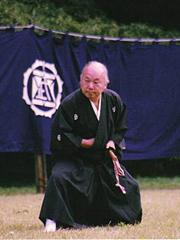
Well, it's something I was taught by this guy:


[link]http://www.ysr.se/shimazukenji.html[/link]

Demonstrations were provided. ;)

It also sets up the whole waist and hips power zone of Japanese martial arts. Though I am aware of the more lightfooted style of Jeet Kune Do. I think we've all seen some Bruce Lee movies. ;)

The guy's a bit of a living legend, over 70 years old, but still teaching. He reunited the two branches of the split school of Yagyu Shingan Ryu Heiho Jutsu, by mastering both sides(and has studied some other schools as well), and is currently grandmaster of one of them, the Sendai line and is known as the Restorer. There will be techniques that die with him because he won't have time to teach them all, and the school will split again after his death.

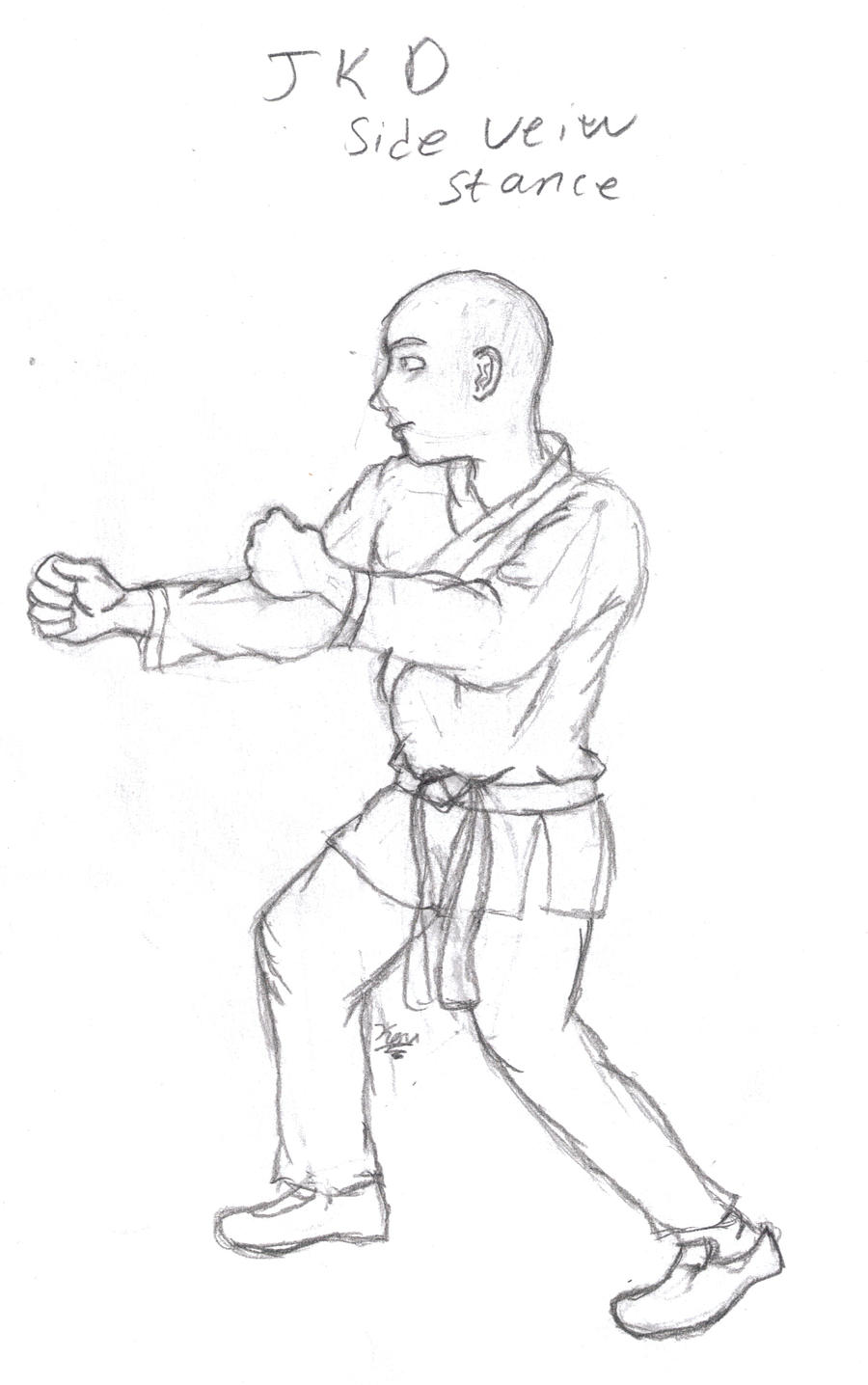
EDIT: Oh and this picture, Jeet Kune Do stance, shows exactly what I've been talking about too!

Ass back, stomach forward, shoulders back, knees slightly bent.
 

spartan231490

New member
Jan 14, 2010
5,184
0
0
Enamour said:
spartan231490 said:
Lastly, as a martial artist myself, the best thing for converting martial arts training into self defense is to practice the fundamentals on your own. A strong stance and a good punch will serve you better on the street than being able to do a tornado kick.
A question to the practitioners.

The post explaining my approach to Jeet Kune Do is on page two.

Reading through all the concerns about practicality, I would very much like to know what a minimally adequate repertoire of defensive moves might include?

My own practice has been heavily focused on having a well rounded and deeply ingrained set of actions and reactions.

In terms of blocking with the arms, I work on a combination of deflections with then intent to find a "fight ending" grapple; taking control of the elbow or wrist for example. If the less violent way does not succeed then on to knees, kicks, elbows and strikes we go.

Protecting my legs is based on light and quick footwork while always being a millisecond away from what I think of as the "launching posture"; body turned, feet shoulder length apart(loosely), arms up and ready.

What are good considerations in terms of defending against someone who knows enough to be dangerous?
I don't know what others would say, but I think your best bet is fundamentals, especially stances. Did you know that in some traditional Okinawan karate schools a student isn't even allowed to learn techniques until after they have spent 2 years working on their stances. The stronger your stance is, the better all of your other techniques, from blocks to strikes to grapples, will be.

Other than stances, I would say that maintaining a good guard or blocking posture while utilizing your techniques is another unsung hero. You think about it when you're practicing kicks, but it can be equally important when throwing punches or reaching for a grab. For that matter, it's important to make sure your guard stays good when moving in all directions, and while turning.

Thirdly, practice on uneven ground. Way too many people just practice on the floor of the dojo, never worrying that in a self-defense situation they might have to step over a pothole, or a curb, or to watch out for low branches and roots from a tree.

It should go without saying that the best thing to do is not get into a fight in the first place, so it wouldn't be remiss to spend some time working on body language in front of a mirror, learning to look confident without looking aggressive. Avoiding areas or situations where you are likely to end up in a dangerous situation is always a plus as well.

From a self-defense point of view, any fight you get into is a fight you've already lost.
 

Wyes

New member
Aug 1, 2009
514
0
0
spartan231490 said:
I think there are more schools than you might think that don't just focus on tournament fighting. In my general area, there are more non-tournament schools than tournament schools.
Maybe, but there's also just a lot more bad martial arts schools out there than good, in my experience. The more popular a style is, the more likely there are to be bad schools.

I'm not sure I agree, I've been in more than a few self-defense situations and never even needed to use a grab escape. I'm not saying you shouldn't learn some basic grappling, like grab escapes, but I just don't think grappling and throwing are as well suited to combating multiple attackers as striking arts. For any grappling or throwing technique that is going to be reliable enough to use in a street situation, you need to devote both hands and a lot of time/attention, leaving you virtually unable to defend yourself, at least for a short time. The also require you to be up close and personal with your attacker, where it's harder to get away and a lot more can go wrong. If my attacker blocks a punch or a low kick, we're back to neutral ground. On the other hand, if he slips out of a joint lock or worse knows enough to reverse the technique, it puts me in a very bad position.
I have (thankfully) only been in a small number of (minor) self-defense situations, before I started training anything seriously, and they all involved a grappling situation. I think we'll have to agree to disagree on this one.

also, this statement is inaccurate. The vast majority of gunshot victims survive, 80% for single shot from a handgun. Even more important, in the vast majority of cases, just pulling a gun will scare off an attacker without a shot even being fired. That doesn't mean you should rely on it for self defense, you shouldn't rely on any one thing for self-defense, whether that be martial arts or CCW.
I'm aware that most gunshot victims survive, but I'm used to the idea that if you pull a weapon on somebody it's because you have the intent to kill. You cannot reliably only injure somebody with a weapon intended for lethal purposes. As for them scaring somebody off - again, this is if you're in the kind of situation where you can draw. It can work, but it's situational, and as you say shouldn't be all you rely on. Also, not legal in many places.

I will admit that the context I'm thinking of self-defense as is probably slightly different. I'm not so concerned with the people that will come up to me a threatening manner - those situations can be run from or defused. It's the predators that are the thing that scare me - the guys that aren't looking for a fight, they're just looking to kill you, and you're not necessarily going to get any warning. I've mentioned it before, but I highly recommend the book 'Meditations on Violence' by Rory Miller.
 

Mid Boss

Senior Member
Aug 20, 2012
274
12
23
SecretNegative said:
Martial arts are kinda useless when the most effective way to fight is to kick someone on the shins, then sit on their face and knee them in the dick.
Not sure how you would sit on a person's face and knee them in the dick. Not only are you facing away from your opponent while sitting on said face but your knee wouldn't extend past their stomach let alone to their genitalia.

Unless you have backward jointed legs with massive disproportionately long thighs. In which case I would probably call the Men in Black because you are blatantly not from our planet. Not to mention that sitting on an opponent's face would expose your own balls to any manner of jabs and grabs.
 

Imperioratorex Caprae

Henchgoat Emperor
May 15, 2010
5,499
0
41
Learn anatomy and physiology, combine that with any martial art (as long as you have a good teacher) and you're a force to be reckoned with. Knowing where muscles attach to, where nerve clusters are at can save you a lot of trouble if you're ever in a fight.
Odd example, aside from various martial arts I've taken I also was trained in massage therapy. You might think this has nothing to do with fighting but a good massage therapist knows just what spots on the body are excruciatingly painful to strike at or dig into. We're also taught how muscles work and what direction they pull from, where on the skeletal structure they attach to and so forth, and armed with that knowledge you can devastate someone.
I'd never use my knowledge to harm someone intentionally unless I had no other choice.
Also remember a lot of martial arts are not the same as street fighting, and one must learn to improvise, use whatever is at hand because there are no rules to a fight outside a ring or gym. Anything goes and its not necessarily the most knowledgeable martial artist who wins but rather the one who's willing to be more ruthless.
I'll give you a Bruce Lee quote that has stuck with me through the years:
"I fear not the man who has practiced 10,000 kicks once, but I fear the man who has practiced one kick 10,000 times."

Any martial art can be devastating, but its up to the person using it and how they apply that knowledge. It still probably won't save you from getting shot though.
 

Wyes

New member
Aug 1, 2009
514
0
0
Imperioratorex Caprae said:
Also remember a lot of martial arts are not the same as street fighting, and one must learn to improvise, use whatever is at hand because there are no rules to a fight outside a ring or gym.
Which is why you should look for an art that tries to simulate this as close as possible (if that's what you're looking for).
 

Imperioratorex Caprae

Henchgoat Emperor
May 15, 2010
5,499
0
41
Wyes said:
Imperioratorex Caprae said:
Also remember a lot of martial arts are not the same as street fighting, and one must learn to improvise, use whatever is at hand because there are no rules to a fight outside a ring or gym.
Which is why you should look for an art that tries to simulate this as close as possible (if that's what you're looking for).
I know there are arts out there that teach street fighting techniques, but it still ends up depending on the teacher/master/sifu/whatever and also the ability of the student to transition from rote memorization to implementation and improvisation.
I've always felt one doesn't take a martial art to learn how to fight but rather to learn discipline and really how not to fight. Its a subtle distinction.
 

Wyes

New member
Aug 1, 2009
514
0
0
Imperioratorex Caprae said:
I know there are arts out there that teach street fighting techniques, but it still ends up depending on the teacher/master/sifu/whatever and also the ability of the student to transition from rote memorization to implementation and improvisation.
I've always felt one doesn't take a martial art to learn how to fight but rather to learn discipline and really how not to fight. Its a subtle distinction.
It really, really depends on how you train. While it's kind of true you can never really train for a street fight/self-defense scenario without just getting into that situation all the time, there are plenty of training methods out there that can help.

Now, most modern martial arts schools don't train like this, but that's a reflection on their training, not on martial arts. Martial arts were designed to teach you how to fight (and there are added benefits like discipline and so on), and it's important not to forget that this is at the root of every truly 'martial' art.
 

BoogieManFL

New member
Apr 14, 2008
1,284
0
0
I'd say it depends largely on three factors.

First, physicals. How athletic, agile, flexible, strong, you are as well as if you're particularly small or large.

Second, do you want to be defensive or offensive? Would you rather protect yourself and deflect and avoid hurting someone else or take the fight to them?

Third, how much free time do you have to dedicate to learning.


Researching different disciplines will reveal that some area defensive more than offensive, or the other way around. And Karate, for example, is really just a generic term. I took 3 years of Shuri Te Ha Karate and as I was taught, it's somewhat balanced defensively and offensively, but it does go more offensive with the intent being to quickly incapacitate or demoralize your opponent and how to endure hits and pain. It focused a lot on on joint locks and ground work, which when applied properly will take the fight out of most people in an instant. Also, it will do a lot to help level the playing field if you're facing someone larger and stronger than you, or if you're really experienced, help you against multiple attackers. But that's a long time in.

It will take years and years of hard work to really get good at it because of complexity and is largely about muscle memory and making the movements reflexive. Also, while you can learn a good deal if you're not good shape, you won't really be able to get the most out of it. Nothing in my life has even come close to how physically and mentally demanding many classes were so it takes a lot of willpower. Another obstacle was learning a lot of Japanese words, which are very very different from English.


I may be wrong but I imagine you might get earlier results with some form of boxing.I would also look into Jiu Jitsu and Krav Maga. Something that focuses a lot on incapacitating strikes and ground work, which is where many fights seem to end up, especially if the people are even decently a match for each other.


You may also be limited to what you can find in your area. Anything is better than nothing. Learning about any kind of advanced self defense is a good thing. At least you can sort of have a plan of action and know how to better react to certain situations.

It's like being suddenly pushed out on stage and told to do a dance. Would you want to go out there without a warning, or have some time to at least practice something?
 

Enamour

New member
Nov 30, 2010
70
0
0
All very good advice, from beginner onward. Many thanks for teaching, reminding and emphasizing.

Since Bruce Lee is almost a religious figure to me, alongside the likes of Shenryu Suzuki and Osho, I've been trying to attempt Bruce's version of Tao as truthfully as possible over the last few years.

Reading through this thread, I think about you guys who've been seriously practicing your arts while I've been thumbing through Bruce Lee's notes and piecing together a home made or personal style. What I do not have is formal training of any kind, simply trained reflexes for movements which I don't even care to know the names of. Needless to say there must be a massive difference. And since none of us are exactly in the same parts of the world, we can't get together to spar but thanks to the internet we can compare notes. I would very much like to understand this divide and would love to hear your thoughts on the following statements.

I think it was Dan Inosato in one of Lee's training videos who roughly said the following; I feel a bit silly telling someone that I practice JKD even though I have been trained in it. It would be more correct to say that I practice my interpretation of JKD, as does everyone who practices JKD. You can teach someone a block, and then they know a block. But teach them the principles of effective blocking and then they have all martial arts to choose from.


From a television interview with Bruce Lee:

"I do not believe in styles anymore. There is no such thing as the Japanese way of fighting or the Chinese way of fighting. Because, unless, humans have three arms and four legs, we will not have different ways of fighting. Because we only have two of each we have to use them to the maximum in terms of straight line, curved line, round line. When you realize the arm goes up and down, forward in straight lines. In terms of kick, same thing right? After all that, then you ask yourself, how can you honestly express yourself in a moment. Not trying to punch or avoid getting hit but to really be in it and express yourself.

Now unfortunately you have boxing, which uses the hands. You have Judo, which is throwing. I'm not putting them down, mind you. But I am saying one thing, a bad thing, and that is, because of styles, people are separated. They are not united together because styles became law. But the original founder of the style started out with hypothesis - but now it has become gospel truth. People who go into that, become the product of that."

My own approach.

I've been practicing from Bruce Lee's Tao of Jeet Kune Do for several years with the goal of JKD being a physical expression of my Zen/Tao; constant, gradual and mindful practice. 90% of my practice has been, and is, in order of perceived importance, focused on: footwork, body training, stance/positioning, the right eye(observing correctly), striking(all limbs), grappling (limb manipulation) and then incorporating easily compatible components from Judo(Had exposure to Judo as a child, father also taught me boxing).

I'm not looking for any specific kinds of answers. Not even sure what I'm asking apart from wanting to understand more.

 

MrFalconfly

New member
Sep 5, 2011
913
0
0
Krav Maga, which is Israeli for, "I'm gonna whoop your ass", seems very practical.

Keysi Fighting Method also seems very efficient if you get in close with the opponent.
 

earroyo

New member
Oct 16, 2014
1
0
0
Some characteristics of a street effective system are:

-simple & direct movements
-economy of motion
-functionality in all four basic ranges of fighting--kicking, boxing, trapping, grappling.
-emphasis on principles rather than techniques

My recommendation would be the Filipino Martial Arts/FMA. Kali is effective in all four ranges, and is the best defense against armed attackers, hands down. Its boxing curriculum (panantukan/pangamut) emphasizes limb destructions, elbows, finger jabs, and tight/compact punches. The kicks in kali (pananjakman) are all low-line; kicking above the belt in a street fight is too slow and too risky. The grappling aspect of the system (dumog) emphasizes quick and destructive takedowns, so as not to spend too much time on the ground. The art, overall, is multi-man attack oriented and has very sophisticated footwork based on the triangle. In kali, you learn the weapon first (nothing superfluous like bo staves; we're talking pocket knives, batons--things you will encounter on the street) and apply the weapons-based principles to the empty hand. Advanced practitioners become extremely proficient at improvised weaponry once they've internalized the attributes of weapons; they train with sticks and knives, but can then apply their skills to anything from a ballpoint pen to a key to a rolled up magazine.

Here's a video of some typical kali training: http://youtu.be/BtjAdhKlgTs (excuse the horrible music)

Jeet Kune Do (JKD) is also ideal for street defense. It blends arts like boxing, wing chun, brazilian jujitsu, fencing, FMA,judo, savate, etc. Its emphasis is on simplicity and adaptability.

Keysi Fighting Method is also effective because it is based on natural physical responses.


Now, to respond to some of the previous comments, while Muay Thai is a great training method for physical conditioning, it actually instills bad habits for the street. Muay Thai fighters are trained to eat punches and then to counter. While that's great for the ring, it's a terrible habit for an environment in which attackers are more likely than not to possess knives and other weapons. If you're used to taking punches to the chest, that same natural reaction will occur when you're attacked with a knife. Muay Thai can work for street defense only if its in tandem with some other art that's more geared toward self-defense.

Similarly, Brazilian jujitsu is EXCELLENT, but needs to be accompanied by other systems to truly be effective. Against multiple attackers, 95% of its techniques are useless if not dangerous. Try putting an attacker in an armbar while his friends are stomping your face into the pavement.
 

PirataMan

New member
Sep 5, 2014
6
0
0
In my experiense the most efectives are Brazilian juijitsu, MMA or Muay Thai, but to be honest these alone are not that good, you need to complement with other martial arts or contact sports, by example wrestling and brazilian juijitsu mix very well (as wrestling is all about positioning and gaining advantage while brazilian juijitsu is about harder grappling).

Right now I'm doing HEMA and wrestling, pretty fun and many techniques are useful, but it requiere previews knowledge of other martial arts to be effective for defense, even so the theory is basically the same.