But as you should have noticed by now, logic doesn't work on these people.Rabid Toilet said:I had the same reaction, but dammit, it's just so tempting to prove them wrong.

Poll: 0.999... = 1
- Thread starter quhouv vhqwiufv qwiu
- Start date
Recommended Videos
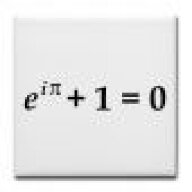
You misunderstand how variables work. The variable has only one value at a time, but can have an infinite amount of values. So in this case, the solutions for x[sup]2[/sup] = x are, indeed, x = 0, 1.emeraldrafael said:Secondly 0^2 =/= 1. 2^0 = 1. But thats oka.
0[sup]2[/sup] = 0
1[sup]2[/sup] = 1
QED.
Would you kindly provide this 'very very slight' difference between 1 and 0.(9)? I'm very very much interested in seeing it.SomethingAmazing said:No.
.9999 is lesser than 1. Very very slightly lesser, but still lesser.
I won't be surprised at all if said difference is 0.

I know! That's what makes it even more tempting!Ravek said:But as you should have noticed by now, logic doesn't work on these people.Rabid Toilet said:I had the same reaction, but dammit, it's just so tempting to prove them wrong.

No matter how many threes you have, it still won't quite be a third. Sorry.BlacklightVirus said:1/3 > 1.333...? No... just no.PoisonUnagi said:But 1/3 is greater than 1.33333...BlacklightVirus said:There is an even simpler proof.havass said:I myself have my doubts about it, but I just can't find anything wrong in any step of the proof! Every step is perfectly logical.crudus said:Every math major I have talked to and showed that to has described that as "shady".
1/3 = 0.333...
1/3 + 1/3 + 1/3 = 3/3 = 1
But 0.333... + 0.333... + 0.333 = 0.999...
Hence 0.999 = 1
So you've failed this round.
acer840 said:That's because it's my equation that is in the first quote box.
The original equation from the first page.If x = 0.999999...
Then 10x = 9.9999...
Therefore, 10x - x = 9
Which implies 9x = 9
Thus, x = 1
x also = 0.99999...
In conclusion, I have just proven 1 = 0.9999...
Ok for simplicities sake and to end this arguement
x=.99999 (the amount of nines doesn't matter it is true for any number of nines, I'm just truncating at a smaller amount of nines.)
10x=9.9999 (this is the step that everyone gets wrong as multipling (.9*.1^n)! by 10 gets (9*.1^n)!, not (9*.1^(n+1))!. (9*.1^(n+1))! is 9.99999 when n+5)
thus 9.9999-.99999=8.99991=9x
8.99991/9=9x/9,8.99991/9=.99999
QED x=.99999.
Try this with a calculator for any amount of nines and you'll see that my math is right.
x=.99999 (the amount of nines doesn't matter it is true for any number of nines, I'm just truncating at a smaller amount of nines.)
10x=9.9999 (this is the step that everyone gets wrong as multipling (.9*.1^n)! by 10 gets (9*.1^n)!, not (9*.1^(n+1))!. (9*.1^(n+1))! is 9.99999 when n+5)
thus 9.9999-.99999=8.99991=9x
8.99991/9=9x/9,8.99991/9=.99999
QED x=.99999.
Try this with a calculator for any amount of nines and you'll see that my math is right.
If you have an infinite number of threes, it does indeed equal a third.PoisonUnagi said:No matter how many threes you have, it still won't quite be a third. Sorry.BlacklightVirus said:1/3 > 1.333...? No... just no.PoisonUnagi said:But 1/3 is greater than 1.33333...BlacklightVirus said:There is an even simpler proof.havass said:I myself have my doubts about it, but I just can't find anything wrong in any step of the proof! Every step is perfectly logical.crudus said:Every math major I have talked to and showed that to has described that as "shady".
1/3 = 0.333...
1/3 + 1/3 + 1/3 = 3/3 = 1
But 0.333... + 0.333... + 0.333 = 0.999...
Hence 0.999 = 1
So you've failed this round.

Ok i completely agree with this point that 0.999... = 1 and i have had it proven to me by one of my maths professors in a way that has been said earlier in the thread, the one that states that if 1 =/= 0.999..., what is the number in between?, but my point here is, i don't see a poll in this thread.
A tempting fairytale, but nonsense. If x is in S, then x = y implies y is also in S. 0.33(3) is also a rational number, because it's the exact same thing as 1/3. By the same reasoning, 1/3 is also a real number. Of course, all rational numbers are also real numbers, so that was obvious anyway.IMakeIce said:No one would ever dispute the fact that 1/3 = .3333 however, you're talking about two numbers living in totally different worlds. 1/3 lives in Q (rational numbers), .(3) lives in R (real numbers). These are two ways, in different number sets to express the same idea (after all, numbers are simply ideas). Likewise, we have 1 (which lives in N (natural numbers), or Z, Q, or R for that matter) and .(9) which lives in R (real numbers).
Your general point is okay though: these numbers are entities that operate under strict predefined rules. If you don't follow the rules when manipulating them, you're going to end up with nonsense.
When you have an infinite amount of threes, it will be exactly a third. But I'm not sorry, that's just how math works.PoisonUnagi said:No matter how many threes you have, it still won't quite be a third. Sorry.
It's true for any finite number of nines, but not when the number of nines is infinite.Sprntr_Zomby said:Ok for simplicities sake and to end this arguement
x=.99999 (the amount of nines doesn't matter it is true for any number of nines, I'm just truncating at a smaller amount of nines.)
10x=9.9999 (this is the step that everyone gets wrong as multipling (.9*.1^n)! by 10 gets (9*.1^n)!, not (9*.1^(n+1))!. (9*.1^(n+1))! is 9.99999 when n+5)
thus 9.9999-.99999=8.99991=9x
8.99991/9=9x/9,8.99991/9=.99999
QED x=.99999.
Try this with a calculator for any amount of nines and you'll see that my math is right.
Infinity does not work that way.
I bolded the problem for you. You can't do any of this with a calculator, because a calculator can only deal with finite numbers of decimals. We're talking about the nines going on for infinity, in which case there is no infinity - 1, because that is still infinity, which can't be represented with a calculator.Sprntr_Zomby said:Ok for simplicities sake and to end this arguement
x=.99999 (the amount of nines doesn't matter it is true for any number of nines, I'm just truncating at a smaller amount of nines.)
10x=9.9999 (this is the step that everyone gets wrong as multipling (.9*.1^n)! by 10 gets (9*.1^n)!, not (9*.1^(n+1))!. (9*.1^(n+1))! is 9.99999 when n+5)
thus 9.9999-.99999=8.99991=9x
8.99991/9=9x/9,8.99991/9=.99999
QED x=.99999.
Try this with a calculator for any amount of nines and you'll see that my math is right.

I think you're trolling. 1/3 will always be less than 1.(3). That's a mathematical fact.PoisonUnagi said:No matter how many threes you have, it still won't quite be a third. Sorry.BlacklightVirus said:1/3 > 1.333...? No... just no.PoisonUnagi said:But 1/3 is greater than 1.33333...BlacklightVirus said:There is an even simpler proof.havass said:I myself have my doubts about it, but I just can't find anything wrong in any step of the proof! Every step is perfectly logical.crudus said:Every math major I have talked to and showed that to has described that as "shady".
1/3 = 0.333...
1/3 + 1/3 + 1/3 = 3/3 = 1
But 0.333... + 0.333... + 0.333 = 0.999...
Hence 0.999 = 1
So you've failed this round.
I think he meant to say 0.33..., not 1.33...BlacklightVirus said:I think you're trolling. 1/3 will always be less than 1.(3). That's a mathematical fact.PoisonUnagi said:No matter how many threes you have, it still won't quite be a third. Sorry.BlacklightVirus said:1/3 > 1.333...? No... just no.PoisonUnagi said:But 1/3 is greater than 1.33333...BlacklightVirus said:There is an even simpler proof.havass said:I myself have my doubts about it, but I just can't find anything wrong in any step of the proof! Every step is perfectly logical.crudus said:Every math major I have talked to and showed that to has described that as "shady".
1/3 = 0.333...
1/3 + 1/3 + 1/3 = 3/3 = 1
But 0.333... + 0.333... + 0.333 = 0.999...
Hence 0.999 = 1
So you've failed this round.
I don't think anyone would argue that 1/3 > 1.333..., but arguing that adding threes to the end of 0.33 will always be less than 1/3 makes more sense.

1.333... = 4/3 > 1/3 = 0.333...PoisonUnagi said:No matter how many threes you have, it still won't quite be a third. Sorry.BlacklightVirus said:1/3 > 1.333...? No... just no.PoisonUnagi said:But 1/3 is greater than 1.33333...BlacklightVirus said:There is an even simpler proof.havass said:I myself have my doubts about it, but I just can't find anything wrong in any step of the proof! Every step is perfectly logical.crudus said:Every math major I have talked to and showed that to has described that as "shady".
1/3 = 0.333...
1/3 + 1/3 + 1/3 = 3/3 = 1
But 0.333... + 0.333... + 0.333 = 0.999...
Hence 0.999 = 1
So you've failed this round.
No it isn't.SomethingAmazing said:Well then your own damn numbers are confusing you. Because .9999... is still less than 1.BlacklightVirus said:This is the problem which people not educated in math always find. As I have already said the reals do not permit numbers infinitesimally small.

I still want an answer to my previous question.
Any repeating decimal is a rational number and can be expressed as a fraction, by definition.
What fraction equals .99...?
Any repeating decimal is a rational number and can be expressed as a fraction, by definition.
What fraction equals .99...?
You know, come to think of it, I'm surprised that web forums don't have some kind of automatic function to destroy threads like this at inception.
Blizzard literally had to start banning people to stop this conversation clogging the battle.net forums when they posted the proof as an april fools joke years and years ago. I don't know if the april fools joke was that the proof was real...or that they knew people would go ape!@#! over it...
Blizzard literally had to start banning people to stop this conversation clogging the battle.net forums when they posted the proof as an april fools joke years and years ago. I don't know if the april fools joke was that the proof was real...or that they knew people would go ape!@#! over it...

no, the problem is that you said 1/3 > 1.333...PoisonUnagi said:No matter how many threes you have, it still won't quite be a third. Sorry.BlacklightVirus said:1/3 > 1.333...? No... just no.PoisonUnagi said:But 1/3 is greater than 1.33333...BlacklightVirus said:There is an even simpler proof.havass said:I myself have my doubts about it, but I just can't find anything wrong in any step of the proof! Every step is perfectly logical.crudus said:Every math major I have talked to and showed that to has described that as "shady".
1/3 = 0.333...
1/3 + 1/3 + 1/3 = 3/3 = 1
But 0.333... + 0.333... + 0.333 = 0.999...
Hence 0.999 = 1
So you've failed this round.
1/3 = .333...
and
.333... < 1.333...
so you're typo made you look like an idiot
YOU FOOL! we're humans logic does not apply to us!Rabid Toilet said:I know! That's what makes it even more tempting!
actually since .999... is the series (.9*.1^n) you can choose any value and cut it off with slightly more error room. In my discrete math class last semester my class of 20 student spent about 10 hour each proving out from 0 to several thousand that this series work and does converge to .999... not to 1. As you head out to infinity x heads to .999... it never reaches one.