
Poll: Cynical or realistic?
- Thread starter Confidingtripod
- Start date
Recommended Videos


That would really on prolong the inevitable. The issue here isn't population size as much as it is population growth. Changing our eating habits wouldn't do much to help our over population issue unless we also stopped growing overall. The bolded part above is the only thing you said that I think would help to that end. And just because we could "comfortably" support 10 million (I'm just saying, I like my cow) doesn't mean that's a good number to aim for either.PatrickXD said:It's a half truth. We have far too many people on Earth to support as we currently live, but it is estimated that we can actually comfortably support up to 10 billion comfortable vegetarians successful, only human nature will never allow that. This is because our tendency to want meat, so cows are bread on what could be lots of extra space for crops. I think it was enough cow to feed about 10 people has to live on enough field to feed over 100.Furburt said:Well, we're actually over the amount of people the earth can sustain now, I think. Correct me if I'm wrong.
However, I believe a far better alternative than cutting off medicines or anything is this. Almost all this population growth is occurring in places like China, India, and Africa. Poor, unstable places. The reason why such large families are needed is because that's the only way the parents can guarantee that enough of their children will live to support the family.
I'd say with more careful application of food and fuel, and strict family planning regimes (1 child each, the China way of life) the human race could begin to live far more in harmony with earth but as it stands it just isn;t going to happen.
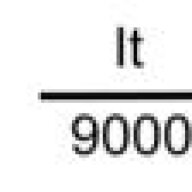
I'd say there's a fine line between realism and cynicism here. Just asking the questions and exploring the answers is realistic, but thinking there's nothing we can do to change would be cynical.

Humans breed in a way that causes an exponential increase in the population which means we'll grow as a population faster and faster until there wont be enough resources for everyone. In other species that have the same kind of growth we got rabbits, lemming and even elephants despite that elephants reproduce slowly. Lemming and rabbits have a constant growing population that sooner or later will explode (over here we got lemming year) and they will have to immigrate to get enough food to survive. This makes them vulnerable to the nature factors such as finding food, shelter, closeness causes diseases, in simplicity many will die until the population is stable once again. This is a cycle that will keep repeating itself. Humans have still not reached that point, but we will in not too long, so either we have to do as animals like deer do and stop the growth rate, or as the lemming and die from hunger, violence or diseases.
I guess to the original question, you're more on the realistic side, but most would describe your views as cynical, but I don't think cynical is a word that can be applied to anyone. I split the world into naive and realistic.
I guess to the original question, you're more on the realistic side, but most would describe your views as cynical, but I don't think cynical is a word that can be applied to anyone. I split the world into naive and realistic.

Just wait 'til you want medicine, and it's not available. It's easy to speak about such things when you're healthy and young.
Look, we, like any animal, are out to survive. We'll keep doing so, repercussions be damned. And if it's any consolation, there is a current trend in which less children are being born, perhaps overpopulation is not as imminent as you think.
Look, we, like any animal, are out to survive. We'll keep doing so, repercussions be damned. And if it's any consolation, there is a current trend in which less children are being born, perhaps overpopulation is not as imminent as you think.

World population is projected by the UN to level out at 9 billion people (an estimate revised down from 18 billion), a number the planet can easily support. Especially if we eat less meat - meat agriculture is the biggest drain on food supply and contributor to greenhouse gases, far more damaging than factories, power stations or muscle cars.joe102 said:(If you dont like dark threads stop now) (sorry about any miss-spelling)
I have been thinking about human medicine... and I have to wonder... are we doing the right thing by curing so many deseases when we risk the chance of new ones developing?
And also we are growing as a species so fast how much longer can the earth support us?
Whether we cure disease or not we'll always be stuck with disease of some kind...
War does virtually nothing at all to control population growth. In fact, war has the opposite effect because patriotic people start breeding like rabbits in order to raise soldiers to fight for their country, or at least to leave a legacy behind before they get blown to bits. War also lowers standards of living in the affected areas, and people who are experiencing lower standards of living tend to have more children. For example, Afghanistan is undergoing a population explosion right now (no pun intended). When you're in a situation with no social security, your children become your social security, because after a certain age they can be put to work on the farm, can protect your property from roving douchebags or look after you if you have health problems etc...theSovietConnection said:A pandemic would be the easiest way of curbing population growth
My other mentioned method, nuclear war, would be highly effective at curbing growth.
Pandemics aren't actually all that effective either. After pandemics are over people tend to do a lot of breeding and replace the lost people within a generation.
The only effective way to control population is to control birthrate, and the best way to get people to breed less is not the China method of subsidising one-child families (which has only really worked for them in the urban areas) but to give people across the board a higher standard of living. If people have a happier life, they want to experience more of it without kids getting in the way, so they have children later in life, or not at all. Also, equal rights for women is very important - if long-term career options are available less women will choose the child-bearing option, hence less population.
Overall, don't worry too much. More people on the planet increases the chances of human survival, because there are more people working on more solutions to solve the problems that humanity faces.
Sorry I'll go back and fix that.FargoDog said:Erm.. I believe you may have mis-quoted me..BonsaiK said:Snip
EDIT: fixed.

We need the rage virus from 28 weeks later. That'd fix everything.The Rockerfly said:I actually considered that and everything gets cured too damn fast for anything to kill off a massive amount of human beings. Plus when it gets to disease level the humans being killed are random, war will allow almost for natural selectionFurburt said:Actually, a pandemic would be far more effective. WW2, the deadliest war ever, caused around 50 million deaths in 6 years. A lot, but it's a small percent of the world population at the moment. Losing 50 million would do very little to curb any population growth.
No, what would be needed is a huge virulent disease. Spanish Flu-esque.
Not that I'm saying that that's anything even remotely approaching a good idea though.
the problem will fix itself, it always does. The main population growth is happening in third world countries, this is because more children=more $, this is because the parents can send the children off to work at sweatshops. Developed nations used to be mainly farms, more children=more farmhands, once jobs like bankers and computer based jobs took over less children was more convenient therefore families were having less and less children, before each family would have about 15 children, now each family has about 1.5 (where my families from at least, that's quite a drop, 2 parents= 1.5 children on average, the population will drop slowly in the developed nations, but in order to keep the economy up and running, the government allows more and more people into the country each year. Once other nations begin to develope the need to have a ton of children will slowly disappear, in the mean time overpopulation will be kept at bay as it always is, by moving somewhere else when it's too crowded.

Part of the problem of overpopulation is that we are trying to support this population. If there aren't enough resources to go around then people won't be able to survive. This puts a kind of natural barrier in place for how many people can survive in one area. I don't neccessarily think that the Earth can no longer support any more human growth. Yes there are people living in near starvation in many 3rd world nations, but think about how much we 1st world nation citizens consume on a daily basis. I'm not as sure about other well-developed nations, but I know in America the amount to food we throw away is ridiculous. We say "Oh, I'm full after eating several courses of food, I'll just throw the rest out."
Instead humanity as a whole needs to start working together to properly ration food so that everyone gets enough to at least survive. Either that or we just stop sending food to starving nations. Let overpopulation take its natural course.
Instead humanity as a whole needs to start working together to properly ration food so that everyone gets enough to at least survive. Either that or we just stop sending food to starving nations. Let overpopulation take its natural course.

OK, I am not saying that there shouldent be medicine, that seems to be becoming a common misconception, what im saying is just like our industry was our medicine seems to be working on the ideal that things wont change, the way you typed made it seem like you were insulted so I apologise for any personal feelings on the subject I pushed for you but I stand by my belief that if (hypotheticaly) an infection ever does become immune to modern medicine then what do we do?Circleseer said:Just wait 'til you want medicine, and it's not available. It's easy to speak about such things when you're healthy and young.
(and by the way, I have had need of medicine, and I would rather not talk about it but I can see from multiple posts that I will have to say that much)
EbonyFacade said:What exactly does a 0.5 child look like?sarge1942 said:before each family would have about 15 children, now each family has about 1.5 (where my families from at least, that's quite a drop, 2 parents= 1.5 children on average,

Found it.
OT: Yeah, no, it's just saying that some people have 2 and some have 1, so on average it's like 1.5 per parent group. And more importantly this would cause an overall downward trend in population.

I originally was going to accuse this theory of not matching the data, but on closer inspection the world population rates are very, very, very slowly decreasing in speed. So I changed my mind! Hooray for careful research before posting!sarge1942 said:the problem will fix itself, it always does. The main population growth is happening in third world countries, this is because more children=more $, this is because the parents can send the children off to work at sweatshops. Developed nations used to be mainly farms, more children=more farmhands, once jobs like bankers and computer based jobs took over less children was more convenient therefore families were having less and less children, before each family would have about 15 children, now each family has about 1.5 (where my families from at least, that's quite a drop, 2 parents= 1.5 children on average, the population will drop slowly in the developed nations, but in order to keep the economy up and running, the government allows more and more people into the country each year. Once other nations begin to develope the need to have a ton of children will slowly disappear, in the mean time overpopulation will be kept at bay as it always is, by moving somewhere else when it's too crowded.
I just hope that this more natural economic solution picks up a little speed. Though it's a plausible theory at this rate it wont outpace social tensions and strains on resources.

I think one of the silent questions being asked is "Is it right to help the individual/allow the individual freedom at the expense of humanity as a whole?" Quality vs. Quantity. I believe you are indeed for the most part being realistic with your concern. We are straining the Earth's ability to sustain the amount of us with our desired quality of life. One day we will have to stop the net growth of humanity. If we don't and try to maintain our level of consumption of limited resources there will be very, very bad things that happen to us (famine, drought, bar brawls over limited beer stores, you get the picture). Normally a species has plenty of checks and balances to keep it from reaching unsustainable levels. We have nuked most of them in the face. For the most part metaphorically speaking. Very few individuals from civilized nations are likely to be on the dinner menu any given evening. There is still a huge availability of medicine and general health care available to combat illness and injury (and yes I know not for everyone and that the quality is coming into question as of recently). We also have plenty of methods and procedures for minimizing damage and fatalities (fire dept., broadcasted alerts, national guard, coast guard, etc.). The long and short of it is not enough people are dying and they are living too long. Instead of a more gradual turnover we are looking at large amounts of people being in a bad way at the same time. And since people have a track record of not sharing well, there will be war over the resources required to live. Restrictions on (or incentives to limit) child birth numbers are a very good tool for keeping the status quo but it goes against our instinct to grow and colonize. Our best bet would be to convince people to only have only one or two children, get past our stigma on socialism (face it, we need to learn to share) when it comes to vital resources and get cracking on extra-terrestrial colonization (read as developing other planets for us, not getting colonized by E.T.'s).