There is a substantial difference between infinity minus 1 and one less than infinity. Infinity is not a number therefore it cannot be subtracted. You are right that one less than infinity is still infinity however it is a different infinite set and cannot be compared with the old infinite set.Spencer Petersen said:Protip: Infinity minus 1 is still infinity, Subtraction does not make it a finite number

Poll: Does 0.999.. equal 1 ?
- Thread starter mattsipple4000
- Start date
Recommended Videos


I never claimed my calculator said 0.3 recurring. The fact that it did not was what made me learn that 1/3 = 0.333... because as I devided one by three, I tried to return to one by multiplying it with three again and ended up with a bunch of nines on the screen. I asked my parents about it and got the answer that it was because the calculator could not handle an infite amount of numbers and therefore made a small error.matt87_50 said:no, your calculator would have said it was 0.3333333, or 0.33333333333333 or 0.3333333333333333Zukhramm said:Who the hell doesn't? The was probably one of the first things I learned about math when I got my hands on a calculator as a small kid.matt87_50 said:who the hell says 1/3 = 0.333...
depending on how many digits your screen could display, or the bit width of the calculators registers...
it didn't say it was 0.3recurring! just as it says 1, and not 0.9recurring!
the fact that 0.3333333333 'looks' a lot more like 0.3recurring, than 1 'looks' like 0.9recurring, doesn't mean anything!
as far as I'm concerned 1/3 = 0.3recurring should be no more or less questioned than 1 = 0.9recurring.
0.999 is closer to 1 than 0.33 is to 1/3

Implying that the set of decimals will end 1 digit before the other set is also implying that either one will end at some point. Because they are infinite they will never end.Winthrop said:There is a substantial difference between infinity minus 1 and one less than infinity. Infinity is not a number therefore it cannot be subtracted. You are right that one less than infinity is still infinity however it is a different infinite set and cannot be compared with the old infinite set.Spencer Petersen said:Protip: Infinity minus 1 is still infinity, Subtraction does not make it a finite number
I agree the proofs which work with statements like 1/3=0.(3) do not actually give new insights, but only show that the statement 1/3=0.(3) is equivalent to 0.(9)=1. However, I'd like to know what proof(s) you (or the mathematicians (what are their credentials by the way?) you know) can give that "1/3 is not .(3)".Winthrop said:The proofs all use rounding errors. I personally know mathematicians who have proven those wrong. for instance 1/3 is not .33333 it is approximate. ((.99...)10)-.99.. = 8.99...1 not 9. I have not seen one of these proofs that does everything correctly. They need an approximation in the equation rather than an equals sign or it fails to be correct, and an approximation would not prove that .99... = 1karplas said:snip
Ok, where does .333...*.333...=.999...?cahtush said:1/3=/=0.333...
0.333... X o.333...=0.999...
0.999...+0,000...1=1
and becouse 1/3=/=0.333 all of your arguments fail

The function was never stated to us, so I was ASSUMING that it was discontinuous. If the function's really nothing more than f(x) = x , well, that changes things. I didn't read this thread all the way through because I found that doing so on the Escapist is a good way to get ulcers, but if he mentioned that the function is f(x) = x, then I retract my original statement.Zukhramm said:You're asuming the function f(x)=x (because that's basically what we're talking about here, just a line of real numbers) is discontinuous?
IF the function is discontinuous, however, then there is potentially a very, very important distinction between x being less than 1 and x being 1, which anyone who went through a Calculus class on limits can understand.
There was never any specific function mentioned, but if 0.999... != 1 the line of real numbers must be discontinuous since the limit and the value in the same point would be different.Kingsman said:The function was never stated to us, so I was ASSUMING that it was discontinuous. If the function's really nothing more than f(x) = x , well, that changes things. I didn't read this thread all the way through because I found that doing so on the Escapist is a good way to get ulcers, but if he mentioned that the function is f(x) = x, then I retract my original statement.Zukhramm said:You're asuming the function f(x)=x (because that's basically what we're talking about here, just a line of real numbers) is discontinuous?
IF the function is discontinuous, however, then there is potentially a very, very important distinction between x being less than 1 and x being 1, which anyone who went through a Calculus class on limits can understand.

Hey, i wanted to say that...Spencer Petersen said:Protip: Infinity minus 1 is still infinity, Subtraction does not make it a finite numberWinthrop said:The flaw with this is that you have one less than infinity 9s after the decimal in 9.999 so it would not be 9 but 8.999...1Spencer Petersen said:x=.9999...
10x=9.9999...
10x-x=9.9999...-.9999...
9x=9
x=1
.9999...=x=1
.9999...=1
OT they are not equal. The reason they always appear to be is that the difference is so negligible that it can be ignored. You could say .999... ≈ 1 but that is because it is approximation. Also 1/3 does not equal .333... it is just a common approximation like pi ≈ 3.14
Infinity minus anything but Infinity is always Infinity... also, plus and x and / ....
Just don't divide by Zero... that's how black holes get made.
Your proof is much better than most of the other proofs. However when working with an infinite set one more 9 will always be appended to the end of the equation. So the number between it and 1 would continually be itself. If that doesn't make sense I am sorry I am less confident in this then the counterexamples of the other proof. I agree that proofs can not exist for both sides, however I have found flaws in the proofs saying they are the same and have yet to find them in those supporting it. I merely supplied those because you implied I had no proofs to back my claims. My statement that by definition they are not equal is actually what is up for debate here so I apologize for using that as defense.Darth Crater said:By definition, it does (0.9... anyway, not 0.9999). There cannot exist proofs both for and against the same thing, so the proofs at that link are necessarily false; sadly I don't have time to pick over them in detail.
My brother is a math PHD and his friends have degrees in math(not sure what level sorry). They are the ones I was referring to. I do not have access to any of them atm so I can not provide you with there proofs however some of them are similar to the ones on this page http://en.wikipedia.org/wiki/User:ConMan/Proof_that_0.999..._does_not_equal_1#Proving_that_1_does_not_equal_.9.._using_the_definition_of_number_sets:karplas said:I agree the proofs which work with statements like 1/3=0.(3) do not actually give new insights, but only show that the statement 1/3=0.(3) is equivalent to 0.(9)=1. However, I'd like to know what proof(s) you (or the mathematicians (what are their credentials by the way?) you know) can give that "1/3 is not .(3)".
Neither has to end for them to be different sizes. There is an infinite amount of whole numbers and an infinite amount of integers, that said there are more integers than whole numbers. The same can be applied here.Spencer Petersen said:Implying that the set of decimals will end 1 digit before the other set is also implying that either one will end at some point. Because they are infinite they will never end.

NiceSpencer Petersen said:x=.9999...
10x=9.9999...
10x-x=9.9999...-.9999...
9x=9
x=1
.9999...=x=1
.9999...=1
Yes, it does, and there are a variety of ways to prove it (though I wont list them, the community here already has you covered from that aspect).

Only if you round. Even though the gap between 0.99 repeating and 1 is so incredibly small that is usually matters very, very little, it's still not 1.

Sorry to end this discussion so abruptly, but 0.9 recurring equals 1. It's got many mathematical proofs.

This is the correct answer. All other answers are wrong. Basic mathematics right here. You can round it up to 1 and not really screw up whatever it is you are doing, but it is still not actually 1.ZiggyE said:No it doesn't. The gap is so infinitesimal that it hardly counts, but 0.9999 recurring does not equal one.
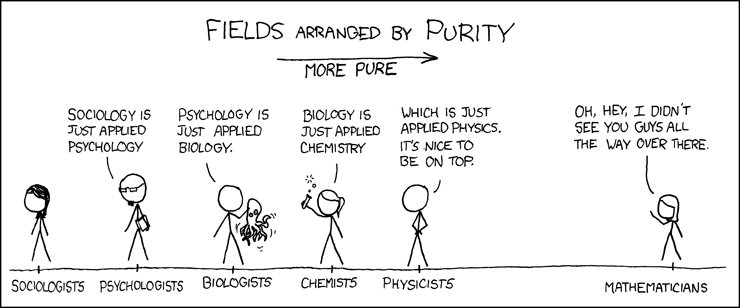
Also, I feel this is relevant:

If you're theoretical and abstractly talking... then of course not, why have different definitions of the same thing. 0.999 is not 1, just as 0.999999 is not 0.999998.
Also equals can be reversed, does 1 equal 0,999?
But if it's something domestic, like measuring your wang, then why not?
In simple math, anything over 0,50 is 1, and under 0,49 is 0.
Also equals can be reversed, does 1 equal 0,999?
But if it's something domestic, like measuring your wang, then why not?
In simple math, anything over 0,50 is 1, and under 0,49 is 0.
I haven't read the page you linked completely (yet?), but from what I've seen so far the proofs of 0.(9) =/= 1 have their flaws pointed out already. Could you please specify a proof which as of yet seems completely sound?Winthrop said:My brother is a math PHD and his friends have degrees in math(not sure what level sorry). They are the ones I was referring to. I do not have access to any of them atm so I can not provide you with there proofs however some of them are similar to the ones on this page http://en.wikipedia.org/wiki/User:ConMan/Proof_that_0.999..._does_not_equal_1#Proving_that_1_does_not_equal_.9.._using_the_definition_of_number_sets:karplas said:I agree the proofs which work with statements like 1/3=0.(3) do not actually give new insights, but only show that the statement 1/3=0.(3) is equivalent to 0.(9)=1. However, I'd like to know what proof(s) you (or the mathematicians (what are their credentials by the way?) you know) can give that "1/3 is not .(3)".