

This just might be the biggest technological invention of the decade, as well as pretty daring, considered to be extremely improbable when the idea first came up over a year ago. And you can read about it right here [http://motorolaara.com/2014/09/21/google-shows-a-glimpse-of-how-its-modular-phone-moonshot-is-progressing/], though I'll explain it in my own words if you don't feel like clicking links today.



Wiki link [http://en.wikipedia.org/wiki/Project_Ara].
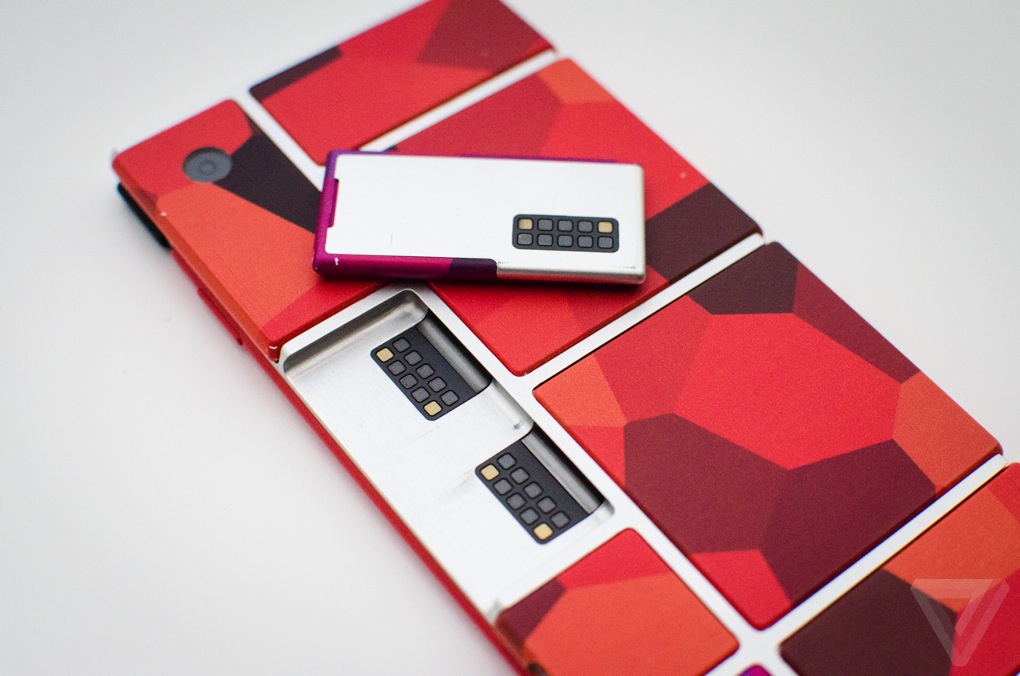
In short, this is modular smartphone designed for Android that starts off as a cheap metal frame upon which you build your ideal phone from a hardware, software, and aesthetic perspective. You can add, remove, and swap modules on the fly while the device is running as if they were LEGO bricks. These pieces could be batteries, processors, cameras, laser pointers, storage, SD card adapters or... well, just be imaginative. There are some advantages to this system.
One: the customer can have whatever they will on their phone, within reason.
Two: reduce the dependence of hardware manufacturers on major smartphone producers, enabling smaller companies to be competitive.
Three: to reduce electronic waste via the reduction of whole phones being trashed for part of it becoming obsolete or damaged.
Four: customization through various methods, including hardware customization and casing customization.
Five: providing cheap smartphone options for other five billion people who still use non-smart cell phones, with prices projected to be as lower than $50 if you want a minimum functionally phone.
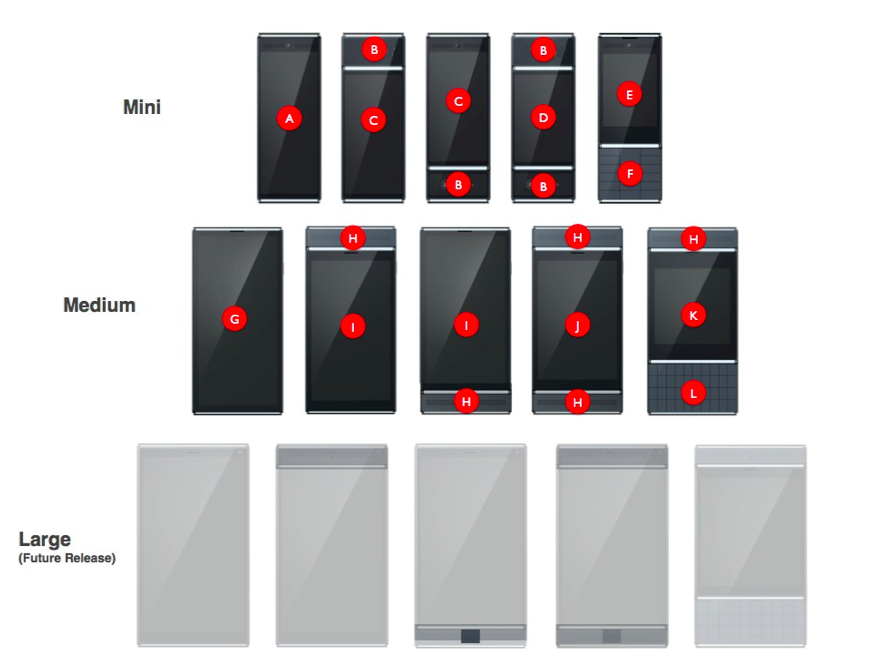
An early version of the Ara Module Development Kit (MDK) is planned for the next conference this year and frames for the phone are planned to be available at the start of 2015. The phone will start with a Mini (2x5) and Normal (3x6) size frame, with a Large size (4x7) coming soon after and a tablet/notebook planned for later. The module sizes are 1x1, 1x2, and 2x2.
The thickness and weight will be around 25% higher compared to your average phone of similar capability, which I think is an okay tradeoff for the modularity. I can just upgrade the parts individually like a PC (but way quicker) instead of having to get a whole new phone. If my phone can't fit everything I want on it, I can just buy more parts and configure it in the morning to suit my day. I'm a little skeptical of what the optimization is going to be like since you're throwing LEGO bricks from a grab bag of different small companies and randomly inserting them on your phone, so we'll see about that.
I find the idea of technology this modular to be pretty exciting. Seeing this applied to other kinds of electronic devices opens up a lot of possibilities.
Wiki link [http://en.wikipedia.org/wiki/Project_Ara].
In short, this is modular smartphone designed for Android that starts off as a cheap metal frame upon which you build your ideal phone from a hardware, software, and aesthetic perspective. You can add, remove, and swap modules on the fly while the device is running as if they were LEGO bricks. These pieces could be batteries, processors, cameras, laser pointers, storage, SD card adapters or... well, just be imaginative. There are some advantages to this system.
One: the customer can have whatever they will on their phone, within reason.
Two: reduce the dependence of hardware manufacturers on major smartphone producers, enabling smaller companies to be competitive.
Three: to reduce electronic waste via the reduction of whole phones being trashed for part of it becoming obsolete or damaged.
Four: customization through various methods, including hardware customization and casing customization.
Five: providing cheap smartphone options for other five billion people who still use non-smart cell phones, with prices projected to be as lower than $50 if you want a minimum functionally phone.
An early version of the Ara Module Development Kit (MDK) is planned for the next conference this year and frames for the phone are planned to be available at the start of 2015. The phone will start with a Mini (2x5) and Normal (3x6) size frame, with a Large size (4x7) coming soon after and a tablet/notebook planned for later. The module sizes are 1x1, 1x2, and 2x2.
The thickness and weight will be around 25% higher compared to your average phone of similar capability, which I think is an okay tradeoff for the modularity. I can just upgrade the parts individually like a PC (but way quicker) instead of having to get a whole new phone. If my phone can't fit everything I want on it, I can just buy more parts and configure it in the morning to suit my day. I'm a little skeptical of what the optimization is going to be like since you're throwing LEGO bricks from a grab bag of different small companies and randomly inserting them on your phone, so we'll see about that.
I find the idea of technology this modular to be pretty exciting. Seeing this applied to other kinds of electronic devices opens up a lot of possibilities.