Sorry that this isn't a subject of much interest or potential discussion, but I have a maths exam tomorrow, and would greatly appreciate it if you put your great minds to good use.
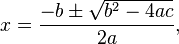
When faced with a quadratic equation such as h^2+7h-72=0 and asked to show that it equals zero, do you simply solve it or must another route of action be taken?
Any help = much appreciated.
EDIT: Also, when dealing with simultaneous equations, what do you do if one of them has squares, such as in:
y=2x+3
x^2+y^2=2
When faced with a quadratic equation such as h^2+7h-72=0 and asked to show that it equals zero, do you simply solve it or must another route of action be taken?
Any help = much appreciated.
EDIT: Also, when dealing with simultaneous equations, what do you do if one of them has squares, such as in:
y=2x+3
x^2+y^2=2