So I have this idea - Codex Complete

Recommended Videos

Sporky111

Digital Wizard
Dec 17, 2008
4,009
0
0
Wow, I had no idea you were such an amazing writer. I wish I could join, but I'm at a nice comfort zone in my RP load and don't want to disrupt that. So, I'll wish you good luck on your first RP, and hope you can make it to 20 pages and farther.
[sup]That sounded a lot cheesier than I intended. . .[/sup]
 

The Hairminator

How about no?
Mar 17, 2009
3,230
0
41
This sounds suspiciously much like Mass Effect. Not saying you copypasted, maybe you just got inspiration?
 

LockHeart

New member
Apr 9, 2009
2,141
0
0
Sporky111 said:
Wow, I had no idea you were such an amazing writer. I wish I could join, but I'm at a nice comfort zone in my RP load and don't want to disrupt that. So, I'll wish you good luck on your first RP, and hope you can make it to 20 pages and farther.
[sup]That sounded a lot cheesier than I intended. . .[/sup]
Haha, cheers. I'm hoping I get some good writers for it :D

The Hairminator said:
This sounds suspiciously much like Mass Effect. Not saying you copypasted, maybe you just got inspiration?
How so? Pretty much all of the space-operas that I've read\seen have things on the same lines, please wait and see the rest of what I have to post before you comment.
 

LockHeart

New member
Apr 9, 2009
2,141
0
0
Time Travelling Toaster said:
Holy crap Lock o_O how long did it take you to write all that up?

Sounds amazing though :D
It took a while :p

But anyhow, here is the second entry :D

Slow and ponderous, the Ra'zel are an incredibly old species with incredibly long lifespans, possibly achieving sentience before all other known races other than the S'Jet. Standing on four thick legs, but capable of rearing back onto two for varying period of time, the Ra'zel do not have hands. Instead, a ring of tentacles surrounding their incredibly sharp beaks give the ability to manipulate objects, and can stretch and mould themselves to a limited degree, while the eye clusters on the sides of their elongated, squid-like heads, are able to focus in alternate directions. When speaking, the Ra'zel do not possess vocal chords in the way that humans and several other species do, instead their voicebox is able to create a wide range of noises over a large number of frequencies - they communicate with their own kind through subtle infra- and ultrasound pulses, while they are able to perfectly mimic human speech.

Highly intelligent, the Ra'zel's brains have been likened to biological computers by many - they have an uncanny ability to quickly and accurately compute equations (for example, plotting ZTT jumps) that would take specialised human Synthetic Intelligences up to 5 minutes to solve. This mathematical genius has allowed them to take a lead in the manufacture of Synthetic and limited Artificial Intelligences, and they have proven remarkably adept at predicting the ways in which these programs will develop once activated. However, despite their ability to compute practically any equation within seconds, the Ra'zel species is, on the whole, slow and conservative in their actions and politics - having lived for such a long time (though no one knows how long), they have come to the conclusion that change is a thing that must be limited and controlled and never taken lightly, hence why despite being an ancient species, they have spread a comparatively short distance from their homeworld. This conservatism is reflected in their politics - leaders are elected form among the Ra'zel colonies not by vote, but by computation: every Ra'zel who votes computes for themselves, which candidate would be preferable; the end result is an entirely uniform decision in favour of one candidate. As a result of this conservatism, they are seen as a reactionary force by a number of the quorum species - of all the races, it was they who most opposed the introduction of humanity so quickly, though they bear humans no ill will.

It was the Molochea race who proposed the idea of the Quorum not long after making First Contact with the Ra'zel. Easily moving over most surfaces, the Molochea, instead of having legs, have a large flexible 'foot', similar to terrestrial snails (though without the slime), that allows them to move over most surfaces. This 'foot' is capable of producing incredible amounts of physical force - with sufficient enough grip, they can even move up walls and across the ceiling, with parts of the 'foot' able to flex into tiny spaces and exert pressure: anchoring them in place until they relieve it. The rest of their body is equally as powerful, having retained the hardiness and physical strength that was required for evolving underwater in a high pressure environment. The Molochea are no longer fully aquarian, having evolved into land-faring creatures and populating both the seas and continents of their homeworld, but have retained the ability to dive (flattening out their 'foot' and undulating it to gain a high level of speed) to great depths or exist comfortably on high gravity worlds, as well as retaining a dual respiratory system, allowing them to breathe underwater. Their body gradually tapers into a torso at the 'front' of the foot, with a pair of powerful arms attached to a blocky torso.

Their method of communication is of some interest - their elongated head tapers into a relatively small mouth (similar to a sea anenome), while their single obsidian eye rests in the center of their head: this eye provides, along with simple clicks and whistles, their sole method of communication, bar sign language and a limited amount of words that their underdeveloped vocal chords are able to form, through the infrared spectrum. After evolving in the deep sea of their homeworld, nature found that simple clicks and bursts of infrared were the most reliable forms of communication, and this has stuck. Automated translator units are able to pick up on the subtle frequencies and provide quick and easy translation into human languages of choice.

The Molochea are generally seen as one of the more progressive races on the Quorum, along with humanity - their (relatively) rapid evolution into creatures able to survive in water and on land has instilled in them an inherent adaptability and willingness to accept changes. They share good relations with humanity, and the two races often support each other in Quorum matters.

The Tanar'i were the third race to join the Quorum, having made contact with the other races after a millenia of peace and galactic stability. Their philosophy has been seen as similar to humanity's - having encountered no other sentient species, they quickly built up a large military to protect themselves from possible threats. Evolving from the apex predator of their homeworld, the Tanar'i have retained many features that give them a fearsome appearance - covered in thick fur (having evolved on a cold planet), their legs are powerful, making them able to sprint or leap at a possible target, while their arms are still able to double up as front legs, increasing running speed. An extra set of arms sprouts from the top of the shoulder blades, with an extra set of hands capable of sprouting razor sharp talons, while their heads feature binocluar vision from a pair of eyes (though more sensitive to infrared than human visible light) and their elongated snouts are filled sharp teeth. Their sense of smell and hearing is highly developed to compensate for their relatively poor sight. Communication is done through a series of tympanic membranes in the throat that allow them to communicate in their own brand of growls, clicks and whistles, while being able to pronounce most human words.

Tanar'i culture is based upon physical and martial ability: to progress in social standing, a Tanar'i must best his peers and sometimes his superiors in ritual combat to prove that they are worthy of an increase in rank. It is an ancient and well-known Tanar'i tradition to hold great tournaments upon where groups of tanar'i (separated by social standing and gender) attempt to outfight their comrades of the same class in an effort to gain appluase and recognition, and greater opportunities for mating - this provides an alternate way to rise in social standing (and is encouraged to maintain genetic diversity and lessen inbreeding). These tournaments are also seen as a way in which a Tanar'i can hone his abilities and strength, meaning that most participants benefit from taking part even if they are not one of the few victors. Single combat against a superior is another matter - a challenge can be made, but cannot be retracted, and losing a bout results in social ridicule for the upstart challenger, while if the challenged is defeated, they are applauded for standing their ground against a worthy adversary, despite their loss in rank. This social phenomena means that tanar'i society remains relatively stable, with relatively few rapid shifts in the social order, though through the generations, new noble families may rise through successive victories in the tournaments.

At the head of the hierarchy is the Emperor - the overall 'alpha male' of the Tanar'i, as well as the supreme military commander of the Imperium's forces. Imperial dynasties often last for generations, as their bloodlines produce some of the strongest, most intelligent specimens of their race. The Emperor can only be unseated by a challenge from a high-ranking noble, and the fight is to the death: again, a stabilising influence on Tanar'i society, although the Machiavellian 'court' politics of Tanar'i nobles are often disguised behind a thin veneer of honour to save face.

As a result of this cultural aspect, many Tanar'i choose to serve in their species' military, which is well-blooded from their experience during the Hancher Crusade. However, there are those who choose to create cultural works and engage in scientific research and trade. Although it is more common for a member of their species to rise in rank through the tournaments, many Tanar'i recognise the important work that their fellows are performing for the Imperium in these fields and often treat them with the according respect.

On the Quorum, the Tanar'i tend to take a centrist position, neither staunchly conservative nor overly progressive - their evolutionary heritage has taught them that rapid change can have disastrous consequences (having seen other apex predators die out because of sudden changes further down the food chain), yet their inherent adaptability as predators has taught them that some changes are inevitable and that adaptation is a must. They supported the Molochea in extending an invitation to humanity to join the Quorum, seeing the need for a break in the deadlock on the council, as well as respecting human martial skill and ingenuity.

The Hancher first came to the attention of the galaxy when they launched their Crusade against the Quorum worlds. Tribal creatures, the Hancher operate under a feudal system not dissimilar to that of the Holy Roman Empire during Earth's European Medieval period - powerful Hancher 'Chieftans' parcel off power and territory to less powerful Hanchar 'Knechts' in return for their loyalty and tithes, who in turn grant smaller amounts of land and power to their warriors and so on. Hancher society is built around the Clans, large feudal groupings of Hancher who are led by their Chief. Formerly, this involved warring with the other Clans over territory and resources, and also for religious reasons. However, when it was discovered that other species inhabited the galaxy, Hancher reaction was mixed. While some Clans began warring with the new comers, yet others renewed their attacks on the others. In time, the Warlord Makkan Gul'den defeated many of the Clans, assimilating them into his own, and forced the remaining Clans to swear fealty to him as Overlord of the Hancher, a feat that had been achieved several times in Hancher history, though generally short-lived. With this complete, Gul'den declared himself Grand Theologist Militant - combining his position as overlord with that of the head of the Unity's priesthood. The Hancher are a spiritual race, with most fervently believing in the Unity - they believe that through death in battle against a worthy opponent, it is possible to transcend the material universe become one with one's ancestors and the galaxy's collective spirit: this is one of the many reasons for the almost perpetual state of warfare between the Clans.

With his dominance over the Hancher race established as both warchief and high priest, Gul'den ordered that missionaries be sent into Quorum space (while the Hancher were still unknown to them) and convert their populace to the ideals of the Unity, aiding the quest for transcendence. However, when it became apparent that this would not happen, Gul'den launched his Grand Crusade against the unprepared races, crushing and occupying many worlds. Although the Quorum's counterattack destroyed their foothold on the occupied worlds, once the battle was taken to Hancher territory the war descended into a gruelling battle of attrition. For a full Terran century, the war raged, until Gul'den's subservient Clan Chieftans (assissted by high-ranking Unity priests who had become convinced that the war would not be successful in spreading their ideal) overthrew and killed him. Subsequently, the Clans fell back into their old habits of warring with one another, while the Quorum races pulled back and waited for the dust to settle. After another 50 years of war, a new Grand Theologist Militant, Skarr Mal'kith, emerged as the feudal leader of the Clans. Knowing that the Quorum races could not be defeated, he sued for peace and offered what reparations he could. His rule has seen the message of the Unity gradually becoming more moderate, though he allows limited warfare among the Clans to allow them to satisfy their religious sensibilities, only stepping in when things are laible to get out of hand. As a result, the Quorum extended and invitation to the Hancher to join as a full member - it was judged that their military strength would be better served in the power structure of the Quorum, and that cultural exchange would gradually aid in moderating the Clans' devout views. It seems that this approach may be working somewhat - a few Hancher fleets have been taking part in anti-pirate operations, and have even been reported as being relatively civil to non-Hancher civilians. Relative being the key term.

At roughly 7' tall, the Hancher are powerful beings, fitting of their warrior culture. Thick skin and bones serve to protect their vitals, while their bodies are covered in thick dark fur, allowing them to survive in a large variety of hostile conditions. Standing on two legs with a long, flexible tail (complete with thick, built up bones, allowing it to be used as a weapon), an angry Hancher, even unarmed, is a serious health risk. Two long tusks jut from their mouths, which are filled with constantly replenished shark-like teeth, and indeed, it was observed on a number of occasions that Hancher driven into a beserker rage would charge their enemies and attempt to gut them with these tusks while beating them with powerful fists. Their sense of smell is good, as is their eyesight, though their hearing is relatively weak. However, this does not seem to impede their combat effectiveness. Interestingly, the Hancher do not seem to die of old age; admittedly, they most often die violent deaths, but there are many highly skilled Hancher warriors, including the current Grand Theologist Militant, who have lived for at least 700 years.

On the Quorum, the Hancher (reflecting their stubborn adherence to religion and tradition) often join the Ra'zel as conservative voices, though the two races are somewhat uneasy of each other. The Hancher, though establishing diplomatic relations with the ITC, are highly suspicious of the upstart humanity, as they feel that humans have not sufficiently proven themselves in battle.

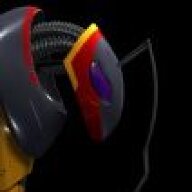
The S'Jet are an enigma - travelling as nomads in their enormous solitary Arks, there seems to be little to no overall S'Jet 'state' or homeworld. Information gleaned from the Ra'zel reveals that when they first started to expand, the S'Jet were the first species that they encountered, meaning that they are far older than any of the other known species in the galaxy. Despite their apparent lack of unity, they are not to be trifled with - during the events of the Crusade, a Hancher fleet was spotted attempting to attack a S'Jet Ark that was passing through one of their systems. Within the space of an hour, the Ark destroyed the fleet while sustaining little, if any, damage.

However, despite this enormous advantage over the other races of the galaxy, the S'Jet seem content to just drift from system to system, trading occasionally, perhaps in pursuit of some unknown purpose, perhaps not. Humanity has limited contact with the S'Jet, usually only when they request permission to pass into Confederacy space. What little communication does occur usually takes the form of trade: the Quorum races are all eager to get their hands (or tentacles) on S'Jet technology (aside from the Hancher, who see such acts as heresy), and it could be said that humanity has cool, but civil, relations with this mysterious species, although no sentient being has ever reported seeing one face-to-face - their contact is made via radio communication or, in the case of trade, metal automata. Some theorise that these automata are the S'Jet, and that they are a race of machine beings. However, these theorists are routinely mocked as charlatans and frauds.

S'Jet Arks are truly wondrous to behold: massive ships, far bigger than anything ever constructed by the Quorum races. The smallest of these ships are easily at least 30km long, with a style of construction that is both beautiful and awe-inspiring in equal measure. Travelling alone, or in pairs on rare occasions, these ships move throughout the galaxy with a majestic grace, yet it would seem that fewer and fewer have been sighted in the last few centuries.
 

SamuelT

Elite Member
Apr 14, 2009
3,324
0
41
Country
Nederland
Don't use the Erealke'ekflskeal method of naming things!

Seriously, it looks all fine, but never use that method of naming. It starts getting confusing and painful after you've read it a few times.
 

LockHeart

New member
Apr 9, 2009
2,141
0
0
Samuel_of_Saruan said:
Don't use the Erealke'ekflskeal method of naming things!

Seriously, it looks all fine, but never use that method of naming. It starts getting confusing and painful after you've read it a few times.
Okay, no more apostrophe'd names :)

Thinking of joining?
 

LockHeart

New member
Apr 9, 2009
2,141
0
0
Right, well I guess this passes as 'tomorrow' by about an hour, so here's the third and final codex entry. Story's coming along nicely :)

Despite the many technological advances throughout the Milky Way, weaponry (on a galactic scale) still mainly revolves around the principle of smashing a solid object with a quicker, more forceful solid object. That is, projectile weapons.

Pulse weapons are widespread and near universal in design - utilising a magazine of caseless cartridges primed with what is colloquially known as Gunpowder 2.0, modern weapons ignite the primer with an electrical pulse in the barrel of the weapon, the explosion produced by the primer provides the projectile with a great deal more force than firearms we see today: on average, roughly twice the power of a .50 BMG cartridge. These come in all shapes and sizes, from pistols to sniper rifles and enjoy a relative lack of recoil due to enchanced gas blowback systems that divert much of the kickback. Easy to use, easy to maintain, easy to kill with. Military spec weapons are often upgraded with enhancements to allow interfacing with HUDs, increasing accuracy.

Heavy weapons have taken a great leap forward from chemical propulsion. Railguns (formally, Magnetic Acceleration Weapon, or MAW) have become the heavy weapon of choice for anyone seeking to cause wholesale destruction. Two electromagnetically charged rails line the barrel of the weapon, while the projectile is given the opposite charge upon pulling the trigger. The subsequent forces generated by the opposing charges propel the projectile to near-relativistic speeds, giving it enough strength to punch clean through reinforced walls, heavy armour and dense foliage. Two varieties of shells can be fired and the two types have separate loading feeds, allowing for the alternate firing of ammunition types: High Explosive Airburst, which can shred scores of infantry and light vehicles, and the even more powerful Electron Compression warhead, which can easily level an entire civilian building or decimate an entire company of enemy soldiers in a single shot. A well-known military tactic is the 'sweep-scorch pattern' - troopers will lay down a base of fire with their pulse rifles in all directions, while the railgun-wielding trooper fires off alternating HE and EC rounds, causing massive casualties on the enemy (rules of engagement permitting).

However, the size of these weapons means that they must either be mounted on heavy vehicles and only the strongest soldiers (often with boosted muscles and skeletons beyond the norm) are able to lift them and withstand the recoil, even in fully assisted combat armour. Even then, a recruit with broken wrists and dislocated shoulders is a common sight in heavy weapons training in most militaries. Yet the devastation that railguns can wreak is immense.

Very large versions of these weapons can often be found mounted on starships as a main offensive weapon.

Grenades have evolved very little from their original designs, aside from having ten times the kill radius. Modern grenades are able to be used as either grenades or mines, and can be set to proximity or timed detonation. Many combat suits provide an integral Y-rack over the spine and shoulders with a pair of indepently targeting grenade launchers that interface with the user's HUD, enabling them to deploy grenades without having to divert their hands from their current task.

Plasma weapons can sometimes be seen in the hands of criminal gangs, as well as a regular feature in specialised anti-armour military units. Giving off a fearful flash and an incredible heat, it is easy to see why plasma weapons are big status symbols among gang members. Shame they only have a limited tactical use. While plasma weapons may be incredibly powerful, destroying everything in range, that range only extends to around 50m, then stops dead. With no reliable way to maintain a strong magnetic field, the superheated gas simply disappates beyond 40m, dissolving harmlessly at 50. This lack of range, combined with the weapon's bulkiness, the occasional tendency of plasma weapons to malfunction and explode and the far greater effective range of other weapons, limits the effective uses of plasma weapons greatly. However, in close quarters, a plasma weapon (colloquially known as a 'melta gun') can reduce practically anything to so much superheated slag, hence their popularity with tank-buster squads.

Similar to plasma weapons, flamethrowers are heat based weapons, but are much rarer. Fuelled by promethium, an advanced form of napalm that burns at an even higher temperature, a flamethrower projects liquid fire which has the ability to stick to surfaces, burning an enemy alive or leaving them so badly wounded that they die of shock. With the promethium tank attached to the weapon itself, a trooper is freed up from carrying a bulky backpack and thus gains mobility, although overall ammunition capacity is lowered. In the right hands, a flamethrower (or 'flamer') can be a devastating psychological weapon against infantry, and can even cook armoured marines in their combat suits. However, it too suffers from range problems (though slightly less so than plasma weapons, a typical gout of burning promethium can reach around 50-60m) and it is a much less attractive option than a plasma weapon as it does not have the same anti-armour capabilities. Can sometimes be found in the hands of civilians on heavily forested colony worlds - it is an invaluable tool for foliage clearance, though precautions must be taken to ensure that the flames do not spread.

Missile launchers have also remained relatively unchanged. Notable differences include variable yield warheads, allowing for maximum devastation of a wide area to a surgical strike within a relatively small kill-zone, and the types of warheads available - HE Airburst (flies upwards before splitting into cluster munitions), armour piercing, variable yield neutron warheads (designed to purge an area of organic life, though its effectiveness can be mitigated by armour suits and fortifications), incendiary (covers an area in a mixture of white phosphorous and promethium); gas (does what it says on the tin); electronic warfare and ECM pods that can scramble enemy communications and combat equipment; and low yield tactical nukes. Smart rocket pods contain limited AI programming that allows them to interface with combat suits, meaning that they can be deployed in one area and can receive orders to provide fire support from a soldier without any physical contact between them.

Electron Compression warheads are unavailable - the rockets lack the extremely high speeds necessary for EC warheads to function.

With so much technology present on the modern battlefield, it has become commonplace for at least one soldier at squad strength to be designated as an ECM specialist. By utilising high spec datahacks and comjacks, the ECM specialist attempts to sabotage enemy communication lines, targeting systems, drones, combat suits and automated weaponry, softening them up for a takedown.

This type of warfare is even more prevalent in ship-to-ship combat, with naval personnel on one side attempting to scramble the communications of the enemy and jam their sensors, while at the same time protecting their own.

Designed to operate autonomously or under remote control, drones have a number of purposes. Scout drones are equipped with a number of ECM pods and operate with shielded internal systems, rendering them almost invisible to radar and other sensors. Their purpose is to survey enemy positions and send reports on troop movements, buildups and reinforcements back to friendly forces. Combat drones, on the other hand, are designed to operate in close support with infantry, providing highly maneuverable, if fragile, assistance. Another class of drones has been designed to provide close air support, bringing high explosive munitions and heavy pulse weaponry to bear against the enemy in the form of airstrikes. These drones are commonly referred to as 'combat aerobots'.

By and large, body armour has remained the same on a civilian and law enforcement level, save for the corresponding increases in toughness to compensate for the increase in firepower. Silksteel-kevlar polymer is the most commonly utilised material to make standard ballistic armour. On a military scale however, battle armour is now commonplace, with select units being equipped with combat suits. However, fighter pilots prefer specially tailored g-suits to help them cope with the fierce g-forces they must endure while dogfighting.

A reinforced silksteel-kevlar suit of armour, with the torso, shoulders, elbows and thighs protected by plasteel carapace. Light enough to allow for a decent level of movement and speed while still affording good protection. The helmet visor often has a limted HUD and in-built communications, allowing an extra degree of accuracy with a weapon via the targeting systems. This is the type of armour generally used by high-end mercs and Colonial Militia units, along with non-Marine naval personnel.

Constructed with an extremely tough Ferro-Ceramic material, the standard ITC military combat suit can be fully sealed against environmental hazards, including hard vacuum, and contains an extremely efficient air filter, designed to remove all harmful particles, gasses and\or substances from the air you breathe. In cases of Extra-Vehicular Activity (EVA), an internal oxygen supply is provided and operates through recycling waste gases, maximising the length of the supply. With this in mind, it is recommended that the suit is kept sealed with the helmet on at all times. The suit's visor is host to the HUD, providing targeting data, satellite imagery and topography, medical readout and IFF (Identify Friend Foe) data. Often includes an integral Y-rack with two grenade launchers linked to a user's HUD to allow hands-free deployment.

Combat suits allow their wearer greater endurance in combat and can assist the user's strength and running speed. In the event of injury, the suit's limited AI medical programme will utilise the first aid suite installed to optimise the user's chance of survival. This is the standard armour for Confederacy Marines, along with some elite Colonial Militia units.

Medical advancements in gene therapy and nanotechnology have raised the average human life expectancy to around 175 years, while the flash-cloning and genetic rewriting, via nanotech, of human organs allows for rejection free transplants.

The rise of affordable in vitro gene therapy (also known as 'geneering') to eliminate genetic disorders has led to the practice becoming widespread among humanity, almost entirely ridding the human race of ailments such as Multiple Sclerosis, Huntingon's Chorea and Motor Neurone disease, as well as providing easy alterations to improve eyesight or avoid baldness in addition to boosting immune function and muscle buildup. The Confederation military offers routine boosting as part of its recruitment, usually to develop sight and hearing, along with a boosted musculature, bone structure and synapse function to allow for better survivability and reaction time. Beyond the embryo stage, these augmentations can take up to 3 months time suspended in a medical tank to reach full capacity. The Human Genome Preservation Act 2240 forbids the altering of the human genome in an effort to preserve humanity's genetic heritage - enhancing is acceptable, adding new genes is not.

Prosthetic limbs have come a long way in the 23rd century - they provide a truly responsive replacement limb with augmented strength, synthetic skin spray allows those affected to hide their augmentations from public view. Again, special clinics offer augmetic replacements for those willing to pay the high cost in credits and limbs. It is far more common to see augmetically enhanced individuals as a result of accidents.

Advances in nanotechnology have aided medical techniques greatly. Once it was established on remote research stations that these nanites would not represent a self-replicating threat to humanity, medical companies began thorough research on their applications in healthcare. The results were twofold: one study bore a prototype Nanotech Stimpack - injecting these nanites into a severely wounded subject would help stabilise and repair the damage that they had suffered; by analysing the host's DNA and chemical markers in the bloodstream, the nanites are able to find places that are in need of repair and also know in what state they should be repaired - no inconvenience of a Ra'zel having human organ tissue grafted into them. However, the Stims would not be enough to save a person's life in the case of critical injury, only sustain them. This is where the second project came in - Medical Nanites take the form of a translucent green roll of bandages. When applied to the skin, or even onto clothing, minute nanite fibres extend out from the sheet and pass painlessly through the skin. Once into deep tissue, they continue to extend, releasing painkillers and antibiotic nanites as they go, before reaching the site of damage, whereby they suffuse themselves into the damaged area and begin to repair it. However, despite this, proper medical supervision is highly advised in the case of serious injuries, should emergency intervention be necessary.

ZTT is the galactic standard for long-haul transportation - it appears that the other races encountered the same issues with superluminal travel as Nigel Isaacs and devised similar solutions. Whatever species the manufacturer may be, ZTT drives all work in roughly the same way - a starship's jump nodes charge with incredibly high levels of energy derived from the craft's He[sup]3[/sup] reactor, creating localised gravitational anomalies. They then concentrate this energy and the anomalies onto a certain point in space, right down to a quantum level, reaching a point of almost infinite mass, whereupon an event horizon is opened and the pattern nodes structure the wormhole around the starship, whereupon the ship arrives at its destination. The entire jump takes around 0.005% of a second. Incredible care muct be taken with computing jump coordinates, rushed calculations could result in jumping into the middle of a star or a planets crust. Each jump can carry a starship around 25 light years, any further and an unacceptably dangerous level of error begins to appear in the jump calculations.

An offshoot of ZTT technology - it was discovered that the gravitational anomalies generated by the energy patterning nodes could be manipulated to create localised distortions in space\time, effectively removing any object caught in the field from the flow of time itself. Further research into this yielded great results in the form of the Zero Tau pod - when supplied with power, any object inside the pod is kept perfectly preserved in the state that it was when it entered until the power is deactivated, at which point the object inside returns to the normal flow of time. This proves useful in passenger, as well as cargo transports and helps to keep costs down - in stasis, passengers don't impact on a ship's life support or supplies while taking up a minimum of ship space, and divert a relatively minimal amount of power from the He[sup]3[/sup] drive core, while perishable goods are kept perfectly preserved. As a result, the price of space travel is generally affordable, though extra expense can be taken to get a private room and supplies throughout the journey.

A knock on effect from the development of Zero Tau technology came with the ability to create localised gravitational distortions through a starship's patterning nodes. This effect allows starship captains to programme minor fluctuations in the nodes, creating a field of standard Earth gravity inside their ship. The reverse is also true, with some lesser-used areas being excepted from regrav in order to save on power.

Practically all starships run on He3 fusion drives: they provide clean, if superheated, non-irradiated exhaust and can grant a relatively efficient delta-V reserve, especially when the gravity warping effects of the patterning nodes come into play - structured gravitational anomalies allow a limited bending of space\time, meaning that a starship can gain a greater speed but expend less fuel in the process. The abundance of He3 in gas giant atmospheres has led to the establishment of many mining platforms, where raw He3 is processed into fuel, ready to fill up thirsty starships. The He3 market is considered one of the most stable in the galaxy, since it is universally required by both starship captains and civilian power stations.

Artificial Intelligence has been proven as an achievable scientific goal by both humanity and the other galactic powers. However, there are Quorum restrictions limiting the development of true AIs.

Ariticial Intelligence has been debated by the scientific community for quite some time, and has recently been shown to be achievable. To construct an AI, a long period of time must be spent compiling painstaking amounts of code into a specially designed computer matrix, built to mirror human neural connections at a quantum level. The base code of an AI originally exists as an adaptive programme that learns through the use of genetic algorithms; once this is uploaded into the system, the learning process is accelerated and, in much the same way as humans, a distinct personality emerges in the program, complete with its own idiosyncrases. Upon gaining language, an AI is able to communicate with others in much the same way as any other person.

However, despite these breakthroughs, Artificial Intelligences are not often used outside of research - the galactic powers consider the possibility of an AI revolt to be too great to allow widespread use outside of behavioural research. Even in this field, AIs are often routinely terminated after the experiments are complete. However, there are limited uses if AIs in the Quorum militaries, usually in the field of intelligence gathering and analysis.

Synthetic Intelligences - or SIs - are far more widespread that true AIs and represent the advancement of interactive user interfaces with strictly limited problem solving and independent thought parameters. SIs are mainly used to manage large systems efficiently, for example a large communications network or an automated factory facility, and are often granted a degree of administrative power to take decisive action in the event of an emergency, i.e. automatic shut downs, the sealing of bulkheads etc. One major area in which SIs are used, is in the computation of complex equations - many starships have an SI interface to aid them in ZTT jumps.
 

LockHeart

New member
Apr 9, 2009
2,141
0
0
Just a general notice here - the storyline's in its final stages so hopefully I should be able to have the proper thread up and running with character sheets later on today :) Also, many thanks to Samuel for kindly agreeing to act as co-GM!