

[HEADING=1]Sub/jective Reviews[/HEADING]
I am starting a new review series that I am going to do every holiday/time off from education. The series will be split into segments, where I discuss the different aspects(gameplay, visuals, audio, story, multiplayer(if any)) of a game in their own given category. Most notably, I will provide what I find to be an objective assessment of those different sections. What this means however, is that I will provide any objective information that I can, which will usually be limited to a list of features, a bug/glitch count during my playthrough and a run-down of the options. I will take both the subjective portion of the game and the objective into account during the final assessment. I will not provide scores, as I am opposed to that idea to begin with, as it causes readers to glaze over key information in any review.
Why am I doing this? Many people are clamouring for game reviews to be more 'objective', so I'll address that wanting, if only to highlight exactly how limited true objectivity is in application to reviewing.
For the time being, I will focus on indie games. I am open to suggestions, so long as the games are available on PC/Steam and so long as they aren't something that has been talked about too much, as I don't believe that I will add anything significant to that discussion.
Why am I doing this? Many people are clamouring for game reviews to be more 'objective', so I'll address that wanting, if only to highlight exactly how limited true objectivity is in application to reviewing.
For the time being, I will focus on indie games. I am open to suggestions, so long as the games are available on PC/Steam and so long as they aren't something that has been talked about too much, as I don't believe that I will add anything significant to that discussion.
Critique is encouraged and appreciated. If you see something you'd like to be added/improved, post ahead!
The PC that the games will be played on:
[li]Intel i5 3470 @ 3.2Ghz Quad Core Processor[/li]
[li]Kingston Hyper-X 2x4GB DDR3 RAM @ 1337Mhz[/li]
[li]Zotac Nvidia Geforce GTX 670 2GB[/li]
[li]Acer 23.6" Monitor 1920x1080 @ 60Hz[/li]
[HEADING=1]Year Walk[/HEADING]
[HEADING=2]Intro![/HEADING]
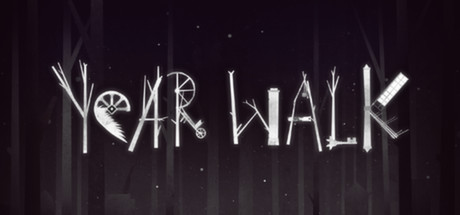
I was initially drawn to Year Walk due to the intriguing aesthetic and subject matter. Northern folklore, particularly Swedish, non-Viking tales rarely get explored in games. It seems that the common consensus is that if it's northern, then it usually involves Valhalla at some point, and Year Walk was refreshingly interesting just because it didn't resort to draw inspiration from that communal pool of ideas that seems endemic to modern gaming. In retrospect however, even that setting is slowly taking the back-seat in AAA development, with standard Tolkien-esque fantasy and grim-dark modernity being the forerunners with little in the way of variety, at least as far as the Western market is concerned.
Year Walk began as a mobile title and has been ported to PC not too long ago. What sets it apart from other such titles is that it isn't a very good mobile game. That is to say, it doesn't rely nor fully capitalise on the platform from which it originated to truly flesh itself out as a mobile-specific experience, beyond a few sections that require tapping or swiping. However, this does prove to be fortunate in terms of the port. The game has, for the most part made a seamless transition, and the core experience would be difficult to disrupt simply by changing platform, as it is a damn good game.
[HEADING=2]Story![/HEADING]
This will be a difficult aspect to pin down. The game favours a minimalistic approach, and it is applied to absolutely everything. Ostensibly, you are playing as a nameless person who undertakes the Year Walk, a ceremony drawn from Swedish folklore that involves communing with strange beasts and undergoing rituals so as to gain the ability to see one year into the future.
There isn't much in terms of encounters with other characters: the game is sparse in its writing, so it conveys the narrative through a purely visual method. You meet strange beasts, and lending to the game's unusual context, everything has an air of the uncanny about it. All the tasks you perform are strange because they appear to serve some higher power, without you being able to comprehend why someone or something would want you to do the task. I'm trying not to spoil anything here, since the game is short and hinges on first-time experience. This doesn't leave a lot of room to truly delve into the story sadly.
Nonetheless, there is a certain amount that can be analysed. The pagan imagery lends itself to unsettle the player, as there is a good amount of familiarity surrounding what you are seeing, but there's just enough of a twist around the creature, or the building to be able to make you feel uneasy. This is the crux of what sells the game's atmosphere: everything is steeped in this design philosophy that what you are seeing is mightier than you are, and that you are ultimately unable to truly comprehend it, with the only certainty being that you must continue on with the Year Walk.
The only time the game hints at a driving force(beyond the fact that given the chance, everyone would want to find out what would happen to them in the future: the narrative doesn't rely on a grand explanation and keeps things relatively grounded in terms of motivation) is at the very end. This seems to lead on into a new game+ mode, which I initially thought signified the end of the game. For those of you prospective players, I'd recommend continuing after the game 'ends', as it grants the story additional depth and leads to a more existentialist and personal outlook towards a person being granted the ability of foresight.
What makes the game truly stand out is the atmosphere. At times, it can be banal, serene or sterile, and at other times it can become downright alien, unnerving and creepy. The game is able to go between these states as you progress, with the détente between the boring and the weird gradually shortening as you near the conclusion. Were the game longer, then perhaps this effect would eventually begin to break down at some point, but due to its dedication to minimalism, the atmosphere is intense and inviting. Regardless of what is happening, the excellent visuals, audio and the situation all contribute towards making you want to invest in what is happening right now, and the game can masterfully set up jump scares and tense promenades across the forest.
[HEADING=2]Gameplay![/HEADING]
Year Walk is most-closely related to old-school point and click adventure games in terms of its mechanics. At any one point, you are doing a puzzle which requires you to either find something in the forest or figure out a riddle. The strong point of the game is that everything is visual. Whilst this can lead to frustrating episodes where you are running around the forest, trying to figure out what progresses the story forward, these moments are rare and they do make things feel like a more enveloping, visual experience.
What's nice is that the game's length means that everything is tight and self-contained. There are no arbitrary additions that would otherwise hurt the pacing: everything contributes the story one way or another, and there aren't enough elements to mess about with that it becomes problematic. The pacing is also well done too, allowing the atmosphere to retain it's presence and maintain the player entranced through the presentation. There are no button mashing segments or any other occasions when you are supposed to think quick on your feet, so visuals, the audio and the pacing continue to grip you throughout.
The addition of hints in the game also makes sure that you're never stuck on any one puzzle, which reflects a confidence in the provided experience by the developers. Though the inclusion thereof may prove to be polarising. Effectively, this would mark the game closer to a 'walking simulator' in the vein of Gone Home or Dear Esther(if one were to use the hints throughout). However, what I personally feel distinguishes Year Walk from that sub-genre is that the puzzles themselves are thematic and entrenched in Swedish folklore. It's never just a matter of finding x for y, it always feels appropriate: that you are performing a task given to you to by a mystical being, and not that the developers couldn't figure out another way in which to lurch the story forward.
[HEADING=2]Objective Assessment:[/HEADING]
No re-bindable keys. Permanently fixed to WASD and a mouse.
[HEADING=2]Visuals![/HEADING]
This is arguably the most striking aspect of the game. The aesthetic employs a rustic feel to it: everything seems natural, but also brutal. There's a deliberate emphasis on harsh edges and generally unwelcoming shapes. The style is reminiscent of cutout animations, but instead of being just a crutch, it builds towards the game's atmosphere. It adds to the oddness when something is looking at you, and its limbs and appendages seem to be able to act independent of one another, as if they are dislocated or manipulated by another force separate from the entity.
The style is also consistent. Snow is present throughout the forest, with a deliberate focus being placed on employing a brown colour palette to convey the harshness of winter and the exclusionary feeling of being lost in a forest. In having such a drab palette, the forest becomes a giant, autonomous creature that the player traverses. It almost seems never-ending and that you are not only indulging in the games of its denizens, but that the forest itself has a stake in the Year Walk as well. Alternatively, the forest can be seen as a reluctant assistant, in relation to the game's conclusion.
From a more pragmatic perspective, the visuals also aid the gameplay. Again, in enforcing the philosophy of minimalism everywhere, the game benefits from being tightly designed. Due to the fact that the visuals are clean and harsh, the puzzles themselves seldom require for you to go pixel-hunting for an object lost at a random location in the forest. Everything is clean and concise: all of the visuals are working together to help you along on the specific experience that the developers have crafted for you to indulge in.
[HEADING=2]Objective Assessment:[/HEADING]
Several resolution options available, as well as many different aspect ratios. Choice between Windowed mode or Fullscreen, no Borderless. Three graphical settings are available: High/Medium/Low, but since the game is 2D, it hardly matters.
[HEADING=2]Audio![/HEADING]
Much like the visuals, the sound design is rudimentary without being deprived of meaning. What I mean by this is that it's simple and effective, but that it goes along with the aesthetic, sometimes feeling like a direct transcription, as if the visuals were converted into music. Due to this simplicity, the music and the sounds can shift from being comforting and sheltered to creepy and meaningful. Journeying around the forest results in the music being gentle but urgent, however when you encounter an ancient being, the sounds become discordant whilst still slightly melodic, which accurately reinforces the atmosphere in conjunction with the visuals.
There is also a nifty amount of trickery going on, with the audio frequently sounding constrained. Instead of being a technical problem, this allows for the atmosphere to be directed towards a more enclosed, claustrophobic nature. The audio effectively acts as a visual cue for the narrative, and sometimes even directly factors into gameplay.
[HEADING=2]Objective Assessment:[/HEADING]
No audio sliders at all.
[HEADING=2]Tangent/Thematic Discussion![/HEADING]
Year Walk emanates the same design philosophy as Portal. Both games employ tight structure and a self-contained narrative, which leads to a more effective end experience. Whilst Year Walk doesn't have the grace to be allowed the same opportunities as the Portal development team had, it still serves as a testament that an experience can be striking without having to arbitrarily inflate the play time. That is to say, the design philosophy still leads to a satisfying end.
Another thing I'd like to discuss would be the nature of adventure games. I've mentioned it several times throughout this review that I find Year Walk to be an engaging experience, even if its design is that of old-school adventure games. It left me wondering as to whether or not those story-tellers of old really needed puzzles to be engaging. Back when it was still a burgeoning genre, adventure games required gameplay of some sort to differentiate itself from a digital choose-your-own-adventure novel, but with the advent of Gone Home and even The Walking Dead, two games which could be considered as leading the renaissance of the genre, gameplay hinging on having the player traipse back and forth to progress the story is slowly beginning to take a back seat. It is ultimately a good thing, but I feel that Year Walk offers us an alternative. Its puzzles were never incredibly unintuitive thanks to the visual and audio cues, and due to the hints system. It allows to choose how you see the game: as a 'walking simulator'(barring The Walking Dead's decisions and dialogue systems, the core gameplay was essentially this, action segments notwithstanding) or as a refined old-school adventure game. I am glad that this genre is undergoing an evolution, but I feel that more games should follow Year Walk's example, after all: this was constructed by about four people and barely outlasts a movie: if this concept were to be tackled with a bigger budget, then perhaps an engaging, personal story could be easily married with concise gameplay?
[HEADING=1]Final Assessment![/HEADING]
Year Walk is fantastic little experience, steeped in a thick, enthralling atmosphere. Whilst the narrative itself isn't particularly strong, the unique aesthetic coupled with the equally cleverly subtle soundtrack leave a worthy little experience. The gameplay, whilst occasionally archaic, keeps up a decent pace and keeps the game going not as a product, but as a true experience. One of its only drawbacks is its length: at only 2 hours or so, the game lacks the proper replay value to justify itself pragmatically.
However, if you don't mind taking part in a mesmerising little experience, it is truly worth your time. If not only to stand up as a great example of the importance of minimalist philosophy in games design, it deserves to be noted due to its unique, specifically-Swedish subject matter, placing it amongst other culturally enlightening games such as Papa & Yo and Never Alone.
[HEADING=2]Final Objective Assessment![/HEADING]
Little no settings options. At £4.79, you get a rate of about £2.395, which is still cheaper than going to see a movie.