US 2024 Presidential Election

Recommended Videos

Hades

Elite Member
Mar 8, 2013
3,315
2,516
118
Country
The Netherlands
Great but that's too little too late. The American public's chance to reject him was during the election, not months after. Their approval simple isn't important anymore. Trump doesn't need to run again so the only downside is that it doesn't look pretty.

Most people who answer such approval polling should consider they either voted for Trump or refused to vote against him, so they can stuff their disapproval up their ass and stew in the chaos of their own making.
 

XsjadoBlayde

~ just another dread messenger & artisanal kunt ~
Apr 29, 2020
3,906
3,999
118

don't have anything to say, watch it or don't it ain't stopping or slowing down

not something they'd do unless they believed they ain't losing power at all in future. the fash creep further still
 
Last edited:

Agema

Overhead a rainbow appears... in black and white
Legacy
Mar 3, 2009
10,996
7,955
118
not something they'd do unless they believed they ain't losing power at all in future. the fash creep further still
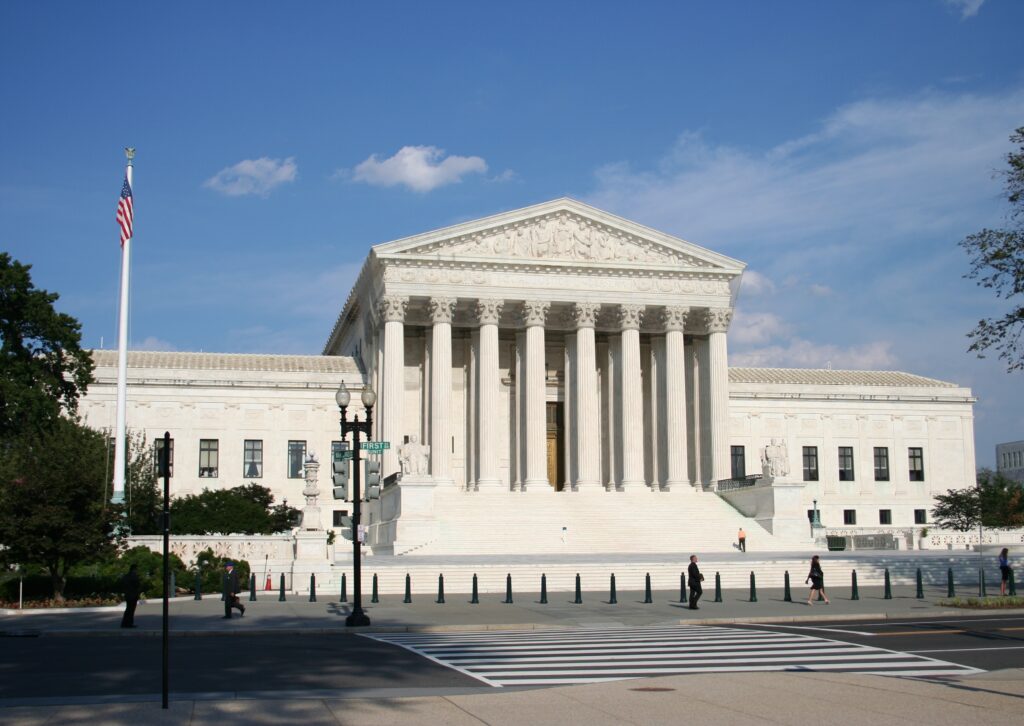
Well, not quite. The point of nobbling the courts is that anything they decide is hellishly hard to undo. Essentially, a future Supreme Court needs to undo it.

The Democrats have tools by which they could undo this faster than average but they are themselves not exactly rule of law and democracy orientated. Essentially, they need to control all branches of government and impeach or threaten out justices they don't like and replace them, or they expand SCOTUS to, say, 15 justices and just shove in 6 loyalists. Neither is a good look unless the Democrats can also rely on the public being supportive in a partisan way, and besides, the Democrats as are now are laughable weaklings who would refuse to take the necessary steps to defend themselves and the USA anyway.

However, we are potentially seeing SCOTUS give up any pretense of neutral legal observation and just rubber stamp whatever the Republican monarch demands.
 
  • Like
Reactions: XsjadoBlayde

XsjadoBlayde

~ just another dread messenger & artisanal kunt ~
Apr 29, 2020
3,906
3,999
118
Well, not quite. The point of nobbling the courts is that anything they decide is hellishly hard to undo. Essentially, a future Supreme Court needs to undo it.

The Democrats have tools by which they could undo this faster than average but they are themselves not exactly rule of law and democracy orientated. Essentially, they need to control all branches of government and impeach or threaten out justices they don't like and replace them, or they expand SCOTUS to, say, 15 justices and just shove in 6 loyalists. Neither is a good look unless the Democrats can also rely on the public being supportive in a partisan way, and besides, the Democrats as are now are laughable weaklings who would refuse to take the necessary steps to defend themselves and the USA anyway.

However, we are potentially seeing SCOTUS give up any pretense of neutral legal observation and just rubber stamp whatever the Republican monarch demands.
sorry, was too vague with words as the edit timer was on its last minute while typing, I meant in the sense of this removes one of the republican's favourite tools they historically leant on to mess with the occasional few good changes Dems try to implement when the gop are out of leadership, all but saying they don't see any further use for it. seems in various ways to imply future opposition ever taking back power is just not a concern no more.

have you ever heard of 'Unitary Executive Theory'? it's been part of the long term goals the main guy behind getting the supreme court packed with reactionary right(and now trump) loyalists, Leonard Leo been successfully working towards for longer than trump was even aware of politics (funded by many billionaire interests including our old nazi-memorabilia-collecting friend Harlen Crow)


What Is Unitary Executive Theory? How is Trump Using It to Push His Agenda?


Since taking office, President Donald Trump has executed a whirlwind of dismissals across the federal government that violated federal statutes and decreed numerous executive orders, including one that blatantly defied the plain language of the Constitution.

Behind the seemingly scatter-shot opening acts of his second administration, legal analysts see a common goal: to test a once-fringe legal theory which asserts that the president has unlimited power to control the actions of the four million people who make up the executive branch.

If courts — specifically the Republican-appointed majority of the Supreme Court — uphold arguments based on the so-called “unitary executive theory,” it would give Trump and subsequent presidents unprecedented power to remove and replace any federal employee and impose their will on every decision in every agency.

Rulings in favor of the Trump administration would also further jeopardize the independence of key regulatory agencies that are susceptible to conflicts of interest and political interference, like the Federal Election Commission, which oversees federal elections and campaign finance laws.


How Trump is advancing the theory

Trump and his administration have furthered the theory by repeatedly invoking Article II of the Constitution, which vests executive power in the president, to justify the recent dismissals of federal officials. They have framed the article as allowing the president to use the whole of the executive branch for his political ends.

For example, the White House Feb. 18 invoked the article to rationalize an executive order signed that same day that asserted the president’s authority over almost all regulatory agencies that were created by Congress to act independently, or semi-independently, from the president.

Frank Bowman, a scholar of constitutional and criminal law at the University of Missouri School of Law, told Democracy Docket he believes the executive order is a step toward “an open declaration of dictatorship.”

“In essence, what he’s saying is, ‘I am the law. My will is the law. My view of what the law is the only view that can ever be expressed,’” Bowman said.


Origins of the unitary executive theory

The theory has its roots in the aggressive assertions of presidential power in the 20th century, especially throughout the Nixon administration, but it emerged as an unorthodox legal framework during the Reagan administration and gathered strength with subsequent presidencies.

The framework gained significant traction during George W. Bush’s presidency, as it was key to his administration’s attempt to legitimize unprecedented presidential powers, including those over the use of military force, state-sponsored kidnapping, the detention and interrogation of prisoners and intelligence gathering.

There isn’t one set interpretation of the theory. At minimum, its proponents generally believe Article II allows the president to remove all executive branch officers. However, there are adherents, including Trump and many of his allies, who believe the president retains all the executive power and can control all officers and agencies.

Bowman said he believes the theory falls apart “under even rudimentary examination,” noting that it conflicts with the basic checks to executive power that are intrinsic to the Constitution.

For example, the Appointments Clause of the Constitution only allows Congress to create federal offices and define their functions and jurisdiction and specifies that lawmakers can determine how officers are appointed to their offices.


How Trump is going beyond the theory

New York University School of Law professor Noah Rosenblum told Democracy Docket that Trump’s idea of executive power is in many ways an expansive version of the traditional understanding of the unitary executive theory.

“Until recently, I think most of us would have said unitary executive theory was obviously a hugely sweeping claim of presidential power that how could you possibly ask for more,” Rosenblum said, “but Donald Trump is making different claims.”

“Until recently, I think most of us would have said unitary executive theory was obviously a hugely sweeping claim of presidential power that how could you possibly ask for more,” Rosenblum said, “but Donald Trump is making different claims.”

He noted that the White House, in addition to invoking Article II, attempted to justify Trump’s Feb. 18 executive order against independent agencies by referring to him as “the democratically elected President.”

“That is an appeal to democratic legitimacy, not the Constitution,” Rosenblum said. “He’s saying, ‘I was chosen by you to be the leader, so I’m in charge. I can do whatever I want.’”

Not satisfied with having supreme control over the executive branch, Trump is attempting to usurp Congress’ power of the purse by impounding federal funds and encroaching on its ability to create federal offices by forming the Department of Government Efficiency to dissolve agencies created by the legislative branch.

The administration is also openly threatening to ignore the court’s power to review the actions of the government to ensure they are lawful, as seen by Vice President JD Vance stating earlier in February that “Judges aren’t allowed to control the executive branch’s legitimate power.”

Most incendiary, Trump on Feb. 15 put the rule of law — the foundation of our constitutional order — under the guillotine with a Napoleonic assertion that “He who saves his Country does not violate any Law.”


Supreme Court’s receptiveness to the theory

Bowman said that before the Republican-majority on the Supreme Court granted the president absolute immunity from criminal prosecution for official functions in Trump v. U.S. last year, he would have said SCOTUS wouldn’t be receptive to most of Trump’s arguments. Now, he thinks they may be.

Rosenblum and his colleagues have argued the unitary executive theory has been guiding the Roberts Court over the past two decades, and he told Democracy Docket that he does not expect the court to significantly deviate from the theory in response to Trump’s challenges.

In past decisions, like Humphrey’s Executor v. U.S., SCOTUS has prevented presidents from dismissing specific types of federal officials, such as those on multi-member independent administrative bodies, for causes that were not specified in law by Congress.

In more recent opinions, justices have maintained precedent set by previous rulings while at the same time expanding the president’s authority to remove other types of federal officials and giving him increased control over the executive branch.

Trump’s Department of Justice has relied on those recent opinions and Trump v. U.S. in its petition for SCOTUS to weigh in on the recent dismissal of the head of the nation’s top independent federal investigative and prosecutorial agency.

The petition may mark the first Supreme Court test of Trump’s second-term agenda and his goal to expand presidential powers.
Further reading on Leo from before this presidency (it's too long to copy paste in one post)

here's trump admitting to it during one of his tantrums;

archived option to dodge paywall;


a copy paste missing from previous post edit as didn't have time to add;


SCOTUS Limits Federal Judges’ Ability to Block Executive Actions Nationwide

June 27, 2025


In a sweeping ruling, the Supreme Court limited the ability of federal judges to block executive actions throughout the country through nationwide injunctions, greatly affecting how parties seek judicial relief going forward.

The court’s 6-3 ruling Friday, with all six GOP-appointed justices in the majority, deals a significant blow to legal challenges against President Donald Trump’s extreme executive orders and other actions, many of which have been blocked or temporarily put on hold through nationwide injunctions.

The ruling “is an existential threat to the rule of law,” Justice Ketanji Brown Jackson noted in a dissent.

Not long after the ruling, Trump claimed that his administration was now free to move ahead in amassing power on a range of fronts.

Nationwide, or universal, injunctions prevent the government from enforcing a law, regulation, or policy across the entire U.S. — not just against the specific parties involved in the lawsuit, and not just in the districts where they’re issued.

In a majority opinion written by Justice Amy Coney Barrett, the court wrote that nationwide injunctions “likely exceed the equitable authority that Congress has given to federal courts.”

“The bottom line? The universal injunction was conspicuously nonexistent for most of our Nation’s history,” Barrett wrote.

Friday’s decision was over Trump’s executive order aiming to deny citizenship to children who are born on U.S. soil to parents who are in the country illegally or temporarily. His order directly challenged the 14th Amendment, which states that everyone born on U.S. territory is a citizen, regardless of their descent.

The court’s ruling does not address the underlying constitutionality and merits of Trump’s order. It instead stayed nationwide injunctions issued by federal judges in Maryland, Massachusetts and New Hampshire.

However, the court specified that Trump’s order could take effect in 30 days.

The lower court orders prevented federal agencies from carrying out Trump’s birthright citizenship order anywhere in the country. The Department of Justice (DOJ) challenged the orders by asking the Supreme Court in an emergency application whether judges can grant relief that applies to parties who are not litigating before them.

The court said the orders now only apply to the plaintiffs who sued.

“The gamesmanship in this request is apparent and the Government makes no attempt to hide it,” Justice Sonia Sotomayor wrote in a dissent joined by Justices Elena Kagan and Jackson. “Yet, shamefully, this Court plays along.”

Sotomayor added that the ruling “disregards basic principles of equity as well as the long history of injunctive relief granted to nonparties.”

Sotomayor notably did not include the traditional “respectfully” to conclude her dissent.

In a separate dissenting opinion, Jackson wrote that the court’s decision poses “an existential threat to the rule of law” by allowing the executive branch to “violate the Constitution with respect to anyone who has not yet sued.”

“It is important to recognize that the Executive’s bid to vanquish so-called ‘universal injunctions’ is, at bottom, a request for this Court’s permission to engage in unlawful behavior,” Jackson added.

During a press conference Friday, Trump said the Supreme Court “delivered a monumental victory for the Constitution, the separation of powers and the rule of law in striking down the excessive use of nationwide injunctions to interfere with the normal function of the executive branch.”

In reacting to the ruling, Trump repeated his attacks on federal judges, calling them “radical” and their rulings “a grave threat to democracy.”

The president jumped on the ruling as giving him complete freedom to plow ahead with many of the policies that have made up his unprecedented power grab and that had been blocked by the courts.

He falsely said that the Supreme Court has allowed his administration to proceed with ending birthright citizenship. He also named ceasing funding for sanctuary cities, suspending refugee resettlement and cutting funding for transgender healthcare as areas where his administration can move ahead unfettered.

“Thanks to this decision, we can now properly file to proceed with these numerous policies and those that have been wrongly enjoined on a nationwide basis,” Trump said. “This is a decision that covers a tremendous amount of territory.”

The lower court rulings, while now limited, remain in effect, and additional plaintiffs will still be allowed to sue the Trump administration over the birthright citizenship order and other actions.

Attorney General Pam Bondi said the Supreme Court will likely decide the merits of Trump’s birthright citizenship order during its next session, which begins in October.

Legal experts noted that the ruling will have a cascading effect on other legal challenges to Trump’s policies that have involved universal injunctions, such as his efforts to mass fire federal workers, cut diversity equity and inclusion programs and change federal research grants standards.

Since January, federal judges have issued at least 25 universal injunctions in challenges to Trump policies, according to the Congressional Research Service.

It’s unclear how widespread relief from a potentially unconstitutional act by the government will now be sought in light of the court’s decision. The ruling may lead to an increase in court cases throughout the country as people seek the same relief in each circuit court.

Justice Brett Kavanaugh suggested that plaintiffs could pursue relief under class-action lawsuits or could ask courts to set aside new agency rules under the Administrative Procedure Act.

The court left open the possibility of nationwide relief in lawsuits brought by state governments.

Just hours after the court’s decision, several civil rights organizations filed amended complaints asking courts to certify a nationwide class of babies and expecting parents who are subject to Trump’s order.

In a rare move, the Supreme Court held oral arguments on the DOJ’s application in May. Normally, emergency applications are resolved through unsigned orders with limited briefing and no oral argument.

During arguments, Solicitor General John Sauer previewed how the Department of Justice (DOJ) will fight potential class action lawsuits against Trump’s order. He said it will likely challenge the commonality and typicality of class members, two crucial elements that must be met for a lawsuit to proceed as a class action.

As an example, Sauer said the DOJ may allege that expecting mothers in the country temporarily may not be in the same class as expecting mothers who are in the country illegally.

In a statement, the Center For American Progress (CAP) said the ruling “rubber-stamps President Donald Trump’s efforts to undermine our nation’s rule of law.

“It upends the very function of the Constitution and cedes unmeasured power to a president who chooses to act unconstitutionally,” CAP said.

Nationwide injunctions have grown more common over recent decades and have been sought by both liberal and conservatives to halt the policies of presidents of both parties.

Legal experts across the ideological spectrum have expressed concerns about the use of nationwide injunctions, saying they promote forum shopping and politicization of the judiciary.

Other experts say they are necessary in rare cases to protect civil liberties throughout the country and avoid a patchwork of conflicting judicial rulings.

 
Last edited:

Trunkage

Nascent Orca
Legacy
Jun 21, 2012
9,648
3,265
118
Brisbane
Gender
Cyborg
Great but that's too little too late. The American public's chance to reject him was during the election, not months after. Their approval simple isn't important anymore. Trump doesn't need to run again so the only downside is that it doesn't look pretty.

Most people who answer such approval polling should consider they either voted for Trump or refused to vote against him, so they can stuff their disapproval up their ass and stew in the chaos of their own making.
Most people who voted for Trump did not vote for his policies. They voted against the current system and hoped Trump would destroy it

Even with low approval ratings, those that disapprove of Trump would still vote for him

Approval ratings literally do not matter and are not representing how people vote.
 
  • Like
Reactions: Casual Shinji

Agema

Overhead a rainbow appears... in black and white
Legacy
Mar 3, 2009
10,996
7,955
118
have you ever heard of 'Unitary Executive Theory'? it's been part of the long term goals the main guy behind getting the supreme court packed with reactionary right(and now trump) loyalists, Leonard Leo been successfully working towards for longer than trump was even aware of politics (funded by many billionaire interests including our old nazi-memorabilia-collecting friend Harlen Crow)
Yes, I know about this. The real bulwark against this should (in theory) be Congress, because despite the conflict with the courts, it is actually Congressional powers that are mainly usurped by this sort of thing. Normally, you would expect any body to defend its own power but I think it's pretty clear the current crowd would rather get with the programme and bend the knee.

seems in various ways to imply future opposition ever taking back power is just not a concern no more.
Yes and no.

The US system is based on gridlock. It's relatively easy to block anything happening. Thus the Republicans might accept that the Democrats will win elections, but what the Democrats probably won't do for a substantial time is win enough power. Roe v. Wade took 50 years to overturn.

Loaded SCOTUS is going to fuck the Democrats again, and again, and again for years on end. If the Democrats want to stop this, they are going to have to do something extraordinarily radical. But how? If the Republicans hold the Senate, the Republicans are laughing as they control appointments to SCOTUS, or indeed almost anything else. And the Republicans have a big advantage in the Senate because of all the low-population red states. Plus that Republicans - reasonably - will be predicting that all those milquetoast moderates in the Democratic Party will ensure they never do anything remotely risky: people who would rather sternly object to than fight tyrants until their necks are under his bootheel.
 
  • Like
Reactions: XsjadoBlayde

Hades

Elite Member
Mar 8, 2013
3,315
2,516
118
Country
The Netherlands
Most people who voted for Trump did not vote for his policies. They voted against the current system and hoped Trump would destroy it

Even with low approval ratings, those that disapprove of Trump would still vote for him

Approval ratings literally do not matter and are not representing how people vote.
I think I have more respect for the drooling simpletons who really do believe in Trump and his policies. At least they believe it will help rather than chose to set everything on fire just because they're grumpy. All the more so because Trump is an escalation of everything they claim to hate about the current system. Both morally and tactically bankrupt.
 

tstorm823

Elite Member
Legacy
Aug 4, 2011
8,664
1,013
118
Country
USA
I think I have more respect for the drooling simpletons who really do believe in Trump and his policies. At least they believe it will help rather than chose to set everything on fire just because they're grumpy. All the more so because Trump is an escalation of everything they claim to hate about the current system. Both morally and tactically bankrupt.
But how do you cope when things do get better?
 

Silvanus

Elite Member
Legacy
Jan 15, 2013
14,109
7,273
118
Country
United Kingdom
But how do you cope when things do get better?
That'd depend on what you mean by "better". For whom, and how? Your version of "better" is exclusionary and cruel, so i wouldn't share the same value judgements.

Besides, you say this as if he's launching some new, untested project. But he's already had four years. Better never came then, and it won't now.
 

Hades

Elite Member
Mar 8, 2013
3,315
2,516
118
Country
The Netherlands
But how do you cope when things do get better?
depends. I can for example admit Trump and that piece of filth Vance havent Talked about stealing Greenland for a a while but until there is an apology I’m not exactly going to forgive it. And I admit Trump did the bare minimum of behaving himself this week but his tone on Putin hasn’t changed much.

Right now the international reputation of the US is still dirt, civil divisions are still close to the breaking point and Trump hasn’t suddenly became pro democracy
 

tstorm823

Elite Member
Legacy
Aug 4, 2011
8,664
1,013
118
Country
USA
Better never came then, and it won't now.
Better did come last time, pre-covid.
depends. I can for example admit Trump and that piece of filth Vance havent Talked about stealing Greenland for a a while but until there is an apology I’m not exactly going to forgive it. And I admit Trump did the bare minimum of behaving himself this week but his tone on Putin hasn’t changed much.

Right now the international reputation of the US is still dirt, civil divisions are still close to the breaking point and Trump hasn’t suddenly became pro democracy
Oh, you misunderstand. I don't mean Trump will be better by your standards of behavior, I mean in actual results. The things you want to happen destroy nations, the things you hate bring peace and prosperity. The question is how do you cope when someone does all the things you hate but the people get happier, healthier, and more prosperous?
 

Silvanus

Elite Member
Legacy
Jan 15, 2013
14,109
7,273
118
Country
United Kingdom
Better did come last time, pre-covid.
For whom and in what sense? In a sense that both you and Hades (or me, for that matter) would consider 'better'?

The question is how do you cope when someone does all the things you hate but the people* get happier, healthier, and more prosperous?
* "the people" meaning a subset of people you care about-- the in-groups-- while others get shafted.
 

Hades

Elite Member
Mar 8, 2013
3,315
2,516
118
Country
The Netherlands
Better did come last time, pre-covid.

Oh, you misunderstand. I don't mean Trump will be better by your standards of behavior, I mean in actual results. The things you want to happen destroy nations, the things you hate bring peace and prosperity. The question is how do you cope when someone does all the things you hate but the people get happier, healthier, and more prosperous?
peace in Europe is a result al in itself, as are the European combination of civil rights, consumer protection and democratic conduct.

Also the collapse of the alliances the US has is the conventional standard rather than my personal one, and it’s never been weaker since the anti European vermin took power

But the far right has never brought prosperity. It won’t do so now
 

The Rogue Wolf

Stealthy Carnivore
Legacy
Nov 25, 2007
18,491
11,569
118
Stalking the Digital Tundra
Gender
✅

tstorm823

Elite Member
Legacy
Aug 4, 2011
8,664
1,013
118
Country
USA
For whom and in what sense? In a sense that both you and Hades (or me, for that matter) would consider 'better'?
From 2017 when he took office through 2019 before the pandemic started, we had unemployment down, real wages up, GINI coefficient down, violent crime down, property crime down.

I could also say things about foreign policy and immigration, but you'd likely get picky about the specifics, so lets stick with things you can't possibly be mad about.
But the far right has never brought prosperity. It won’t do so now
I agree with this entirely. But neither Donald Trump nor most of the people you think are far right actually are though. A reasonable person could see reasonable outcomes reached by their political opponents and think "hmmm, maybe they aren't actually fascists". You, however, I expect to find ways to rationalize how reasonable results are actually the collapse of western civilization. Congratulations, I officially confer upon you the title of Rush Limbaugh Jr.
Here's more than half a million people who are not happier, healthier or more prosperous.

Why are you so sure of this? That is 5% of the entire population of Haiti. Why are you certain that the US just claiming these people in perpetuity is good for them? It's almost certainly bad for Haiti.
 

Agema

Overhead a rainbow appears... in black and white
Legacy
Mar 3, 2009
10,996
7,955
118
From 2017 when he took office through 2019 before the pandemic started, we had...

unemployment down
Unexceptionally, yes.

real wages up
Unexceptionally, yes.

GINI coefficient down
Data says no.

violent crime down
Data says meh.

property crime down.
Unexceptionally, yes.

So, two out of those five are either false or dubious. Three are true, although follow long-running trends preceding Trump thus must be questionable to credit to him.

The question is how do you cope when someone does all the things you hate but the people get happier, healthier, and more prosperous?
Is that a question you ever ask yourself?
 

tstorm823

Elite Member
Legacy
Aug 4, 2011
8,664
1,013
118
Country
USA
Interesting. I'll revise that out of my rant. I'm certainly not making it up, there are sources that display otherwise, but I'd say you've got the more reliable thing here, and one that wouldn't have been showing 2019 data when I first made the observation as they seem to take their time before publishing, probably a good thing.
So, two out of those five are either false or dubious.
The murder rate spiked up in 2016, and then dropped over 5% from 2017 to 2019. The rape rate dropped like 25% over the same period. I hardly call that "meh" or "dubious".
Is that a question you ever ask yourself?
That's not really a thing, cause I'm not an idealogue. If something works (without murdering people), I'm not going to hate it, and am reasonably content to let it stand until there is a compelling reason to do different. That's basically what conservatism is.