Could you link these stories?
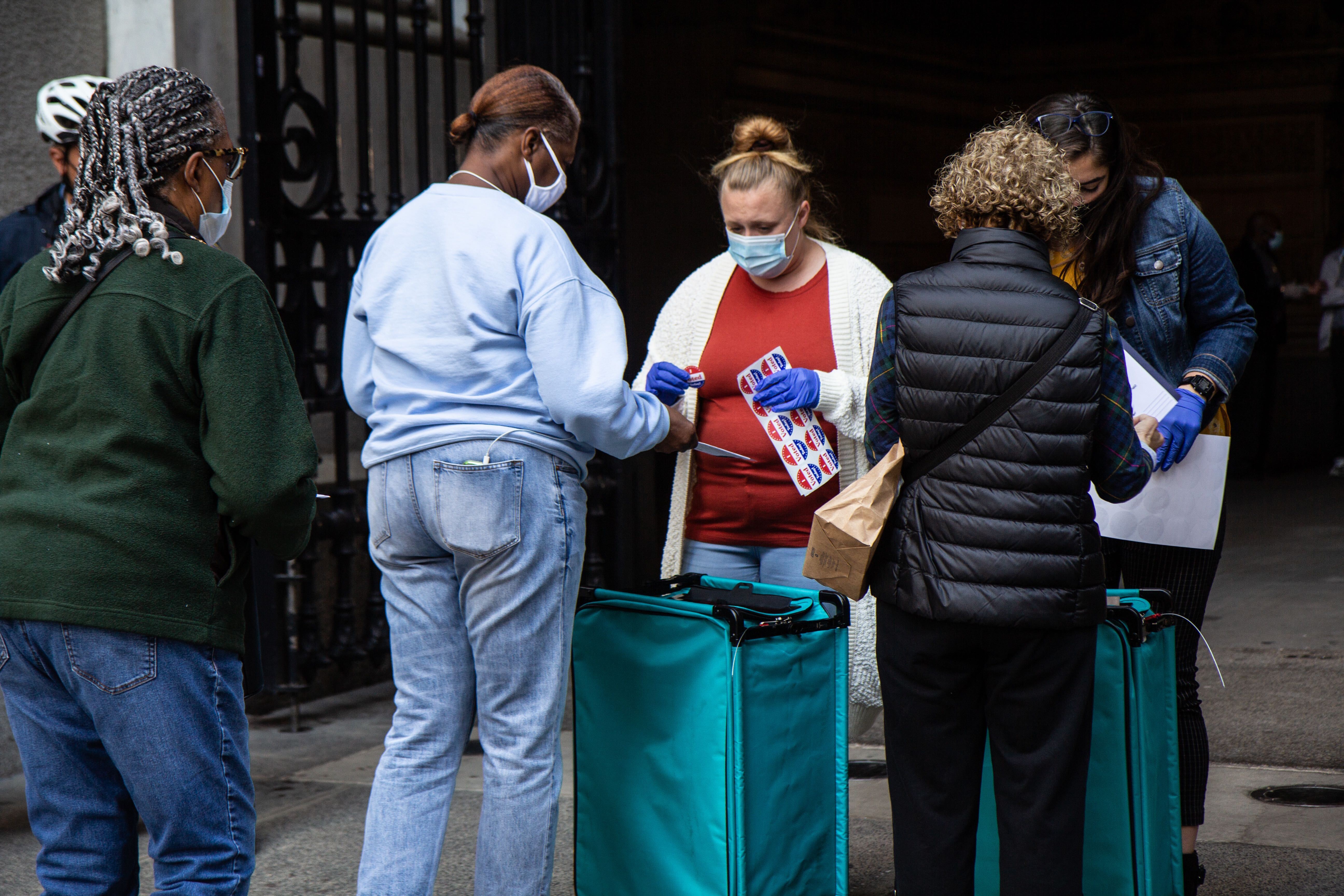
Philadelphia invents its own early voting system:
The article there from 2020 in support of it claims the 2019 law allowed for satellite early voting locations, but it absolutely did not. The relevant change is that it let anyone do mail-in without an excuse, and let people pick up and drop off mail-in votes at the county elections office. The part about satellite offices they just made up. The advertisement of early voting ran contrary to the
voting laws that were passed with bi-partisan support literally the year before. The only counties that had that option available were 6 of the bluest counties in the state: 4 around Philadelphia, 1 for Pittsburgh, and then Center County which would be dark red if Penn State students weren't half the resident population of the county.
In Philadelphia specifically, they were giving out food to people to vote early, which does feel like a minor point, but also absolutely violates federal law.
The practice lead to a lawsuit, went to the PA Supreme Court, who voted on party lines (PA Supreme Court judges are elected by party) to allow it with about a month til the election, too late for anywhere else to take advantage. Their
legal argument for allowing it was a combination of two things:
1) That the law said to return mail-in votes to the "county board of elections", and that phrase is vague enough to interpret as anywhere the people on the board specify, which it very well might be, except the law says they must deliver it to "said county board of elections", referring back to the previous sentence, which said the envelope needed to have written on it the address of the county board of elections, which is referring to the official office, not the people on the board. They hid verbiage from the law to create ambiguity for themselves.
2) That they felt satellite offices and drop box were in keeping with the legislative intent of the 2019 laws because they made voting more available. But that argument is really dumb, if the legislature passed election reform the previous year and said nothing about these things in it, it's hard to argue their intent was to allow for them. It's not like they didn't know voting drop-boxes were a thing elsewhere when they wrote the laws.
So all that happened, and the Republican campaigns said "ok, you've got your early voting places, but now we're going to go watch them to make sure you aren't cheating." Poll watchers are a real thing, election law guarantees the right of campaigns to send observers to polling places to ensure everything is done fairly and honestly. They kicked Republicans off the premises. The City of Philadelphia claimed the election laws didn't need to be followed because they "weren't polling places".
The president's lawsuit connected to his now-famous "Bad things happen in Philadelphia" quote has been rejected.

whyy.org
And like, if I cared to put more effort in, that deserves the Patrick and ManRay meme.
Like, imagine a red state making up a variation of in-person voting with slightly different rules and then claiming election laws aren't relevant there because it's technically not a polling place. The outrage would be enormous and justified.
All of this chaos was justified in large part by the pandemic, they said they wanted voting to be easier because of the pandemic, which makes the other two stories here laughable.
I'm having difficulty finding a source for the State pretty much ignoring the senior citizens. I found
an article that alludes to the State telling counties to relocate polling places away from assisted living facilities due to the pandemic, but I haven't found the part where elder rights advocates petitioned for voting assistance for seniors (you know, like Philadelphia did), and the response they got was basically "they can figure out how to mail a ballot". Their methodology for ensuring people had voting access during a pandemic was to invite people in cities to extra in-person voting places while handing out free food, and then telling senior citizens that weren't supposed to be leaving their facilities that they can figure it out themselves.
And then the last one is the
Green Party ticket being kicked off the ballot. Nominees to go on the ballot have to be submitted with a certain number of signatures on the petition, along with a bunch of paperwork, and a sworn affidavit from the named candidate that those papers and petitions are accurate. The Green Party initially submitted placeholder candidates, because they had not yet had their convention to decide on their national candidates but knew they intended to be on the ballot. This is an established, normal practice. They later substituted out to the actual candidates in August, as expected. The Green Party's presidential candidate was removed from the ballot on the basis that the original placeholder candidate's signed and notarized affidavit was faxed in rather than physically sent. The lower courts actually decided in their favor and would have allowed them on the ballot, but Democrats (specifically one Democratic candidate for state office and a member of the state Democratic Party) sued up to the state Supreme Court to remove their presidential candidate on the basis that the person they were replacing on the ballot filed electronically during a global pandemic.
And those same Democrats on the state Supreme Court who would later say that satellite offices might not be explicitly allowed by the law, but matched the legislative intent, in this case wrote
this sentence:
"It is well-settled that the “so-called technicalities of the Election Code” must be strictly enforced, “particularly where . . . they are designed to reduce fraud.” "
The shamelessness of that year really is overwhelming.