The Known, Unknown Nazi
In 1974, a young photographer came face to face with the man who would try to assassinate the President. Or did he?
Patrick Witty
Sep 04, 2023
 Photograph by Donald Carter
I stumbled across these disturbing photos while researching
mug shots of John Hinckley Jr. in the
Ronald Reagan Presidential Library archives. Having never seen them before, I was startled, surprised.
John Hinckley was a Nazi?
https://substackcdn.com/image/fetch...a0-7b85-4d60-8540-48619b91edc4_2336x2461.jpeg
The caption information with each photo was sparse: “
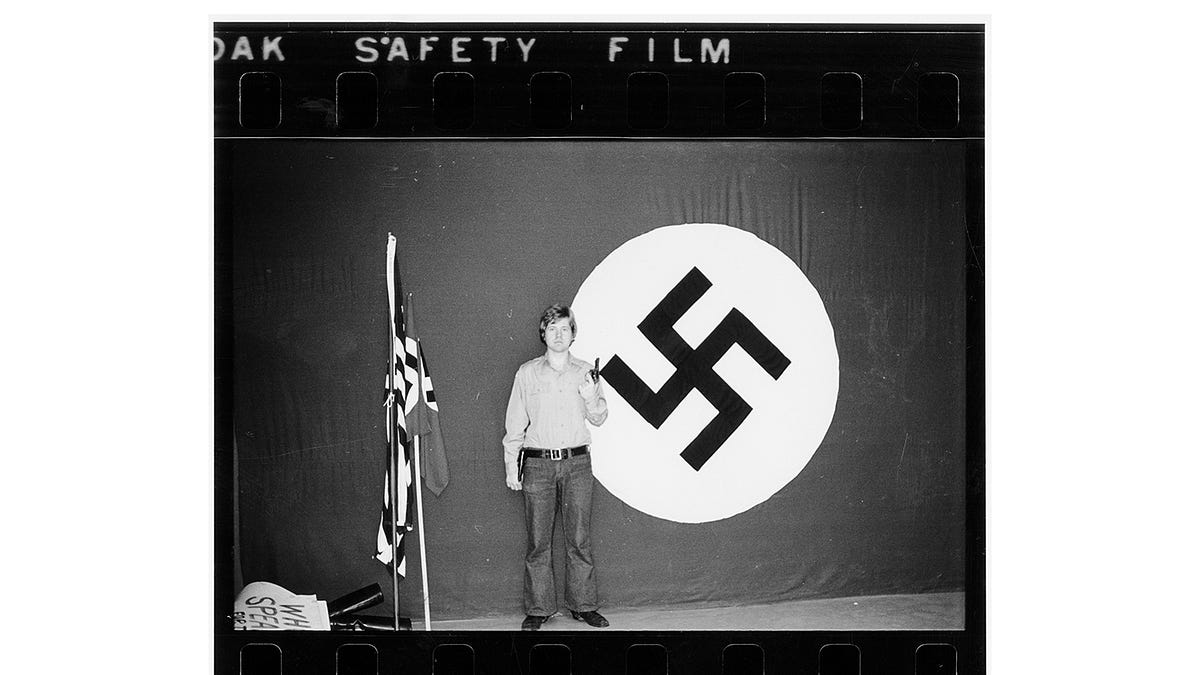
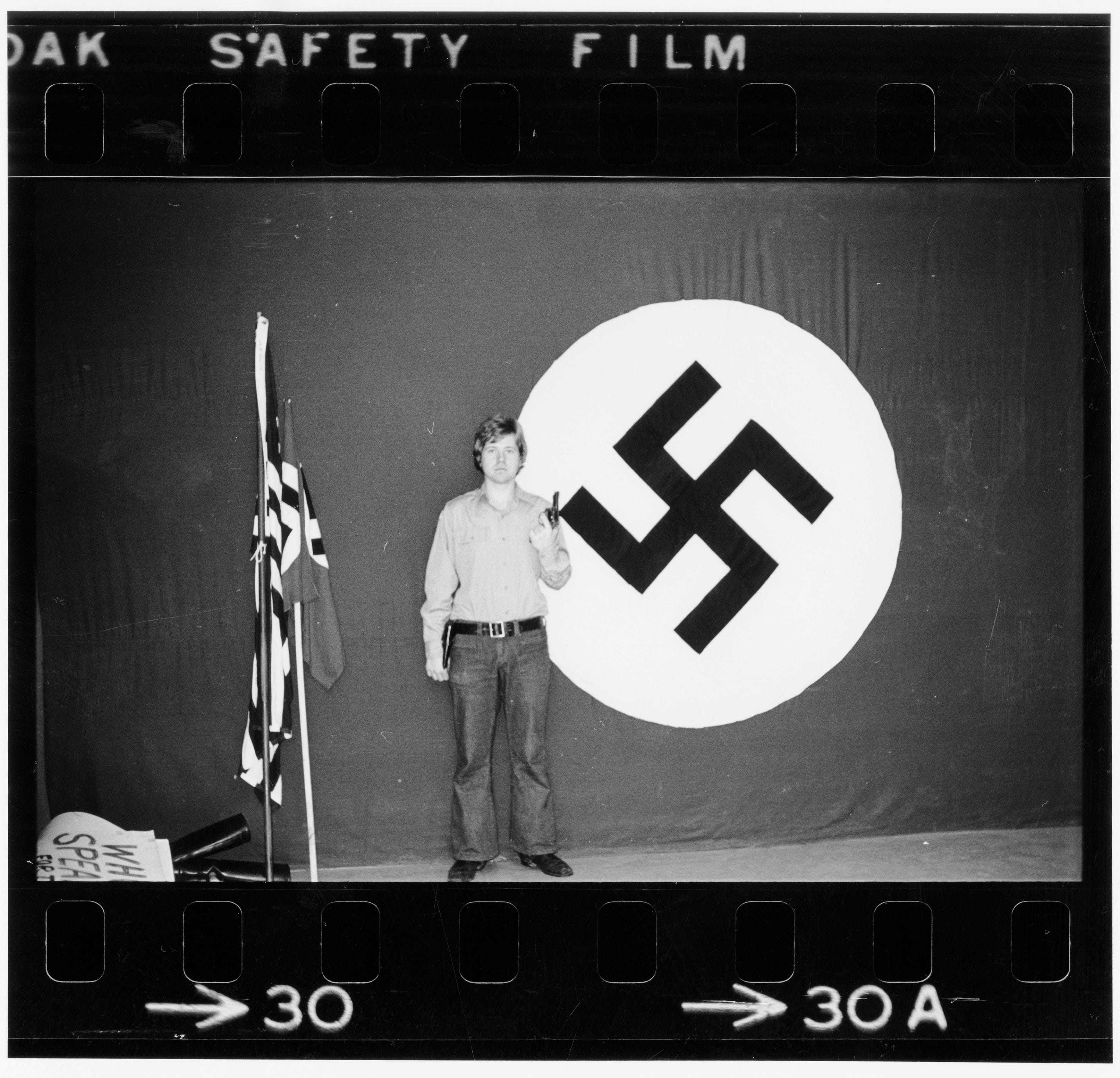
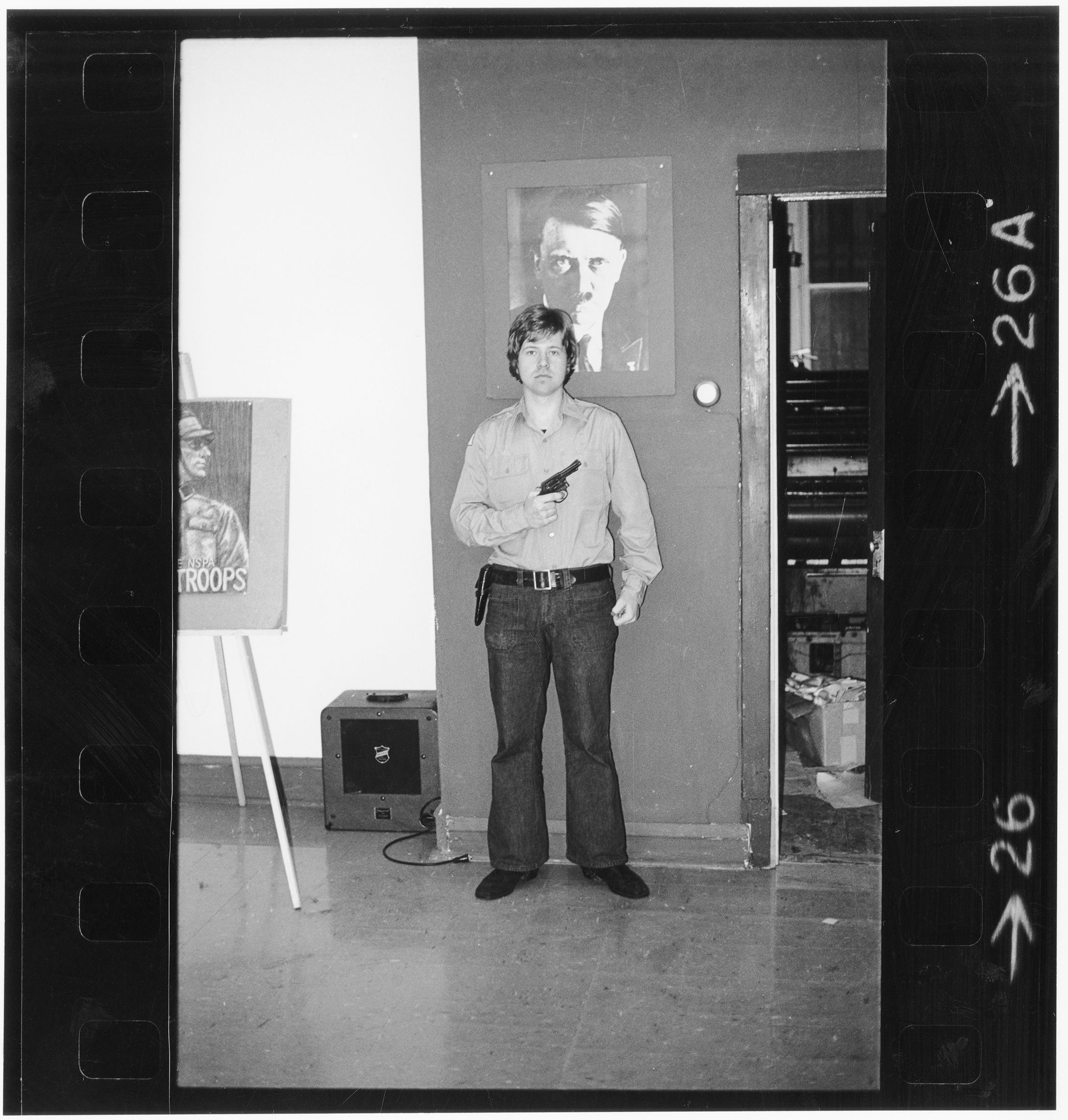
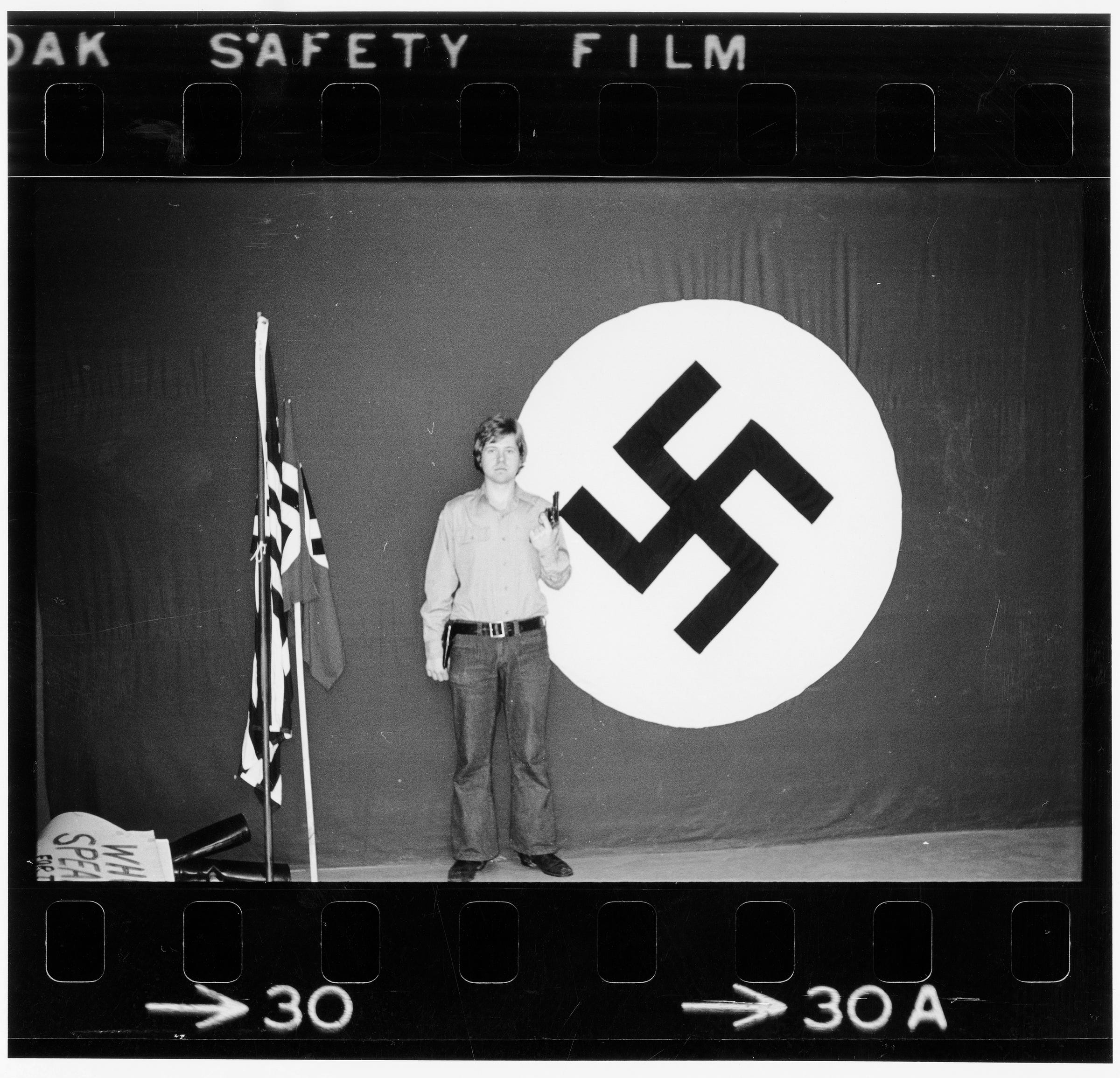
John Hinckley in White Power meeting hall holding gun under photo of Adolf Hitler” and “
John Hinckley in White Power meeting hall holding gun with swastika.”
“Photographer: Unknown.”
A quick reverse image search led me to these two riveting essays by Donald Carter: “
Into the Stormtroopers: Part One” and “
Into the Stormtroopers: Part Two.”
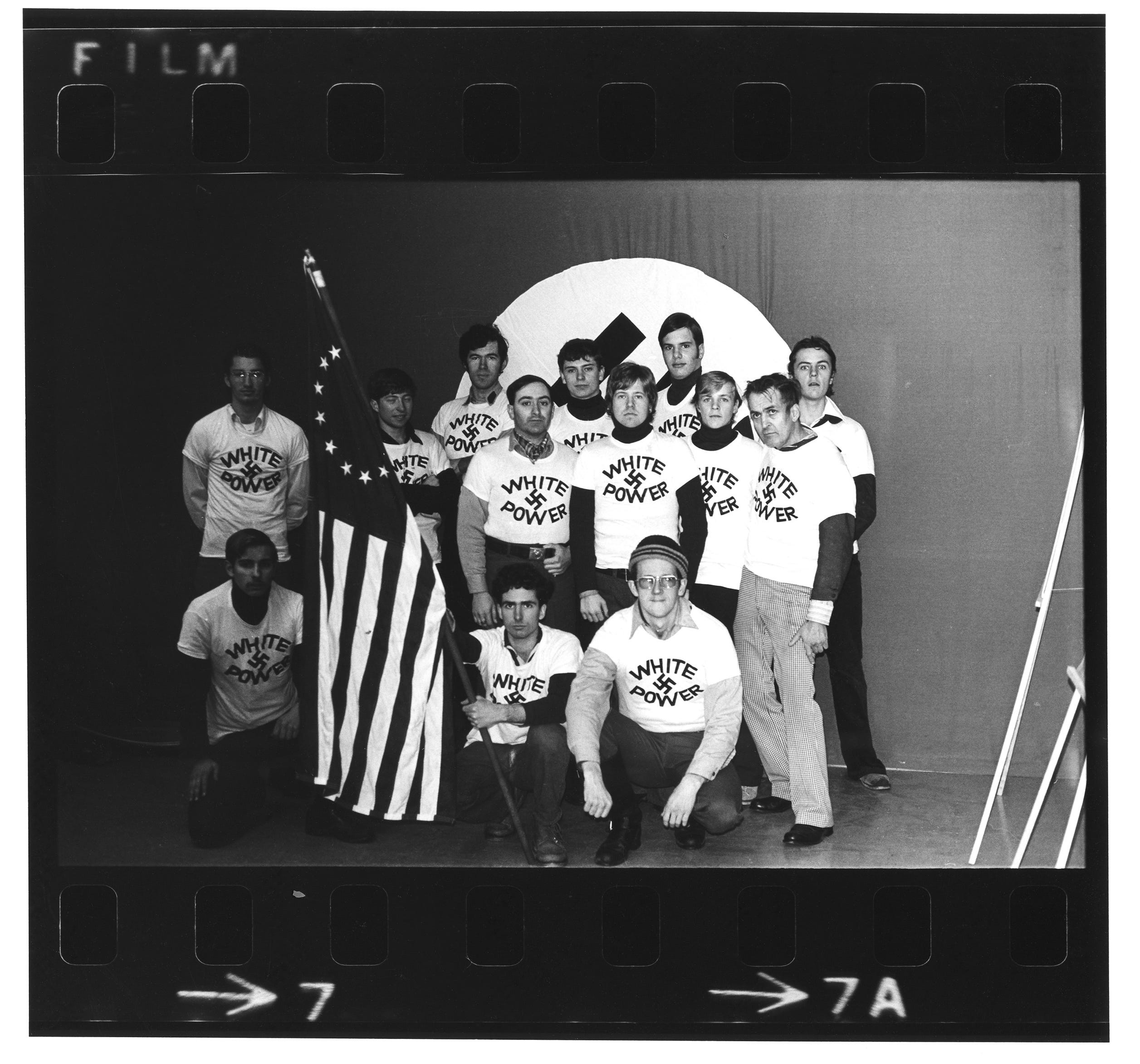
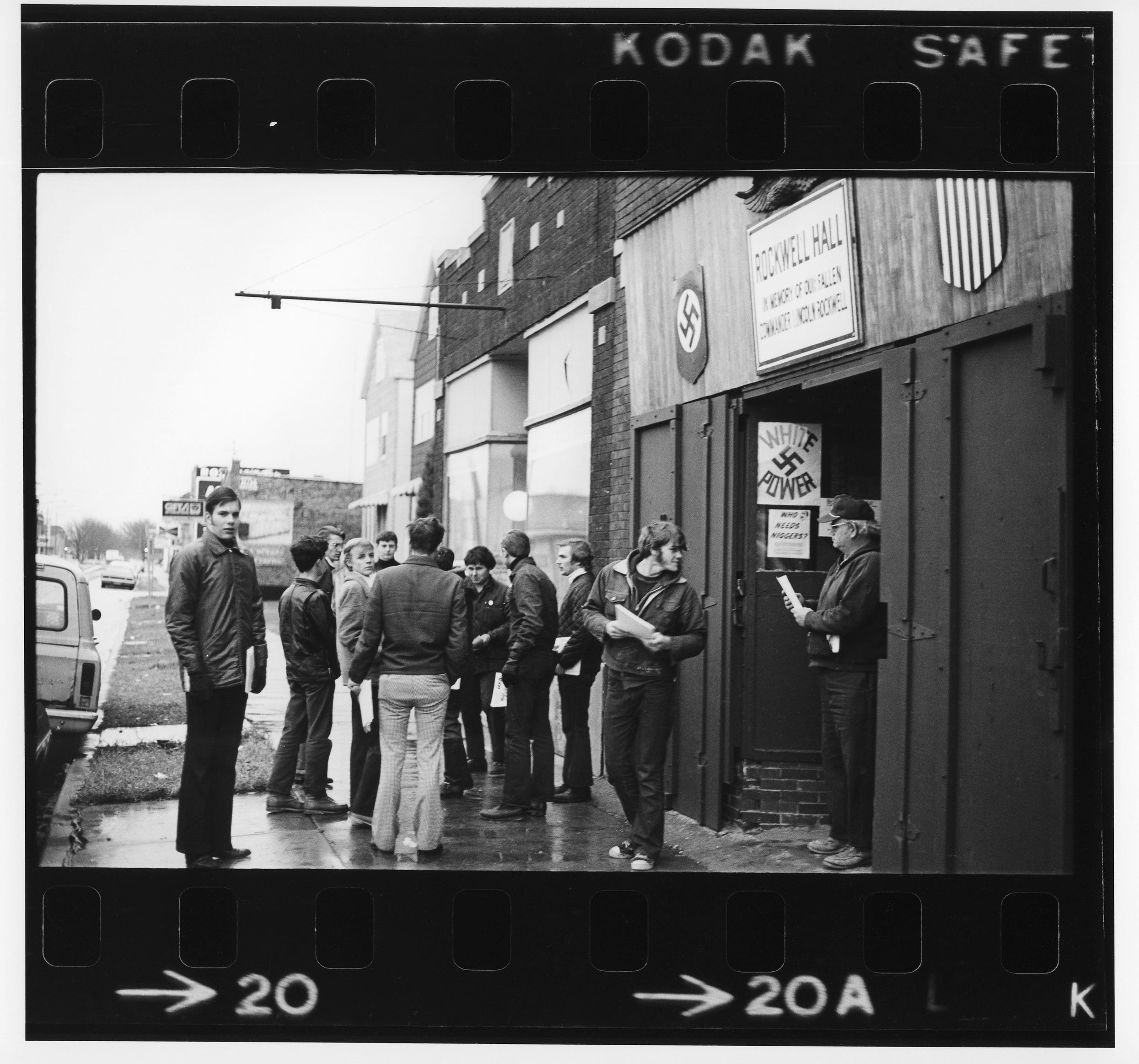
Back in November of 1974, Carter was a freshman at the School of the Art Institute of Chicago. With a “battered, second-hand Pentax” at his side, Carter set out to photograph Nazis at the National Socialist Party of America (NSPA) headquarters on the city’s south side — an ambitious, and potentially dangerous, school project.
Carter tucked his ponytail into his knit cap, made his way inside and approached the group's leader,
Frank Collin, revealing his camera. Collin “summoned his men to pose before the flag for a quick group shot — just like one big happy Aryan family,”
Carter later wrote.
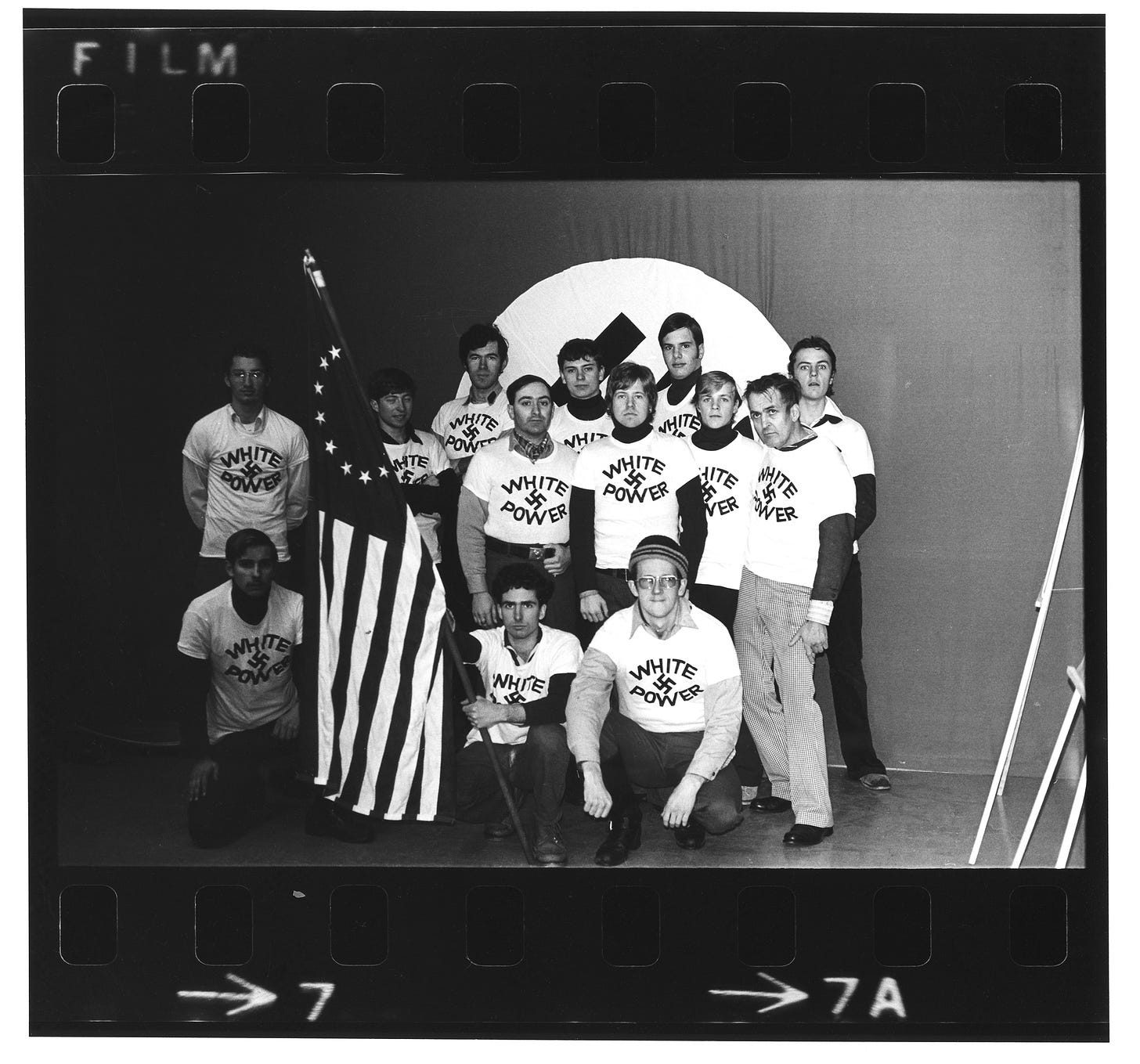 Photograph by Donald Carter
Carter then struck up a conversation with another man, a pistol holstered on his hip.
The man posed for Carter, brandishing his gun inches from his face.
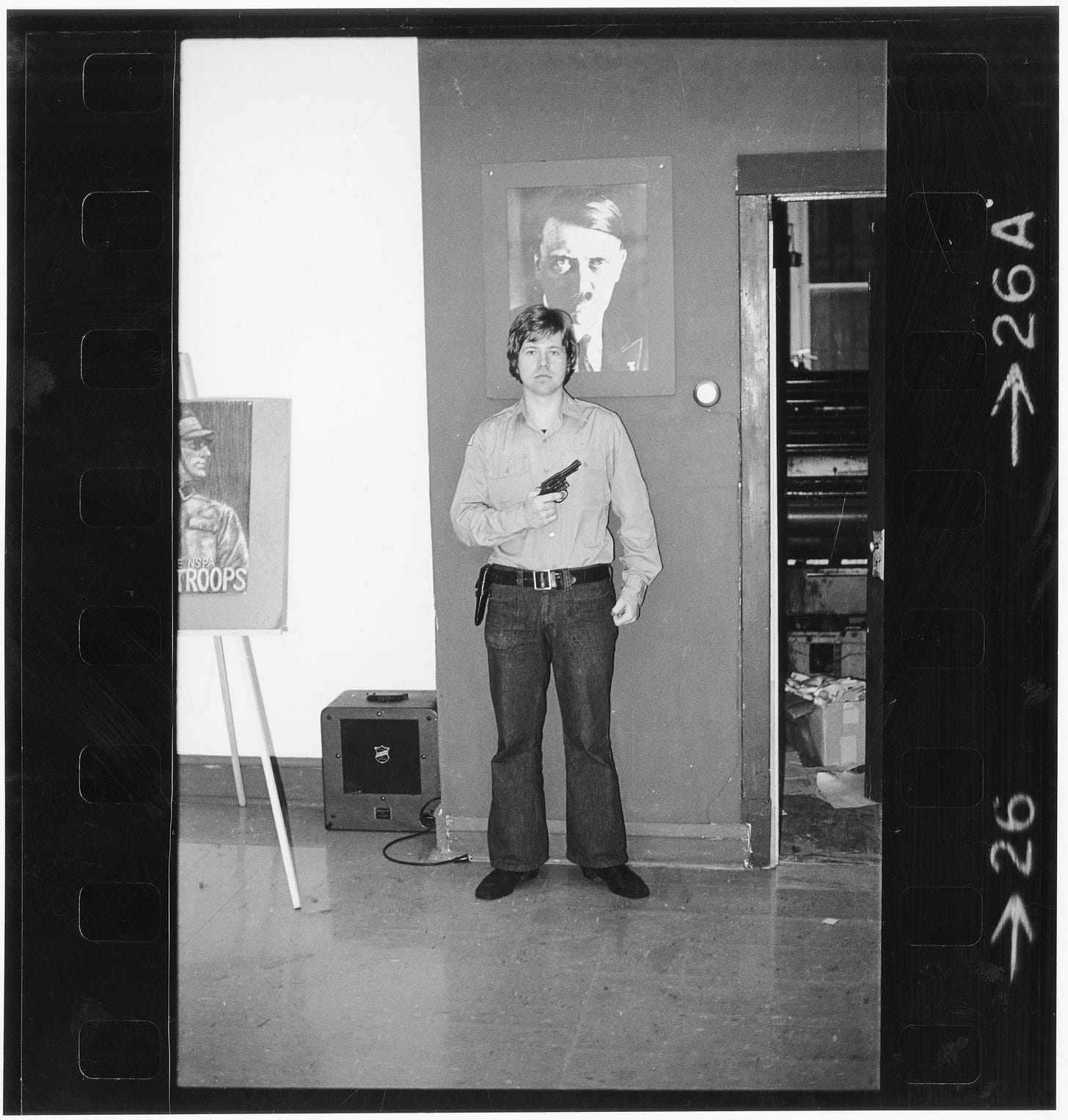 Photograph by Donald Carter
Carter shelved his photos, not giving them another thought until 1981, while reading
an article in The New York Times about the assassination attempt on President Reagan. Reports began to surface regarding Hinckley's potential association with Nazis. Carter recognized Frank Collin’s name in
the article, triggering his memories of his freshman year photo project.
“I took a good look at the images of John Hinckley Jr. in the newspaper and thought, ‘We’ve met before.’”
Carter wrote. He dug out his photos from 1974 and starting comparing faces, finding too many similarities to ignore. “When combined with
the article linking Hinckley to Frank Collin and the Chicago NSPA, I was convinced I had hit the photojournalism jackpot.”
Carter contacted multiple news outlets, eventually striking a deal with the
New York Post, who agreed to do the research necessary to prove the man in his photos was indeed Hinckley.
Why was the
Post so reluctant to identify the Nazi as Reagan’s would-be assassin? After
news reports mentioned Hinckley’s connection to white supremacist groups, a slew of Nazi photos hit the market, all claiming to be Hinckley. They were wrong, it wasn’t him.
The New York Times even published a photo from the Associated Press of three men in Nazi uniforms from a 1978 march in St. Louis, claiming one of them was Hinckley. They were wrong too, it wasn’t him.
Turns out that the AP,
who paid freelance photographer $2700 for the photo, was duped. The AP sent out a kill and
The New York Times published a correction, blaming the error on the photographer.
The AP wasn’t alone. Photo agencies Gamma-Liaison, Sygma, and Visions all distributed photos of Hinckley look-alikes. As Jennifer Coley, then director of Gamma-Liason, told
American Photographer magazine in 1981, “In the frantic scramble for pictures, there wasn’t a whole lot of concern for accuracy.”
1
At least she was being honest.
So, the
New York Post, doing their due diligence, showed Carter’s photos to a Secret Service agent, who told the
Post that he was “90% sure the pictures were of Hinckley.” But then, the
Post showed Carter’s photos to “Federal authorities” who
denied the man was Hinckley, “despite the amazing resemblance.”
It gets crazier.
On May 28, 1981, two FBI agents approached Carter with a subpoena and confiscated his negatives of the Chicago Nazis.
That was news — enough for the
Post to publish Carter’s photos the following day, skirting the issue of making a positive ID.

Bizarrely, the
Post published Carter’s photo flipped horizontally — which makes the “young Nazi” look even
less like Hinckley, who parts his hair to the right.
So, is that John Hinckley Jr. in Donald Carter’s photos?
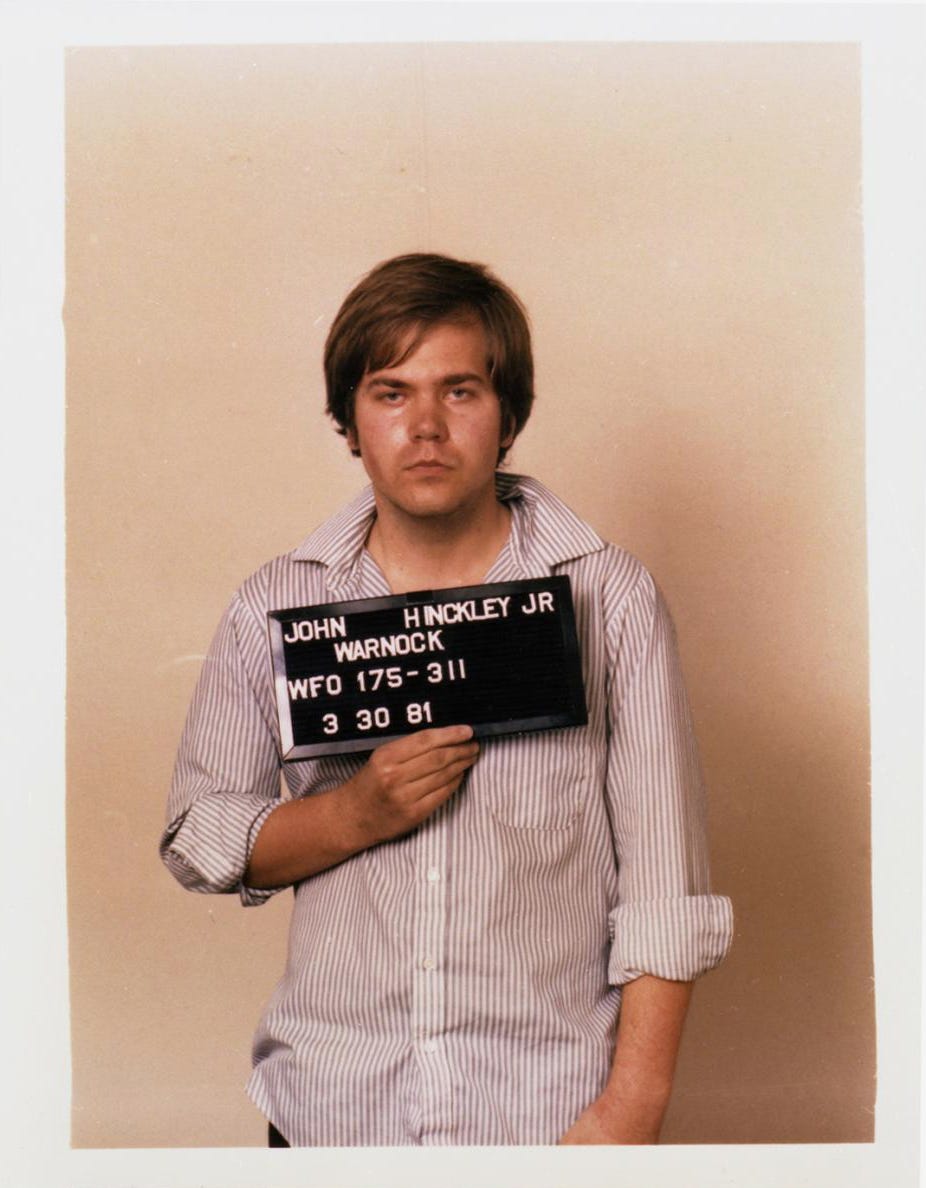
Carter believes so, and he makes a solid argument. “I find similarities in the shape of his eyes, despite being slightly closed in the mug shot,” he wrote to me in an email. Here’s the mug shot of Hinckley, taken by the FBI after his arrest, March 30, 1981.
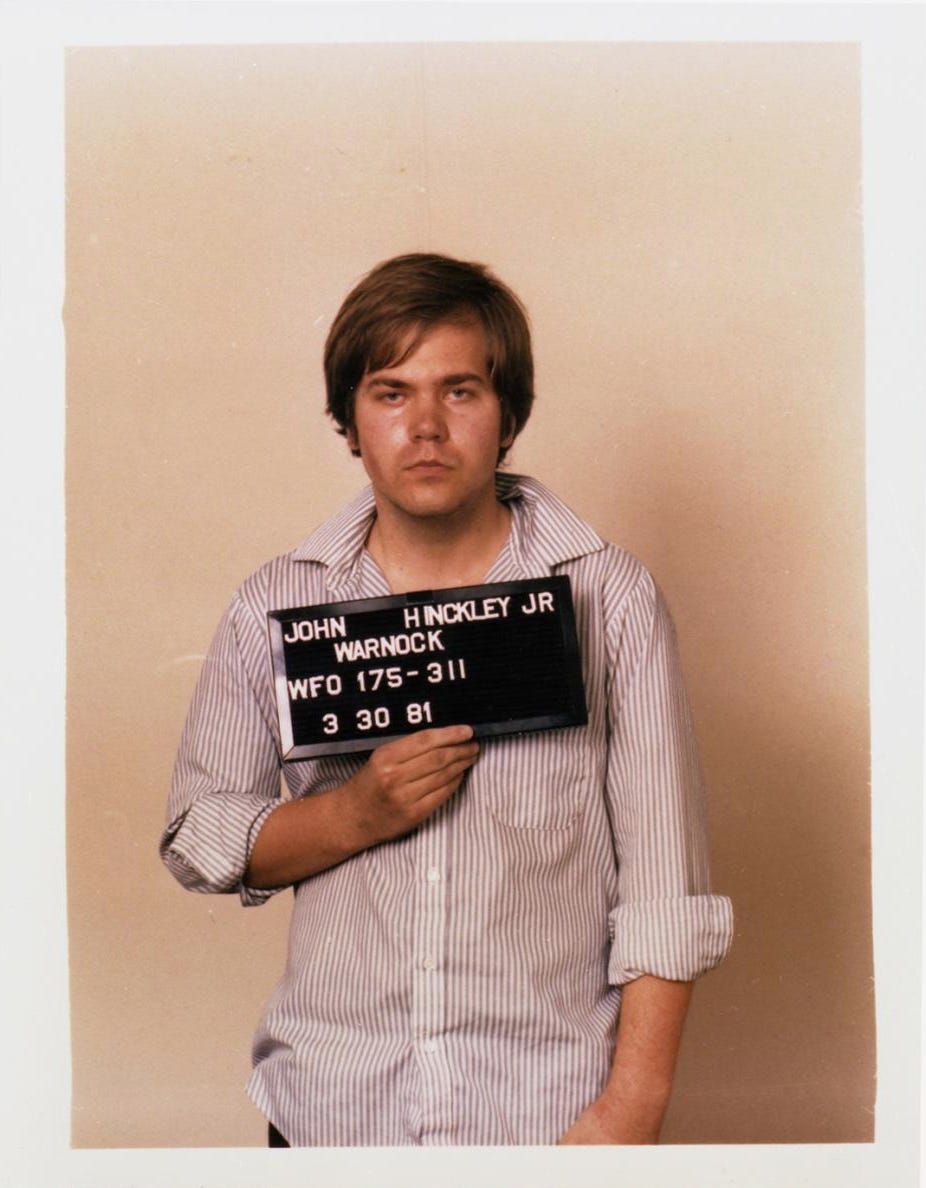 Photograph from the FBI
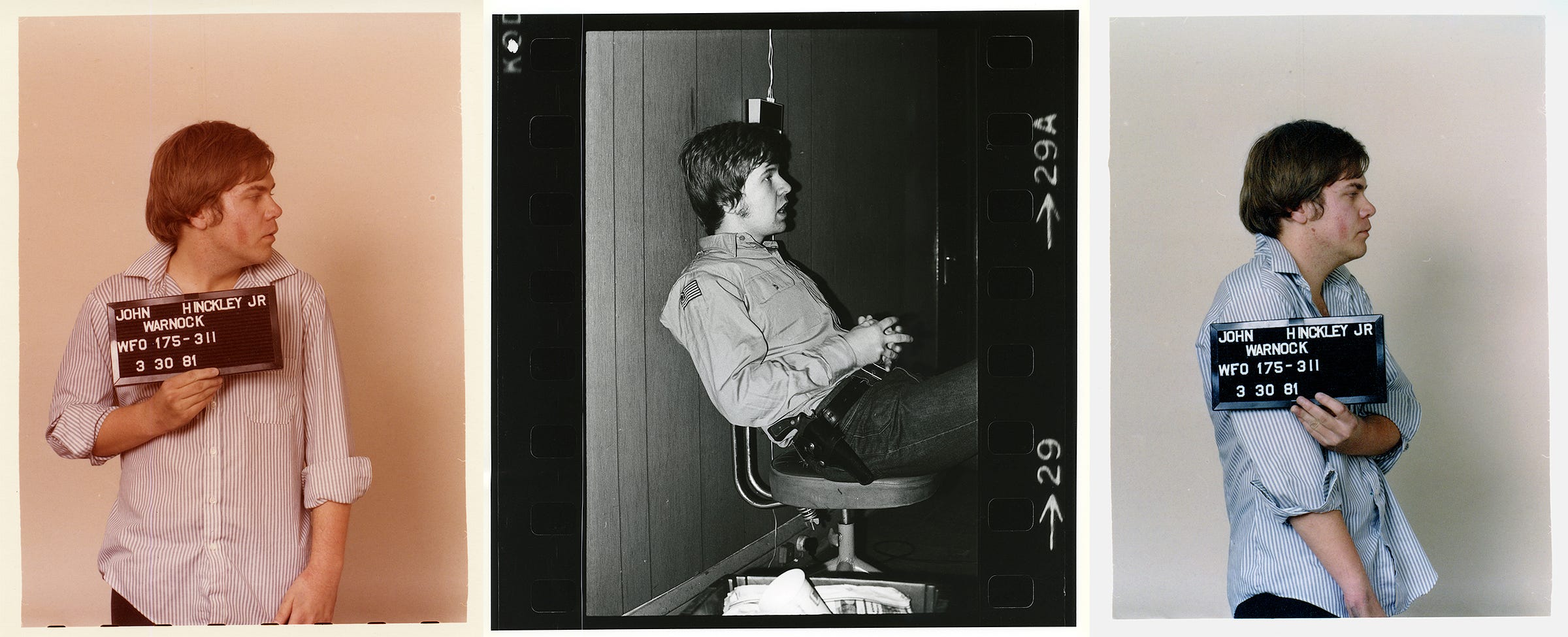
“In most of the pictures of Hinckley and my subject, the right eye is narrower than the left. The larger I made the images, the more similar his eyes appear to me, especially his left eye. I also find the fleshy area directly beneath the eyebrows to be similar,” Carter added.
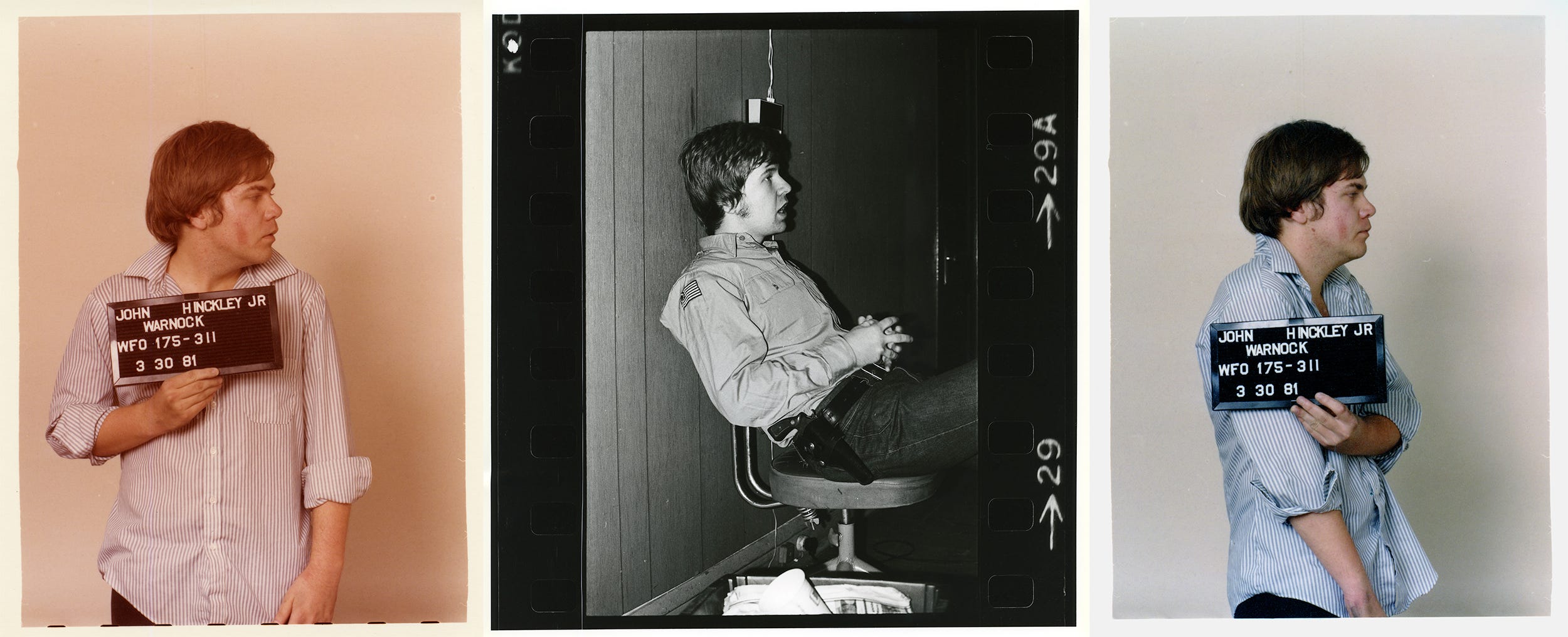
Here are more mug shots of Hinckley from the FBI, flanking Carter’s photo for comparison.
Below is a cropped version of one of Carter’s portraits alongside an FBI evidence photo of Hinckley the day he graduated from high school in 1973.
Personally, I don’t think it’s Hinckley.
Still,
The John Hinckley Jr. Collection, part of the
Ronald Reagan Presidential Library & Museum, offers a revealing look at FBI evidence surrounding the assassination attempt.
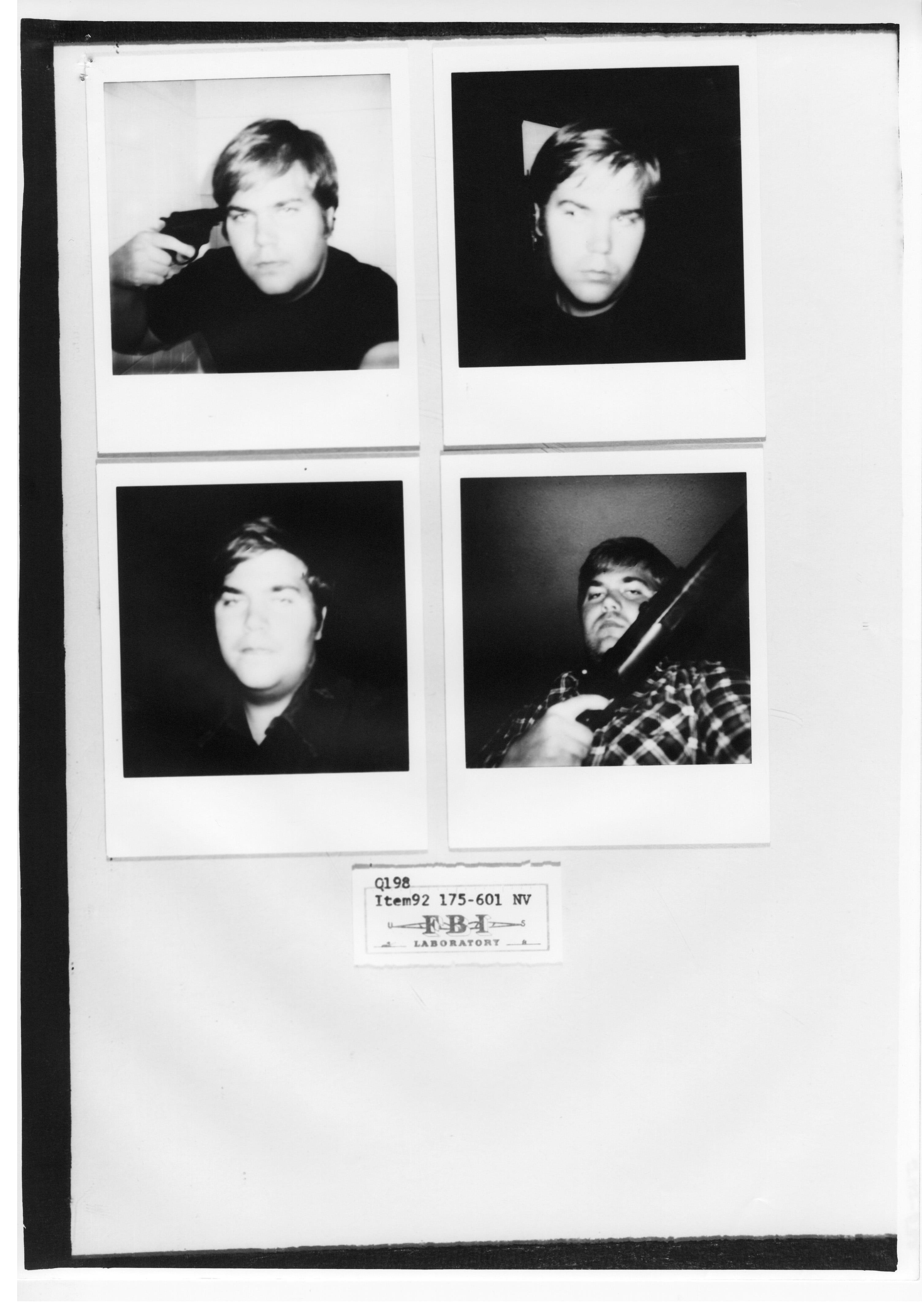
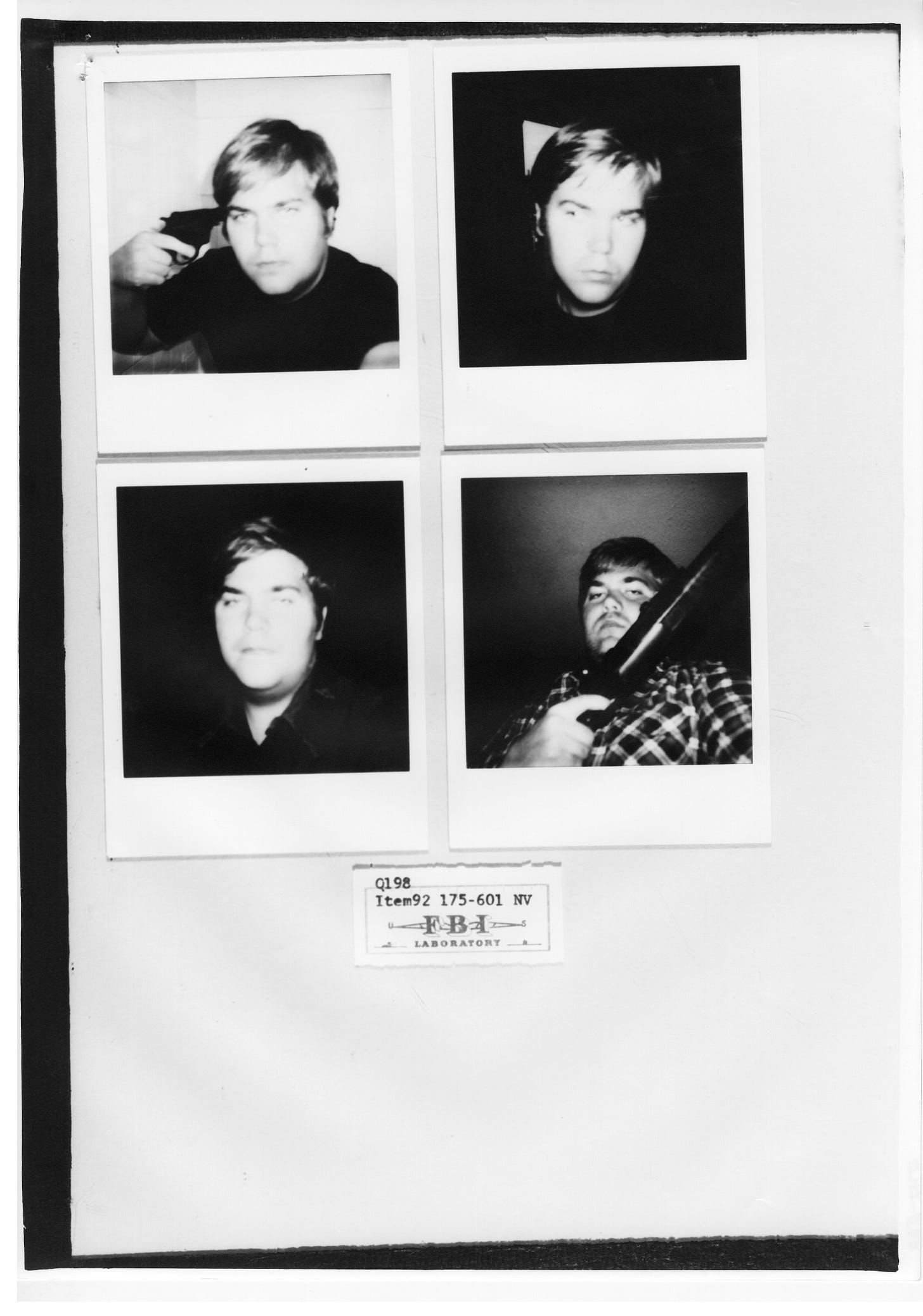
Like this collection of
disturbing Polaroid selfies. The photo of Hinckley holding the gun to his head was released by the FBI and widely published.
 Photograph from the FBI
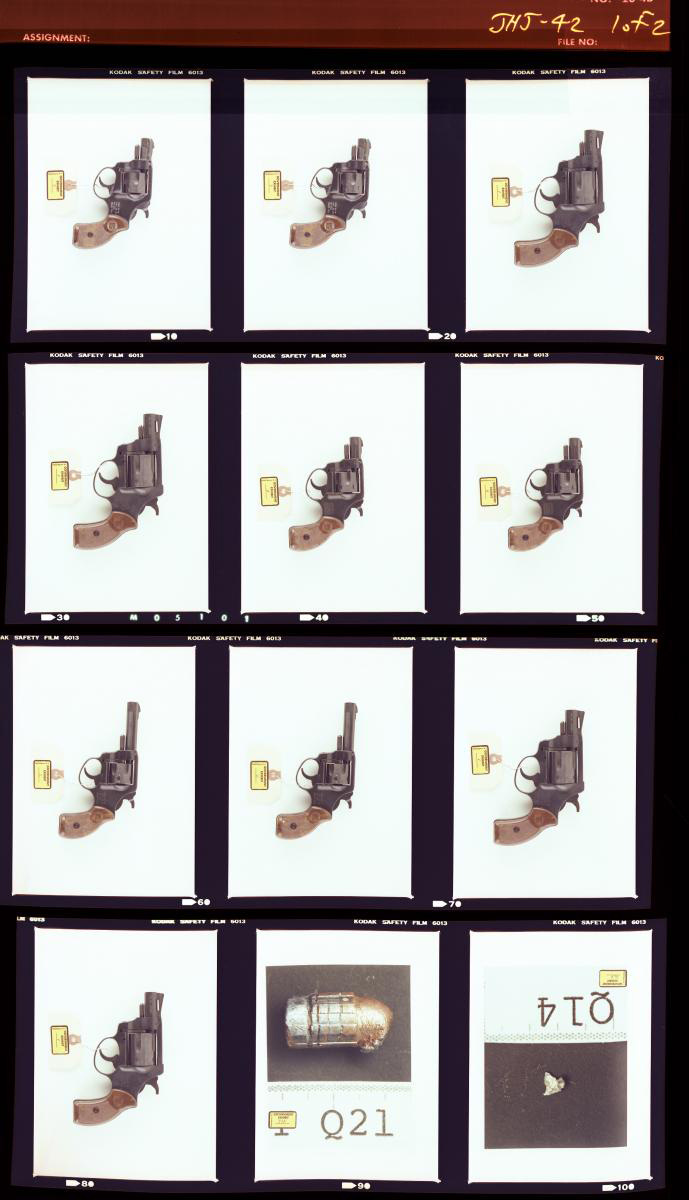
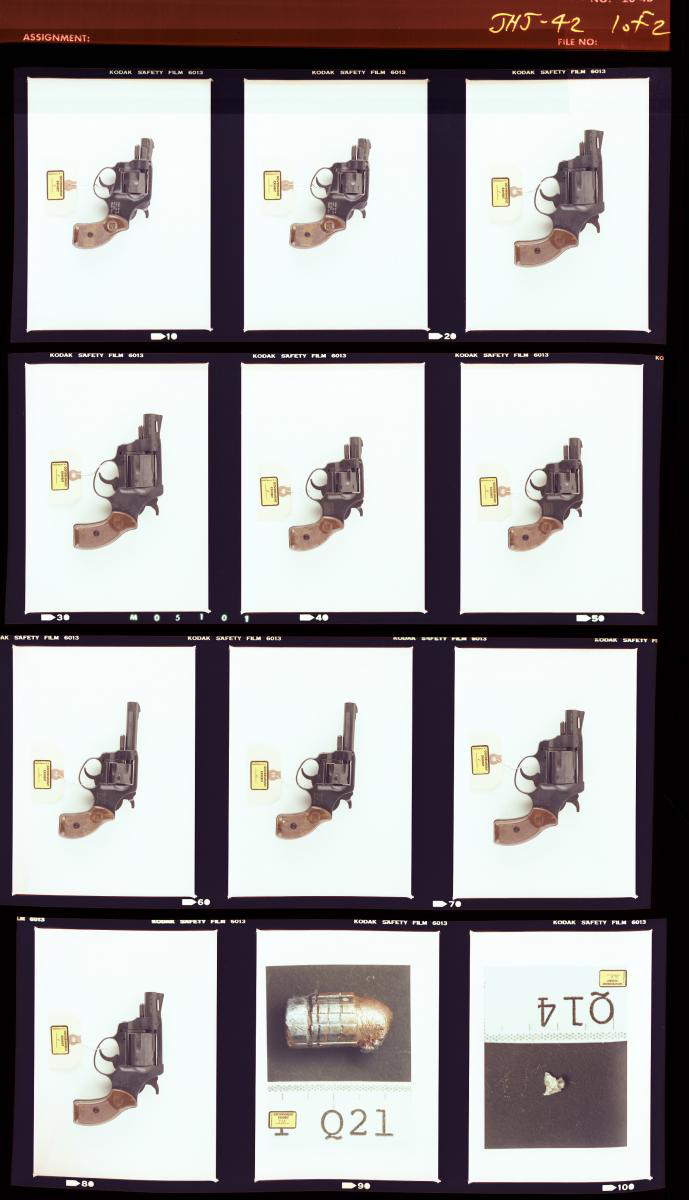
Another compelling image I found
in the archive is this contact sheet of Hinckley’s two handguns. Hinckley bought the gun he used to try to kill the President for $47.95 at
Rocky’s Pawn Shop in Dallas.
 Photograph from the FBI
The John Hinckley Jr. Collection
Photograph from the FBI
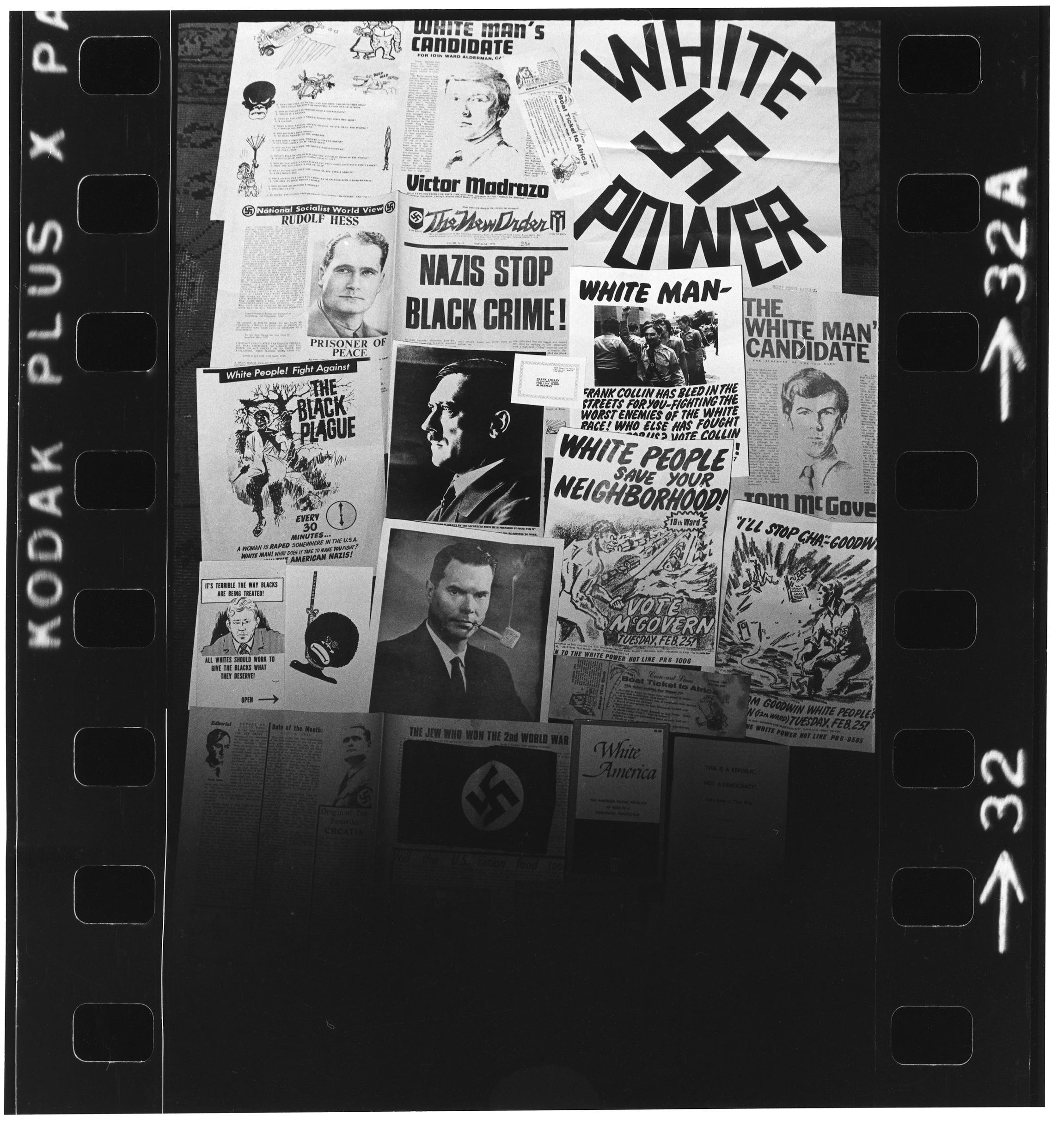
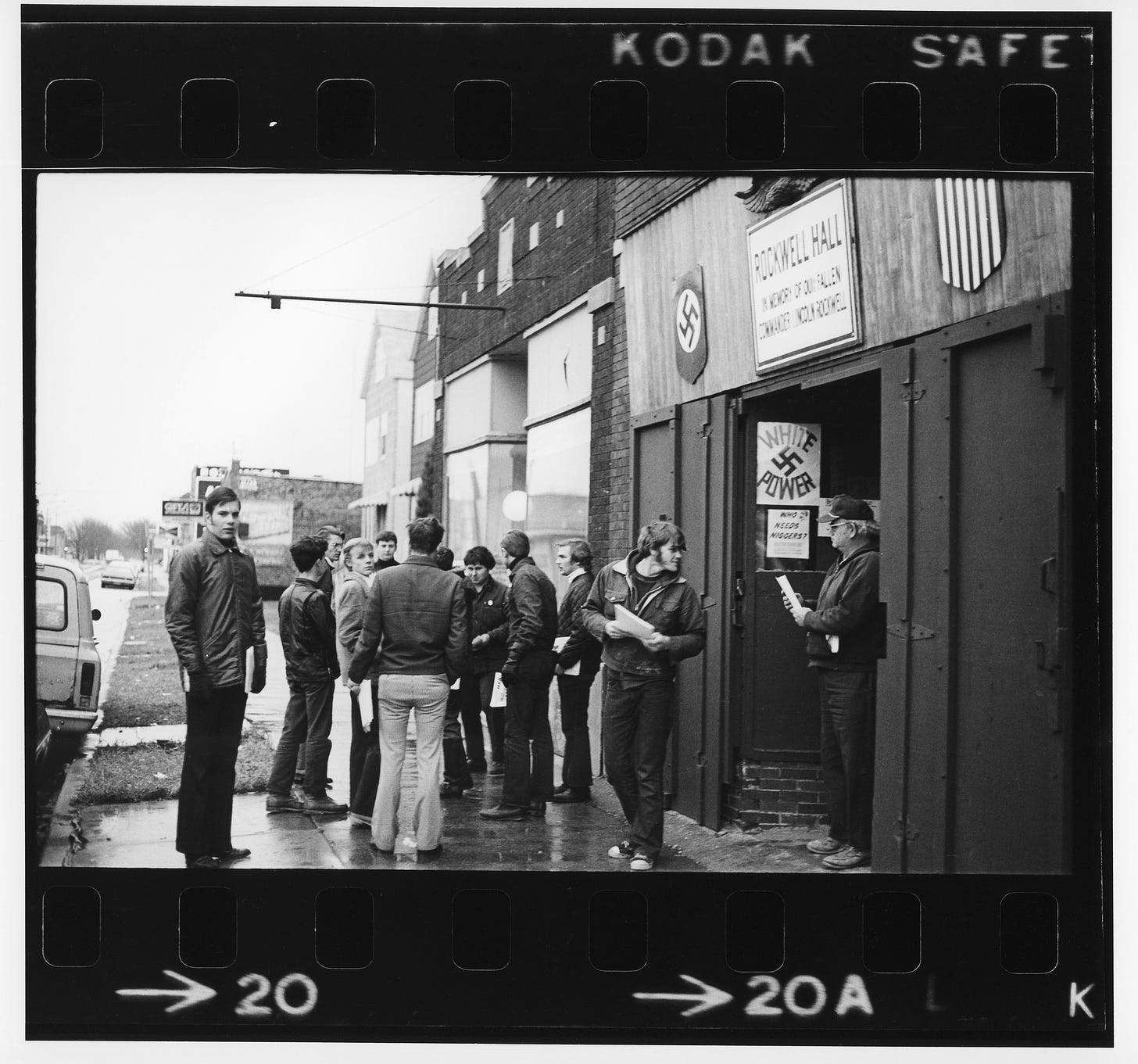
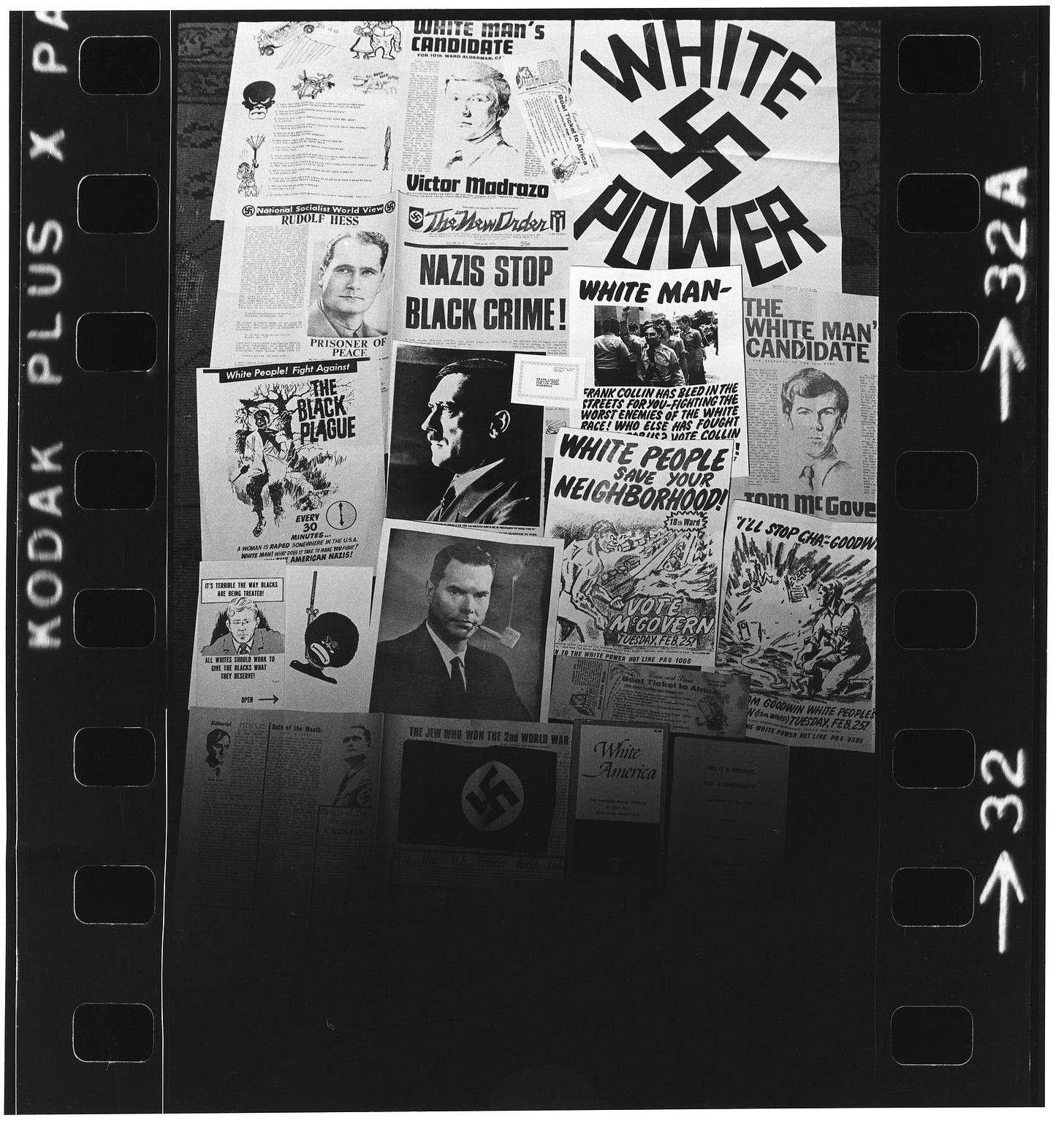
The John Hinckley Jr. Collection includes additional photos by Donald Carter within its archive. These never-before-published images were taken that same day in 1974 at the Nazi headquarters in Chicago.
 Photograph by Donald Carter
 Photograph by Donald Carter
Carter told me he hadn’t seen these photos in over 40 years. “I turned over the original 35mm negatives and was never able to retrieve them,” Carter mentioned. “Despite many calls to the FBI.”
John Hinckley Jr., who was found not guilty by reason of insanity, was released in 2022 after 41 years in confinement.
So, is that John Hinckley Jr. in Donald Carter’s photos?