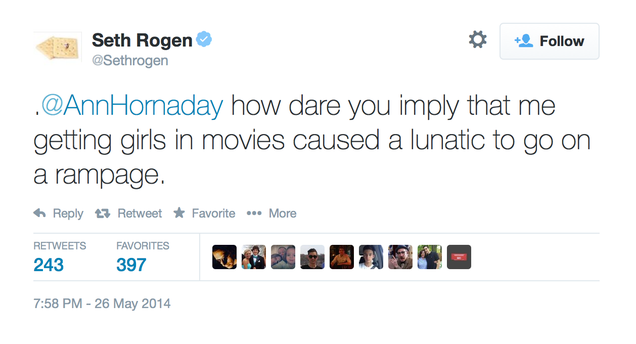
I'm of the opinion that a lot of contemporary thought and (semi-)public discourse is now tinted by the lens of social justice and rigid, over-applied concepts like privilege and power dynamics. Although social justice is it itself a well-intentioned movement it's created a race to the bottom - there's moral high-ground, recognition, and even a certain type of prestige now linked to minority status, and as a result people are competing to distance themselves from the majority (because the majority is privileged, and there's nothing worse than that) by inventing all kinds of silly labels and imagined oppression.
It taps into the same kind of easy, feel-good inaction as slactivism does - complaining is easier than changing, raising awareness is cheaper than donating money, painting yourself as helpless is easier than offering help. It also dovetails with the nasty and vindictive kind of Tall Poppy thinking associated with social science's prevailing ethos of cultural Marxism, where any deviation from the baseline is seen as proof-positive of either being privileged or marginalised - and because everybody is created equal, any inequality of outcome is to be viewed suspiciously.
In much of the West there has always existed a culture of rooting for the underdog. As the mainstream becomes more politically liberal, that compounds the situation by actively rewarding the underdog - financially, in the case of welfare, academically and vocationally, through affirmative action and quotas, and socially, through the gradual promotion of "Tumblr values" - it's more important to try than to succeed, bravery is more important than beauty, it's more noble to accept than to strive for better, everywhere is a "safe space", and disagreement is a hate crime.
That's not to take anything away from people who are genuinely worse-off, marginalised, victims of abuse, etc. But the well has been thoroughly poisoned by the politicization of victim culture.
(In my humble opinion.)
It taps into the same kind of easy, feel-good inaction as slactivism does - complaining is easier than changing, raising awareness is cheaper than donating money, painting yourself as helpless is easier than offering help. It also dovetails with the nasty and vindictive kind of Tall Poppy thinking associated with social science's prevailing ethos of cultural Marxism, where any deviation from the baseline is seen as proof-positive of either being privileged or marginalised - and because everybody is created equal, any inequality of outcome is to be viewed suspiciously.
In much of the West there has always existed a culture of rooting for the underdog. As the mainstream becomes more politically liberal, that compounds the situation by actively rewarding the underdog - financially, in the case of welfare, academically and vocationally, through affirmative action and quotas, and socially, through the gradual promotion of "Tumblr values" - it's more important to try than to succeed, bravery is more important than beauty, it's more noble to accept than to strive for better, everywhere is a "safe space", and disagreement is a hate crime.
That's not to take anything away from people who are genuinely worse-off, marginalised, victims of abuse, etc. But the well has been thoroughly poisoned by the politicization of victim culture.
(In my humble opinion.)