The Deadpool said:
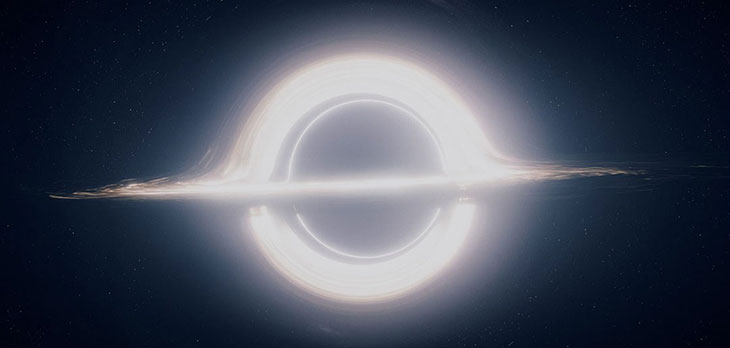
" but adhering as closely as possible to hard science: So we see wormholes, unexplored planets, singularities and even extra-dimensional space realized with unprecedented fidelity to what we can extrapolate they'd actually look like"
You know, the REAL sad part of it all? They STILL got most of the science WRONG.
Particularly the time dilation thing, which was such an important part of the plot...
It might have been wrong, but Nolan certainly wanted to show broad strokes of the stuff out there in space and unfortunately took some liberties. He wanted to show a black hole, but he didn't want give the characters proper propulsion to visit one and still visit a habitable place. He wanted them to struggle for fuel and energy. He wanted to show some fantastical but still viable alien planets (not that ridiculous "the sky is purple, therefore alien... just ignore the gases needed to have it purple"). He wanted to show the effects of dilated time and relativistic physics, but didn't want it to be a constant effect that close to the black-hole, but a situational hazard.
In fairness, I had much less trouble suspending my disbelief in this movie than many other Sci-Fi movies, INCLUDING 2001 (with which I always struggle to stay fully awake).
No magical unexplained gravity inside the ship? Check.
No "scientific discovery" leading directly to "instant practical application"? Check.
No evil robots because technology is evil? Check.
No evil technology because technology is evil? Check (it is implied the plague killing crops is naturally occurring and the resentment is more on the excesses of the past (current present) when they have so little than "technology killed us")
I can forgive the weirdly specific time dilation, what bothered me more was the ease with which they visited planets. They obviously needed tons of fuel to escape earth, so technology hadn't advanced that much (even though they were supposedly transporting more components to the main ship). And yet their Ranger shuttles could make planet fall and escape orbit multiple times without refueling. Especially because the gravity of the first one was 1.3 Gs. Meanwhile I could ignore how these planets could be so stable that close to a black hole (giant constant tsunamis on a water covered planet was still relatively tame, but it's proximity to the black hole really should have ruled it out altogether anyway, but you know, tension!)