
Funny events in anti-woke world
- Thread starter Agema
- Start date
Recommended Videos




Yeah, I got that email. See my screengrab above. It raised an eyebrow.
Not the first time CD project proved itself amenable to that particular crowd tho

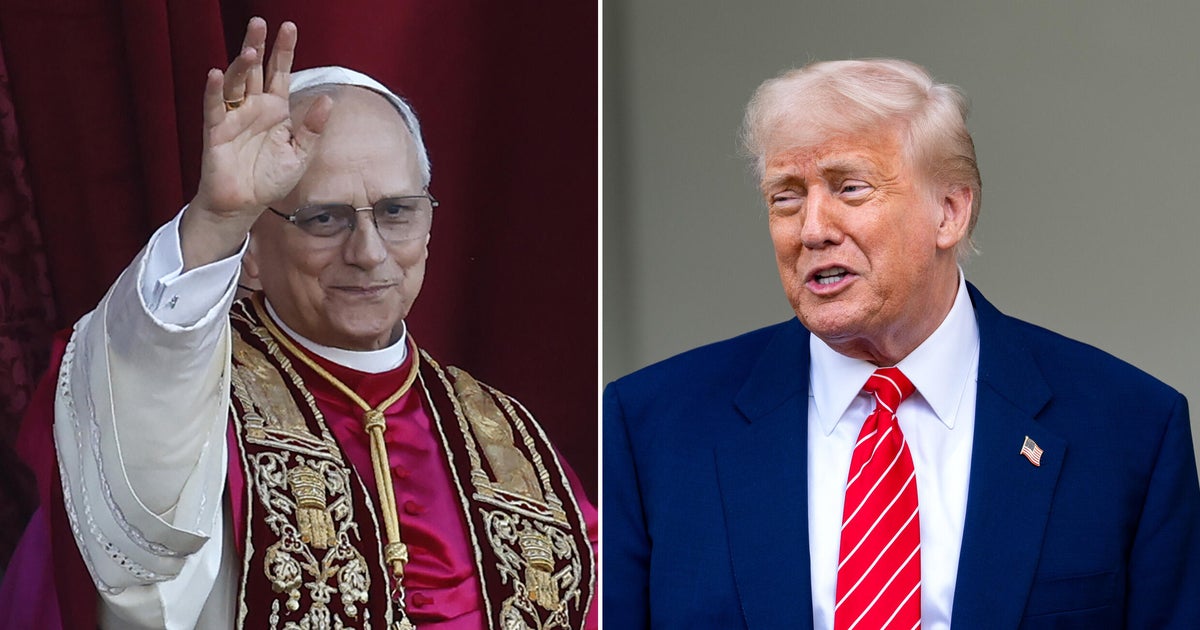
Trump calls Pope Leo "WEAK on Crime, and terrible for Foreign Policy"
Pope Leo has been critical of the war in Iran and other priorities of the Trump administration, but says his comments are "not meant as attacks on anyone."
 www.cbsnews.com
Why can't he just do this quote, and be more succinct.

history of the phrase ‘How many divisions has the Pope?’
used to pose the dilemma between material power and moral strength, and seemingly to dismiss the latter—from a question allegedly posed by Joseph Stalin (USA 1943)
 wordhistories.net

I was going to raise the point "Is GOG anti-woke now?" but didn't bother. This comment left me pondering though: have they displayed anything resembling such attitudes? My assumption was that they made an honest mistake in that newsletter.Yeah, I got that email. See my screengrab above. It raised an eyebrow.
Not the first time CD project proved itself amenable to that particular crowd tho

Its good that a French visit said drunk Hegseth isn't welcome at the D-Dday celebrations because as an open anti European and someone against the allied soldiers fought and died for he shouldn't be welcome.

 www.france24.com
Residents of French village say US defense chief Hegseth not welcome for D-Day visit
US Defense Secretary Pete Hegseth on Saturday marked the 82nd anniversary of the World War II D-Day landings with a visit to Normandy, but did not attend the international ceremony hosted in Langrune-sur-Mer.…

Nearly 100 of the Jan. 6 Rioters Trump Pardoned Were Re-Arrested For New Crimes, New Report Says
Late last year, government watchdog CREW (Citizens for Responsibility and Ethics in Washington) revealed that 33 of the 1,600 insurrectionists that stormed the Capitol on Jan. 6, 2021—and who were pardoned by Trump in his first day back in office—were re-arrested, charged, and sentenced for other crimes since 2021. At the time, CREW emphasized that this was a likely undercount, and in June updated the count to 40. Well, apparently, we still didn’t even know the half (or triple) of it.
On Thursday, Lawfare Media published a new report upping the pardoners’ crime spree count to 97, revealing also that five of them were arrested for conduct they did after Trump gave them clemency. Of these crimes, dozens also include sex crimes and crimes relating to child sex abuse material (CSAM); several include domestic violence charges; and at least 20 include driving under the influence of alcohol and drugs, or being publicly intoxicated. Per this updated count, 1 in 16 pardoned insurrectionists have re-offended.
Because the crimes include a constellation of alleged and proven charges out of a large group of individuals who are not monitored or reported on, Lawfare says tracking down their recidivism rates is a hard task. It was made especially difficult after the Justice Department vanished various records of Jan. 6 defendants in 2026—scrubbing from its databases their cases, and their involvements in the riot.

Shall we review the stuff that you keep on ignoring? Let's start with the context in which this case occurred.Firstly, an affirmative claim that this is brazen corruption, without even the slightest qualifier, is not suspicion or even accusation, either of which would allow for the potential of exoneration.
I am not asking for proof, I am asking for reason. If you'd like to consider possible standards here, lets go with the three most significant legal standards:
1. At one end, there is probable cause. I would say we agree that there is something akin to probable cause to look into the potential for corruption.
2. At the other end, there is proof beyond a reasonable doubt, which I would say we agree is an unreasonable standard.
3. In between those, there is the preponderance of evidence, where you'd say given what we know that something is just more likely than not. I don't think we are even close to this for the claim of brazen corruption. Though it is a somewhat subjective standard, which is why someone like Silvanus claims so many things Trump does are mal-intentioned, because his worldview says it's more likely in any given moment that Trump is trying to do bad things, whether or not there is evidence of it.
1) Blanche specifically was told long ago that - given his history as Trump's former defense attorney - as acting Attorney General he should recuse himself from cases involving Trump because that a circumstance that would reasonably raise conflict of interest concerns. Instead, he was heavily involved in this case.
2) Bondi and Blanche's tenures have both been well criticized for eroding DOJ independence, blurring the distinction between DOJ policy, loyalty to the presidency, and loyalty to Trump personally.
3) In this second Trump administration, DOJ leadership has acted to effectuate that exact mentality by culling career prosecutors that deemed insufficiently loyal to Trump, on the grounds that they had previously been assigned to cases in which Trump was a defendant. Blanche in particular made no secret of the rationale, justifying their dismissal on the grounds that - due to their roles in such cases - they had "sued their boss". Hell, this DOJ created the "Weaponization Working Group" under Ed Martin who flat out declared - while acting AG for Washington D.C. - that DOJ attorneys are "President Trump's Lawyers".
4) Trump himself issued an executive order declaring that the DOJ was forbidden from advancing any legal theory or opinion that was at odds with him, his policies, or his political goals.
With me so far? Because that's just the context in which the preamble to this occurs.
5) As the DOJ is part of the Executive, it is under Trump's control. And as covered in the previous points, this DOJ has signaled quite strongly that it cannot be assumed to be impartial where Trump is concerned, to the point that the courts have been seriously questioning the presumption of regularity since at least this time last year.
6) As the IRS is a government entity, legal defense of it falls to the DOJ. (And remember what I said about its lawyers being dismissed for being assigned to the other side of a case from Trump?)
(Hence the common invocation of Article III issues and self-dealing: The defendant (the Treasury Department) and the Defense Counsel (the DOJ) are both beholden to the plaintiff, at a time when the administration has been pushing hard for the Unitary Executive Theory to erase the very distance between these organizations and the presidency that traditionally acted as a safeguard)
7) Trump et al showed they were quite aware of this, with Trump himself practically bragging that the case amounted to trying to negotiate a settlement with himself.
Cue then these details:
8) Owing to the nature of Littlejohn's employment as a contractor, there's a good case for Trump's suit targeting the wrong defendant, grounds for dismissal.
9) Owing to the timing and notoriety of Littlejohn's leak, the statute of limitations should have passed before Trump filed his case, which is also grounds for dismissal.
(And as before, it's conspicuous that the DOJ didn't so much as raise either of these issues, despite representing the IRS)
10) The relief sought by Trump was far in excess of the actual damages he suffered
11) The relief sought by Trump was far in excess of the statutory limits for the offense ($1000 per disclosure)
12) The IRS claims to have brought all of these deficiencies to the DOJ's attention.
13) And yet the DOJ - which again, was supposed to be zealously defending the IRS in this case as a matter of course - curiously didn't raise any of these defenses, failed to challenge the damages aggressively, and moved towards settlement so quickly as to be bizarre.
And here's the fun part:
14) Amicus briefs were filed to inform the judge of the aforementioned red flags which make it look highly likely that the defense counsel for the IRS was in fact working for the benefit of the plaintiff.
15) The judge signaled awareness of the issues with the case and the circumstances that made it highly questionable that the parties were sufficiently averse to each other for an actual case.
16) The judge told the parties to submit filings on the issue, and assigned six lawayers to produce a memorandum on whether or not the lawsuit was legitimate.
(Said attorneys noted that Trump had - in their words - extraordinary control over the defendants of the case and that "circumstances raise the specter that Defendants and their attorneys may instead be operating at the President's direction". This is not helped by how "since taking office, President Trump has significantly expanded the President's oversight and control over the Attorney General and DOJ, including in ways that blur the line between fidelity to the President's policy priorities and fidelity to the President himself")
17) DOJ lawyers directly acknowledged the conflict of interest in Trump being the plaintiff while being directly in charge of the defendants (the IRS and Treasury), but claimed it as unavoidable.
18) Before this could be ruled on, Trump voluntarily withdrew the case.
19) Blanche then simply announced the creation of the $1.776 billion fund for "victims of political weaponization"(which, conspicuously can only be used during the Trump administration, as it's set to expire December 2028), and declaring that the IRS is forever barred from investigating Trump et al for all IRS matters "currently pending or that could be pending", which - despite being presented as a settlement - was not actually overseen by the judiciary, nor congressional oversight, and - as relief - is conspicuously outside both the scope and scale appropriate for the damages.
That is an incredibly suspicious - and indeed alarming - set of data, far beyond what would ordinarily be required for a formal investigation. It's got an apparent convergence of incentives, unusual procedural behavior and a slew of warning signs including but not limited to:
- conflicted decision-makers,
- personal loyalty relationships,
- deviation from ordinary litigation practice (in a way that looks very much to reflect those conflicts of interests),
- demonstrably weak adversarial conduct,
- and attempts to terminate scrutiny before adjudication.
- conflict-of-interest inquiries,
- ethics investigations,
- discovery demands,
- inspector general scrutiny,
- recusal questions,
- or at minimum aggressive adversarial probing
But according to you, expressing an opinion in alignment with those judges and saying that chain of events looks an awful lot like corruption is only "maybe half-justified if you squint hard enough" and that "whether this case could go through under those circumstances is an interesting legal hiccup, but not terribly pertinent to the question of corruption, which is the thing anyone actually cares about".
And moreover, while you are now trying to spin this as you simply being concerned with with the preponderance of evidence, you've gone well beyond that in your rhetoric, going out of your way to deflect, downplay, and broadly dismiss concerns out of hand as so necessarily irrational and tainted by assumed bias as to be beneath consideration, something only worth snide dismissal as inherently ridiculous.
You claimed that you were "not saying that it's impossible that Trump ordered them to make this fund with the intention of hiding big payouts to his allies. What I am saying is that's an illogical conclusion to reach given what we know", and that the conclusion "just doesn't make sense", because "someone else could have been the plaintiff, they could have class-actioned this and then made the settlement with the same outcome but no complaints from the judge and even less oversight. And Trump could have gotten paid from that himself after it was already settled. This end result just makes no sense from that starting position."
And moreover, you've been arguing that the only reason someone would reach the conclusion of corruption from the data is "because their worldview says it's more likely in any given moment that Trump is trying to do bad things, whether or not there is evidence of it" and even trying to reframe my own position from "there is cause for serious concern and at least an investigation of impropriety" to the much weaker "this only looks bad or could theoretically be weak to corruption but doesn't actually qualify as such".
You have not been arguing that it hasn't been proven beyond reasonable doubt or even about the preponderance of evidence. Your rhetoric has been that an allegation of criminality is flat out nonsensical and doesn't even meet the level of reasonable suspicion, much less probable cause.
And if that truly reflects your thought process - to return your own accusation back at you - "then you believe a much harsher claim about this situation than what you are saying, and you are trying to shift the discussion away from your actual opinion."
Last edited:


Nah.Shall we review the stuff that you keep on ignoring?
I don't think we disagree here in any meaningful way, and the entire thing is moot.


Criminals who should've been put in a cage for the rest of their disgusting lives instead went on to do more criminal things. Well color me shocked.
"You secretly agree with me, so obviously I won." Every time you lose. You're pathetic.I don't think we disagree here in any meaningful way, and the entire thing is moot.
This is precisely why I never lose. I'm willing to agree and validate an opponent's argument, when appropriate. You, among others, are unwilling to do so, seeing a literal expression of agreement as if it was an insult. You are stuck in the "it's not enough to succeed, others must fail" mindset. It bothers me none if you say something right."You secretly agree with me, so obviously I won." Every time you lose. You're pathetic.
Asita may be disappointed or annoyed at my minimal response, but there's really nothing more to say. We agree the method the settlement took justifies scrutiny, the end result infinitely less so, but now it's rescinded so there's nothing to scrutinize, which is to say we will likely never know more about this than we do right now. I have nothing more to add or dispute.
No, this is exactly the mischaracterization I just spent an entire post addressing.Asita may be disappointed or annoyed at my minimal response, but there's really nothing more to say. We agree the method the settlement took justifies scrutiny, the end result infinitely less so, but now it's rescinded so there's nothing to scrutinize, which is to say we will likely never know more about this than we do right now. I have nothing more to add or dispute.
I explicitly objected to reducing my position to "the process justifies scrutiny but the outcome itself is not especially concerning," and then laid out at length why I think the outcome remains probative rather than merely the victim of an 'interesting legal hiccup' as you termed it.
So, when you summarize my position as "We agree the method the settlement took justifies scrutiny, the end result infinitely less so", you are not describing a point of agreement. You are just restating your position and attributing it to me.
My argument has consistently been that the litigation conduct, the institutional relationships, the Article III concerns, the withdrawal, and the post-withdrawal relief form a cumulative pattern that creates substantial grounds for suspecting impropriety. I have repeatedly explained why I do not view the outcome as existing in a vacuum from the process that produced it, and indeed view that outcome as another red flag rather than something that would be benign on individual merit.
If your position is that those facts justify scrutiny but do not make corruption a particularly persuasive explanation, that's your prerogative. But it remains a substantive disagreement.
What you cannot do is take the position I've spent multiple posts arguing against, relabel it as common ground, and then announce that we substantively agree.
Because we don't.


Okay I guess I will call a crackhead. Check and mate.
In a more serious note, I do love Hunter's clap-backs.