I Just Realized The Elder Scrolls can be considered Sci-Fi

Recommended Videos

Loop Stricken

Covered in bees!
Jun 17, 2009
4,722
0
0
The Elder Scrolls series lacks something pretty integral to the concept of Science Fiction; Science.

The one race who attempted to Science all got vanished.

 

Truehare

New member
Nov 2, 2009
269
0
0
I'm too lazy to read all the posts to see if this has already been said, but here's my two cents:

The main difference between fantasy and sci-fi is magic. If everything in the story can be explained using the natural laws of Physics, Chemistry, or any other scientific field really, then it's sci-fi. If there's magic in your story (i.e., a force that doesn't conform to or changes the natural laws), then it's fantasy.

That's how I see it, anyway. I even have a sci-fi short story in the works where the "science" part is mostly Linguistics...

OlasDAlmighty said:
Mr.PlanetEater said:
No, I'm sorry but no. Science Fiction is a very clear cut genre from Fantasy;

No it's not, the two are essentially different shades of the same genre. As writers associated with both have pointed out "Any sufficiently advanced technology is indistinguishable from magic"[footnote]Arthur C. Clarke[/footnote] and "any sufficiently rigorously defined magic is indistinguishable from technology"[footnote]Larry Nivens[/footnote] so really they're only separated by different story conventions associated with each, and even those conventions can be easily mixed together such as with Star Wars where you have swords and sorcery (the Jedi) as well as space battles, which is why it's often classified as 'Science Fantasy'.
That's more or less what I mean. If your "magic" is well explained as just one more set of natural laws, then it's a science. And if your "science" is too obscure and unexplainable (in-universe, I mean), it's magic. So you can have "hi-tech fantasy" or "low-tech sci-fi". There's a very interesting collection of short stories called "Isaac Asimov presents the best of science fiction from de XIX Century" with a lot of nice examples of the latter, a recommended reading for anryone interested in the two genres.
 

DoPo

"You're not cleared for that."
Jan 30, 2012
8,663
0
0
thesilentman said:
Oh come on guys, OP has a point here.
Unfortunately he doesn't. "It's on another planet" is not and has never actually been a core definition of sci-fi. And reading some of the other comments here...many people seem to believe that it's somehow a matter of opinion which is which with no external guidelines.

Here is a brief rundown - broadly speaking "fantasy" doesn't refer just to orcs and elves in a medieval-ish setting - it's any fiction and science fiction is a subgenre of it. But now it's more or less used to refer to the orcs and elves thing. Anyway, sci-fi is actually also a subgenre of speculative fiction (that also falls under the broader fantasy, if you want to keep track) so - there you go - some distinction is to be found, if there is no speculation, it can't be sci-fi. Also for it to be sci-fi, there needs to be some aspect of technology/science involved. Of course there is more than that, but at the very least it's a start and not everything is a matter of opinion.

Somewhat more concrete, but still very broadly speaking, science fiction deals with "What if?" situations to deviate from what we know already - "What if we could manipulate mass?", "What if we had cybernetic implants?", "What if we found aliens on Mars?", etc. Key being - somewhat plausible and somewhat grounded in reality. The broader fantasy lacks that constraint, as does the medieval-ish fantasy.

Lines can still get blurred at times, however, not everything can arbitrarily be labelled as a random person wishes. Also, TES lack anything to qualify the series as sci-fi. Saying "it's set on a different planet" is both laughable in it's inaccuracy and misunderstanding and sad in how far from the mark it is.
 

sXeth

Elite Member
Legacy
Nov 15, 2012
3,301
676
118
While there are settings that mix the two (CS Friedmans Black sun trilogy, Might & Magic's world before UBI changed it, Shadowrun, etc), I don't know if you could stretch it far enough on the Elder Scrolls. While they do run with a lot of steam-punk stuff in regards to Dwemer, which is edging that way, it tends to stop there. If the Daedra and Lorkhan all turned out to be technologically advanced aliens or whatall (sort of the M&M premise), maybe, but nothings really dropped ingame to demonstrate that.
 

HardkorSB

New member
Mar 18, 2010
1,477
0
0
D-Class 198482 said:
Hear me out here.
The Elder Scrolls is set on an entirely different planet, right? That means the trolls, the dragons, the werewolves and the Vampire Lords...
They're all aliens.
In fact, quite a few fantasy games can be considered Sci-Fi. They are either in another universe, dimension, or another different planet.
Discuss.
I personally don't find this that far-fetched because the trolls look like something you'd see invading the Earth

Science fiction without any explanations as to how and why extraordinary things are happening is fantasy.
Star Wars is fantasy with a futuristic setting. There is no science in it, nothing is ever explained. Just like a wizard can shoot fireballs because magic, a Jedi can move space ships with his mind because force.
Star Trek on the other hand is science fiction. There's a lot of focus on explaining how everything works (warp drives, shields, phasers etc.), even if it's just pseudoscience. Everything is grounded in our reality (as much as possible in a universe where you have omnipotent versions of internet trolls).
 

Xarathox

New member
Feb 12, 2013
346
0
0
Th3Ch33s3Cak3 said:
inb4 Chim. Anyway, if you refer to Chim, the Elder Scrolls is actually a dream just taking inside someones head.

There's... a bit more to it than that. Hit up the lore forums on Bethesda's site. Though, expect shit tons of flame directed at you if you ask about it.

Edit: Also, some in here are stating that magic isn't explained in TES lore. Yes it is. There's a whole lot of explanation on how the universe works.
 

mfeff

New member
Nov 8, 2010
284
0
0
D-Class 198482 said:
Hear me out here.
The Elder Scrolls is set on an entirely different planet, right? That means the trolls, the dragons, the werewolves and the Vampire Lords...
They're all aliens.
In fact, quite a few fantasy games can be considered Sci-Fi. They are either in another universe, dimension, or another different planet.
Discuss.
I personally don't find this that far-fetched because the trolls look like something you'd see invading the Earth
Part is parcel with this is going to be how the narrative exposition grounds the scenes. How much fantasy is interjected into the work and how that interjection is expounded upon. The more a work trends towards fiction the more expository stuff will be presented to justify it's existence in the world your crafting or exploring. A lack of exposition tends towards either the metaphorical or fantastical... fates, gods, super beings, so on and so forth.

Sometimes there are hybrids, such as Mass Effect which "essentially" has "magic", that is loosely explained in the codex and some dialog. Thing is does Skyrim (as an example) go to any length to explain magic in it's world, or is it simply assumed to be a part of the world "as it is presented"?

That all comes back around full circle as genre, tone, theme, and how one handles the suspension of disbelief. Differences may be subtle such as Cyberpunk 2020 and Shadowrun, which are both Cyberpunk genre, both are science fiction, but one is grounding itself on it's plausibility the other is leveraging it's implausibility, which gives it a little more leeway to move a scene or plot. Troll racism? Got'cha covered!

Shadowrun


I see it broken up like this...

low fantasy->high fantasy

Conan film->Dungeons and Dragons->Conan pulp->Final Fantasy/Korean pop

Skyrim falling between Conan aesthetically and Dungeons and Dragons narrative and mechanically; the aesthetic alone dictates much of what one "expects" to see in the world before one has really even engaged the material.

science fiction->science fantasy

firefly->Aliens->battle star->star trek->babylon 5->mass effect->star wars->a slew of anime->mass effect 3->Final Fantasy/Phantasy Star

Now reading your post, one could assert that we are all "aliens" to each other.

"She thought they said illegal aliens, and signed up".

The distinction here is that all of this stuff tends to fall into the "fiction" category with the sub-divisions acting as a "to what extent" will the world be grounded as a simulacrum to every day, day to day, living.

Aliens is a classic example of visual design grounding the events as being gritty and having a high fidelity of realism. While Prometheus on the other hand, is very clean; it visually driving at being more fantastical, a throw back to old 50's pulp.

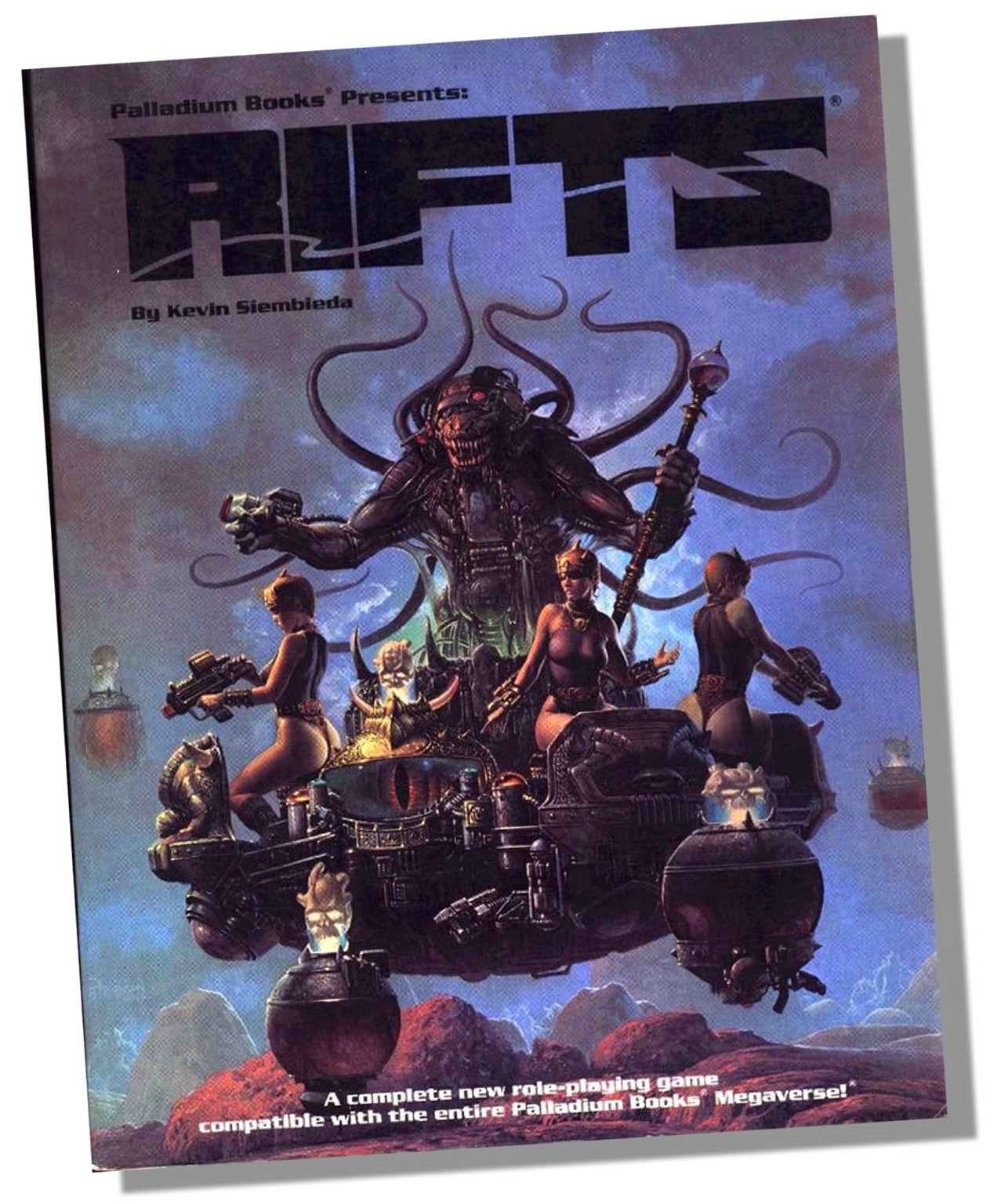
Some pen and paper games such as "Rifts" plays with the idea of different fictional worlds colliding, and as such, this would be difficult to pin down, other than to simply describe it. Game wise it presents some troubling balancing issues. Although it is handled in much the same as it is in Shadowrun.

So why impose rules in the world?

Mostly for the boil the water, add potato flake, serve aspect of it. It helps when one is seeking some narrative coherence. Once a world is established the narrative tends to write itself. Works of fiction the setting and world tend to tell the audience a lot about what is happening.

In fantasy the world in many ways tends to be a backdrop or set piece. If the world is important it is usually in some really vague way, such as "save the world", or "the world is falling apart", the universe is headed for disaster, or some other such contrivance.

Looking at the fictional stuff, low fantasy and science fiction we see a use of sequels focused on characters. Characters tend to be a part of a much bigger story or world.

Once we begin to stray into fantasy land, we see an emphasis on the world as an (object) not really a part of it, tropes and memes tend to go from one iteration to the next but none of the characters.

As an example:

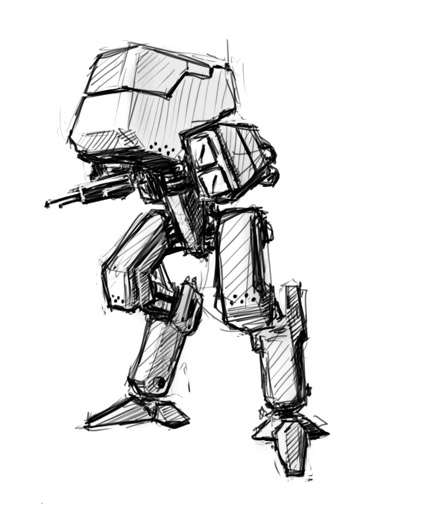
Skyrim, we add a mech.


Functionally it is no different than a giant or dragon. Visually it is a little out of place, so we dress it dwarven and park it in a ruins. It's relatively rare, we place notes and tons of steampunk and steam-magic do-dads all over the place. Presto... a mech in dungeons and dragons... call it a golem, and done.


The more "fantasy" we go, the less bother we take upon ourselves to explain why this thing is even here. The more you ground it the more "bother" it is to keep everything straight.

For the purposes of video games there is a lot of overlap due to the highly visual nature and derivative designs.

Now again with Elder Scrolls... trolls act like "trolls", dragons are dragons, werewolves involve ritual, and vampire lords blood stuff. They are alien in so much as they are denizens of the world, but not really alien in the sense that they evolved through process independently of everything else in the world.

Architecture may have dragons on buildings, or on shields, trolls may be a part of a local ecology, werewolves may be discussed in hushed voices at a tavern, vampires may be in positions of authority in secret.

Because they are a part of a "world at large" we can explore them and in so doing learn about the world.

Now in sci-fi, there is always this notion of "when on an alien world, I am the alien". That is going to be the difference here. Humans or whatever may be stereotyped by other alien cultures, they will have variances in culture and ecology which are "alien". It tells us more about "the universe at large", by exploring them.

In high fantasy... don't expect much if ANY explanation as to how anything works, or why it is there...


It really just comes down to audience participation and consistency. That is going to be managed in dialog, visual communication, and audio.

The quick and dirty litmus test, how much tedium did a creator go about getting what is on the screen to make sense in the composition. The more work they do, the less fantastical, although that doesn't mean they didn't hijack culture stuff "like vampires" and just toss it into the composition.

For the purposes of your assertion I think you make an interesting point, as a narrative tool, it is the same thing; it serves the same purpose.

To describe the local ecology or the universe ecology and give the audience information about the world at large.

How much they are described and how all the pieces fit together is the distinction between low and high fantasy, or fiction and fantasy.

I think the difference is going to be in how one handles the narrative as to how the "alien" or "critter" perceives the audience or characters in narrative.

Aliens on the whole tend to exhibit human like intelligence and the same prejudices in science fiction.

A "critter" in the local ecology maybe not so much. More like a force of nature, inexplicable, or wild life. Maybe it is just tossed in for flavor in the scene? If so, maybe it is fantasy?

The more "critters" have thoughts, express emotions, desires, the closer we likely get to overlapping the genres. Simply from having to actually explain why this thing can actually do this.

Translator microbes or a magic spell? Whichever way you go in your design, pretty much establishes that world if one plans to keep the audience interested.

Audiences get worn or even frustrated with big clumsy shifting in genre, tone, theme. 2c anyway.
 

waj9876

New member
Jan 14, 2012
600
0
0
Ah...Well...I was expecting this to be about the Dwemer/Dwarves. And I had this big argument that they had nothing more advanced than us that didn't rely on some form of magic as more than just the fuel source.

No, it's not. Saying that is the same as saying Minecraft is sci-fi. That Lord of the Rings is sci-fi. That fucking DUNGEONS AND DRAGONS is sci-fi. Simply because they do not take place on our Earth.

Edit: Sci-fi and Fantasy aren't mutually exclusive. You can have both, but just because The Elder Scrolls takes place on a world that isn't Earth...yeah, no.
 

Ed130 The Vanguard

(Insert witty quote here)
Sep 10, 2008
3,777
0
0
Your Sci-Fi analogy kinda breaks down when consider Nirns two moons are considered to be its dead 'attendant spirits' which explains why you can see stars in them during the new moon.

What are Masser and Secunda?
Masser and Secunda ('Jone' and 'Jode' in the Ehlnofex), the moons of Nirn, are the attendant spirits of the mortal plane. They are like the mortal plane in that they are temporal and subject to the bounds of mortality; in fact of this, the moons are dead and died long ago. The moons used to be pure white and featureless, but today their 'skin' is decaying and withering away. Their planes are likewise dying. Mortals perceive this as the moons being spheres with patches of their 'surfaces' completely eaten away; as the moons spin, they seem to become slivers or ragged crescents. These are not caused by shadows, because you can see stars through the black patches of the lunar spheres.
http://www.imperial-library.info/content/cosmology

Clarkes Third Law also takes a hit with magic including:

The Dragonborn consuming souls, people in general wielding magic, receiving blessings from the gods that cure illnesses, etc.

Some of this could be done with some advanced tech, but the Elder Scrolls universe just goes 'it's magic LOLOLOL' and doesn't go beyond that to the degree of say something out of a David Webber novel.

This is one of the flags for me that I'm dealing with a fantasy setting.
 

iblis666

New member
Sep 8, 2008
1,106
0
0
im not sure its scifi but i consider d&d to be a bit what with the planes shifting but I have a theory as well that explains why different races can mate and thats because they are all made of energy and as energy beings they dont have genetics just characteristics
 

DoPo

"You're not cleared for that."
Jan 30, 2012
8,663
0
0
mfeff said:
sni-i-i-ip
Wow...just wow. You went to greater length and depth than I would have ever done. And I agree with everything you said. Also props for using Rifts in there. Great post, my friend, I enjoyed reading it.
 

Auron

New member
Mar 28, 2009
530
0
0
Every bit of fiction we've created as a race is based on elements from early fantasy works we have recordings of, some authors even define some of the early speculative fiction as scifi but it's not usually very correct, it's all related in the end though. Both Sci fi and traditional fantasy depend on sense of wonder but it's usually handled differently with Fantasy dealing with imagination and magical unthinkable things and scenarios while Sci fi tends to put some more basis on the achievements of man and technology of course it more than usually turns out to be quite fantastic as well but that doesn't make them the same.
 

mfeff

New member
Nov 8, 2010
284
0
0
DoPo said:
mfeff said:
sni-i-i-ip
Wow...just wow. You went to greater length and depth than I would have ever done. And I agree with everything you said. Also props for using Rifts in there. Great post, my friend, I enjoyed reading it.
Hey not a problem, glad you got something out of it.

Funny enough I thought I was going to have a quick and easy answer... the more I got into it... the more murky the answer started to become... found myself almost making a slippery slope to actually derive a conclusion. Ah, Rifts! Classic Palladium magic.


Thinking about Rifts, I am really surprised no one has really done anything with the IP, outside of the MMO, which was a little sad.
 

RedDeadFred

Illusions, Michael!
May 13, 2009
4,891
0
0
No, no it can't. Scifi uses science (or at least made up science in the case of Mass Effect and mass effect physics) to explain the world and what happens in it.
Fantasy uses magic to explain the world and what happens in it. This is very much the case with TES.

Sorry, but you are completely wrong.
 

norashepard

New member
Mar 4, 2013
310
0
0
Mimsofthedawg said:
wombat_of_war said:
actually in the case of dragonage the original poster might be onto something . in the kasumi dlc for mass effect there is an ancient statue of a troll from DAO. so theoretically that world exists or existed in the mass effect universe
I KNEW IT! Those demons were just different types of Reaper husks and dragons were actually an ancient prothean technology (or result of genetic tests)!!!!
And don't forget the Lyrium Idol from Dragon Age 2. Where else have I heard about people going madder and madder, almost as if they were... indoctrinated?
 

Zakarath

New member
Mar 23, 2009
1,244
0
0
Aye, to be sci-fi means, generally, either no magic or very minor 'magic', usually by another name. Often, "The Power of The Mind". Either way, it probably won't be in the foreground. Example: Dragonriders of Pern. The dragons are (telepathic) genetically engineered beings, and society is surviving on another world after their spaceship from earth landed there. (Additionally, the stories are much more focused on the systems of society and the lives of its inhabitants than epic adventures and good vs. evil)

The Elder scrolls, however, have magic very much in the foreground, are centered around epic adventures, and basically have all the elements of fantasy, not sci-fi.
...

They key to this is that there is having a Sci-Fi setting, and a Sci-Fi tone, and these are two different things. Are there spaceships, advanced technology, etc.? Then the setting is Sci-fi, and if instead the strange or fantastical elements of the setting function on a 'magic' then the setting is more fantasy. If the setting is then assessed, its implications and intricacies worked out and explored, often with a heavy focus on the human condition and not good vs. evil, the Tone is then more Sci-fi. If it appears at first to be good vs. evil, but the 'evil' is then found to just has a different system of morals, or a problematic communication barrier (the Ender series, for example) this also works.

There are works aplenty, however, of Sci-fi setting stories with more of the themes or tone of fantasy; Star Wars is a common example (after all, the Hero's Journey that Lucas used is a Fantasy staple since time immemorial), and the somewhat rarer bird of a Fantasy-set series with more of the tones traditionally associated with Sci-fi (I would argue that A Song of Ice and Fire and The Kingkiller Chronicles are a couple examples of this); This murky middle ground is what leads to the conception that sci-fi and fantasy are the same creature dressed up a little differently, but I disagree. As you leave this area, headed one way or the other, they become very different ways of discussing the not quite real.

(in my humble opinion anyway)
 

Doom972

New member
Dec 25, 2008
2,311
0
0
If you keep an open mind about it, many sci-fi and fantasy games/books/films/etc can be classified as fantasy.
If the story takes place in a completely imaginary or an alternative version of our universe, it could be considered Fantasy.
In order to be considered sci-fi, however, the story's main plot must have something to do with science and technology that are advanced beyond our own - which is also a part of some fantasy stories, like the one told in The Witcher.
 

J Tyran

New member
Dec 15, 2011
2,403
0
0
Hero in a half shell said:
Fantasy does not bother to justify itself in our universe, so you get magic and situations that are never explained or justified, they just are the way they are.

Skyrim is chock-full of unscientific stuff that is never reasoned or justified. It's just possible because 'magic'. This is pure fantasy.
A lot of Fantasy does provide an explanation for the existence of magic and other strange stuff, sometimes its powers granted by gods and things like that. In the Elder Scrolls its down to the way that the physical world, Nirn (in the plane of Mundus) is actually a magical construct within the wider non coperoral universe called Aetherius and saturated in its energy.
 

Trull

New member
Nov 12, 2010
190
0
0
Just so everybody knows,

LotR is alternate history,
Elder Scrolls is Science Fiction,
and they are still technically both fantasy.
 

IamLEAM1983

Neloth's got swag.
Aug 22, 2011
2,578
0
0
D-Class 198482 said:
Close, but no cigar.

Consider the way Nirn's cosmogony and genesis are organized in Tamrielic lore. Remember why Nirn has two moons? Initial observation might make someone who takes these two moons at face value to say "binary system, duh" and move on. You have to remember, though, that Nirn wasn't created out of thermodynamics and convection. The entire process behind the universe's existence rests on one of the standard lynchpins of Fantasy storytelling: the Creation Myth. In comparison, we humans are able to look to Earth and observe the creation of our planet without NECESSARILY bringing religion into account.

We can, of course - if we're theists - but Nirn and Tamriel's natives don't have that option. Their take on physics allows things like magic and distortions of the space-time continuum (see "The Warp in the West") without bringing math into account. Faith, to them, is Science. Science is Faith, in a roundabout sort of way. This is why magicians, alchemists and priests can be considered as the learned folk of this set of cultures.

Purists will say that even Frank Herbert's "Dune" doesn't really count as Science Fiction, because of the way House Atreides comes to have fairly messianic undertones. Dune feels more like techno-Fantasy to coin a term, seeing as it presents a situation where people who seriously look like humans have managed to travel to and colonize other planets - but while adopting and supporting an extremely developed religious dogma. If you want to slip somewhat more technical considerations into the Elder Scrolls' lore, then this is where Tamriel would be closest to sitting in the same ballpark as Sci-Fi. Even then, that'd be pretty far.

It's not because the Dwemer had flying steam-powered ships and that their tombs are chock-full of pistons and automated guardians that you can bill them as Steampunk, after all.