It's pretty bad. For starters we had what amounted to the villians of the franchise (and make no mistake, they were villains rather than just antagonists) trying to change the central narrative of the franchise in literally the last few minutes of the entire trilogy. That in and of itself is practically a cardinal sin of writing, and in cases like ME3 it has the additional slap in the face of setting aside the immediate and tangible problem (you know, the giant mechanical space squids who had thus far shown nothing but overt contempt for everyone else and that were KILLING EVERYONE EVEN AS YOU WERE TALKING) in favor of an abstract eventuality (sometime well after the Reaper war, organics and synthetics might fight again because they're "just too different").
Furthermore, what was reframed as the 'real' conflict had been presented as ultimately BS by the franchise as a whole. It's the same song and dance we'd seen many times over. Oh, the Turians and humans will always have difficulties, remember the Contact War? Humans and Batarians will never get along. I mean they
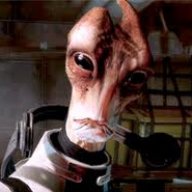
hate each other. The Rachni are an intrinsic threat to galactic civilization. If you save them then our children's children will suffer for it. You can't cure the genophage! Krogans are naturally imperialistic savages. Getting rid of the genophage will just doom us to another Krogan Rebellion! The Quarians are just vagabonds who don't add anything of value and deserve to keep roaming because of the Geth. The Geth are synthetics, they're naturally hostile to organics and exemplify why the rules about AI are in place! An AI is naturally dangerous. We can't ever trust EDI with run of the ship! The thing is though, every single one of these is
wrong. It's not that these groups are too different or naturally at odds with each other, it's that fear and preconception have kept people from discovering that. Yes, it takes effort, but with effort each of those prejudices can be overcome and the race grows beyond its stereotype. The catalyst's logic is more of the same, only this time the narrative insists that we treat it as wisdom that we must accept rather than a continuation of the same damn cycle of fear that we'd seen many times before in this same story.
Then we hit another cardinal sin of lack of denouement or catharsis. Boom, Mass Relays explode (dooming the galactic civilization that is only possible because of them, and - as per Arrival showing the devastating effects of destroying a Relay - obliterating who knows how many systems), Normandy crash lands and...nothing. Dragon Age did better than that, and much of its denouement was in the form of slides. Heck, someone online cobbled together
a generator that mimics the Dragon Age denouement, and that alone makes it so much more bearable. It doesn't fix the former problem, but it does illustrate how even ignoring that problem the ending was lacking a critical element of narrative structure.
From a writing standpoint, the ending was a hot mess that shouldn't have been greenlit.