You're missing the point - making a alignment/morality system more complicated than good/evil while still making the choices impactful is much more difficult than you imagine.
We want choice in games, we want plenty of it, and we want that choice to affect how the game plays out and ends. We want the consequences of our actions to echo down the line, for the game world and characters to react to them as well as building our own character through those choices.
Now imagine you need to develop a game. Let's say we start with a linear game with no choice. You need to write and record dialogue, build assets, do the design work, etc. Now let's say you want a Good/Evil morality system that changes how the game plays out. Well, now you need to record dialogue for both the Good and Evil options (and maybe Neutral), you need the various responses mapped out, cover every permutation. Then let's say you want some major events in the game (major quest chains, for instance) to have specific effects on the game, so you need to cover the various possible outcomes of such events, cover the Good/Evil options, etc. You are already doind 2-3 times as much work (maybe even more) in the writing/dialogue/voiceover department than you would for a linear game.
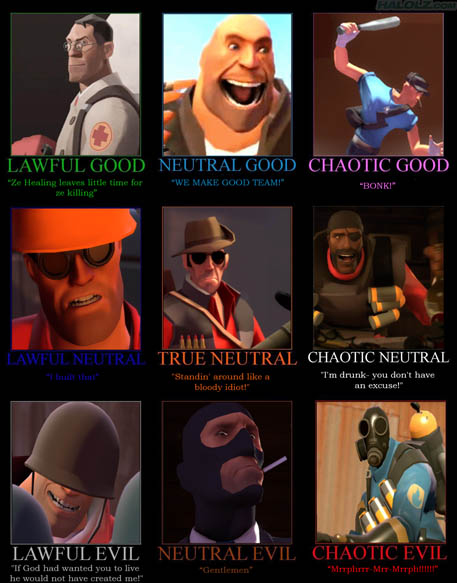
But now someone wants to add a Chaotic/Lawful scale to your Good/Evil scale. Suddenly, the number of permutations possible increases exponentially. And if you don't provide enough variety, people will whine about your game having no choice. You can make a quest chain have six different resolutions, but the Lawful Neutral player might end up whining that his alignment wasn't catered to, that he couldn't ropleplay his character the way he wanted to.
And that's why you don't get more complex choice systems in games today, at least not in AAA titles - the more choice you put in and the more impact it has on how the game plays out, the work and cost of making such a game skyrockets compared to a no-choice game. And as Shamus Young points out [http://www.escapistmagazine.com/articles/view/columns/experienced-points/9331-The-Big-Cost-of-Small-Places], making games is already a massive undertaking, to the point where they can't even match the complexity of older games, much less surpass it.
Dreaming about the stuff you'd like to see in games is all well and good, but you really should try to be realistic about the implementation of such mechanics.