That's a nasty one to explain.Mayhaps said:Electron self-interference, tell me about it.
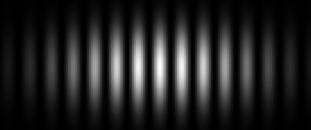
Ok, lets give this a shot. The most common example of electron self interference is the dual slit experiment using an electron (or photon) emitter, a screen with two slits in it, and a detector on the far side of the screen.
When the emitter emits, you can normally expect an electron that passes through either of the slits to take a particular path to the detector, with the laws of physics governing its overall motion and all that jazz. The puzzling thing is, electrons consistently fail to follow the same path. Many of them land on the emitter in locations that would require them to deflect after passing through the slits, in spite of there being nothing, at least in theory, to deflect them. Even more curiously, this simply does not occur when there is only one aperture for them to pass through.
The answer is not all that difficult if you remember that both photons and electrons do not entirely conform to physical properties. When either of them approach the slits, instead of simply passing through, they form a wave front that passes through BOTH of the slits simultaneously. There are then two separate amplitudes that pass through the screen, a bit like having two singers singing the same song together, only they are out of sync with each other. When the wave front tries to recombine, that difference causes the deflection.