The best leaders of your country
- Thread starter sb666
- Start date
Recommended Videos


Yup, the guy who banned most sports, make-up, doing anything on a Sunday, celebrating on Christmas, and subjugated and murdered a bunch of Irish people after saying they wouldn't be harmed and turned their children into slaves for no reason other than he assumed all Irish Catholics were traitors was a brilliant leader. That's why the minute he was out of power the monarchy was restored.MasterOfHisOwnDomain said:For the United Kingdom:
- Oliver Cromwell. His policies on religious freedom and reform of the law / Parliament were incredibly ahead of their time. It took until the Great Reform Act of 1832 to re-establish what Cromwell had set up during his reign.

I'll agree with that. I just wish that Gough's free uni stuff had stuck around longer.solidsnake101023 said:Who are your favourite leaders who were the head of the country you live in or are from.
Gough Whitlam introduced free health care, free education, destroyed conscription and gave women equal pay.
John Curtin saved us during World War 2.
Paul Keating man was hilarious.
I'd also add Ben Chifley to that list. He took over after Curtin died, and set up the snowy hydro scheme, ANU, expanded the CSIRO, an early Pharmaceutical benefits scheme, and he tried to nationalise the banks, which failed, but he did get through some other banking regulations, which helped us avoid the GFC a little bit.
He never said the Irish wouldn't be harmed; he made it perfectly clear he intended to make them pay for their uprising against the English that partly caused the English Civil War. Subjugating Ireland was not Cromwell's bright idea, he was merely the most successful person at it - thus making him a brilliant leader.Chairman Miaow said:Yup, the guy who banned most sports, make-up, doing anything on a Sunday, celebrating on Christmas, and subjugated and murdered a bunch of Irish people after saying they wouldn't be harmed and turned their children into slaves for no reason other than he assumed all Irish Catholics were traitors was a brilliant leader. That's why the minute he was out of power the monarchy was restored.
The monarchy was restored because there was a power struggle after his death between his Parliament and the Army. Richard Cromwell resigned the position of Lord Protector, and the Army kicked out Parliament. Then things started to fall apart, and the General in charge of order in Scotland came down with the only held-together army and returned the King to power - for lack of imagination.
That's why the monarchy was restored not because "Cromwell was a bad man". Which he wasn't.

I don,t really like any of the mooks that ran my country.
but if you ask me which one I dislike the least it would be Mark Rutte
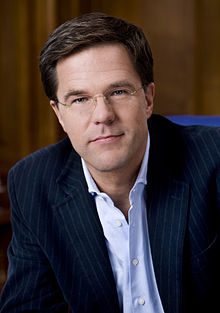
unlike the guy that came before him he looks less like Harry Potter/the guy that everybody in the government would give a wedgie. Also as far as I know (and I don,t really know allot about his decisions) he hasn't fucked up (or ran our country into bankruptcy)
but if you ask me which one I dislike the least it would be Mark Rutte
unlike the guy that came before him he looks less like Harry Potter/the guy that everybody in the government would give a wedgie. Also as far as I know (and I don,t really know allot about his decisions) he hasn't fucked up (or ran our country into bankruptcy)

I'm French, so, most obviously, it would be King Henri IV, the protestant Henri of Navarre who rose up to take the throne of France away from these dastardly,ultra-catholic, fanatical nobles and shut them the fuck up. Too bad that stupid ************ Ravaillac just had to go and stab him. Then we got the Louis XIII and Richelieu pair, which were great too, but everybody else that followed was vastly incompetent, including that megalomaniac Louis XIV who went senile just at the moment his ministers went out of order and fucked everything up by repealing the Édit de Nantes...
Regardless of why he did it or whether or not people did it before him, Cromwell committed genocide. And when I say wouldn't be harmed, I'm talking in particular about the siege of Drogheda and the sack of Wexford, where he most certainly did promise they wouldn't be harmed.MasterOfHisOwnDomain said:He never said the Irish wouldn't be harmed; he made it perfectly clear he intended to make them pay for their uprising against the English that partly caused the English Civil War. Subjugating Ireland was not Cromwell's bright idea, he was merely the most successful person at it - thus making him a brilliant leader.Chairman Miaow said:Yup, the guy who banned most sports, make-up, doing anything on a Sunday, celebrating on Christmas, and subjugated and murdered a bunch of Irish people after saying they wouldn't be harmed and turned their children into slaves for no reason other than he assumed all Irish Catholics were traitors was a brilliant leader. That's why the minute he was out of power the monarchy was restored.
The monarchy was restored because there was a power struggle after his death between his Parliament and the Army. Richard Cromwell resigned the position of Lord Protector, and the Army kicked out Parliament. Then things started to fall apart, and the General in charge of order in Scotland came down with the only held-together army and returned the King to power - for lack of imagination.
That's why the monarchy was restored not because "Cromwell was a bad man". Which he wasn't.
In the US all we have at the moment are Democrats who clearly have never read Atlas Shrugged and Republicans who love the taste of foot in their mouth.
Even though I'm a Republican (so I obviously <3 Reagan), I gotta respect Andrew Jackson. The dude know how to get stuff done and balance a budget.
Even though I'm a Republican (so I obviously <3 Reagan), I gotta respect Andrew Jackson. The dude know how to get stuff done and balance a budget.

I'm Finnish, so most of our leaders have actually been Swedish or Russian.
I'm going to with:
- Alexander I of Russia, because he gave Finland autonomy.
- Alexander II of Russia, for re-establishing the Diet of Finland, increasing our autonomy, for giving us our own currency and for just being a nice guy.
- Carl Gustaf Emil Mannerheim, the first Finn on my list, for being a great military commander who saved Finland from Soviet occupation and took care not to waste lives of his soldiers and for skillfully handling the political situation with the Soviets and the Nazis without even subordinating to Hitler.
I'm going to with:
- Alexander I of Russia, because he gave Finland autonomy.
- Alexander II of Russia, for re-establishing the Diet of Finland, increasing our autonomy, for giving us our own currency and for just being a nice guy.
- Carl Gustaf Emil Mannerheim, the first Finn on my list, for being a great military commander who saved Finland from Soviet occupation and took care not to waste lives of his soldiers and for skillfully handling the political situation with the Soviets and the Nazis without even subordinating to Hitler.

Taiwanese-Canadian here: ohgoodyigettodo2countries
Taiwan/Republic Of China/Formosa/That one island that keeps pissing actual China off:
-Chiang Ching-kuo, not a great leader, but loosened the authoritarian rule of his father Chiang Kai-shek. Paved the way for later politicians like...
-Lee Teng-hui, the first Taiwanese-born President of Taiwan. Supported Taiwanese independance and truly made Taiwan a democracy, even if he may have had a few shady business deals on the side.
Canada:
-Wilfrid Laurier, the famous negotiator. Our first French-Canadian PM, established the Canadian Navy, set up free trade with the United States, and largely responsible for making Canada a little bit less British.
-Pierre Trudeau, Canada's third French-Canadian PM. Responsible for making sure Quebec didn't become it's own separate country, established the Charter of Rights and Freedoms within Canada's Constitution, officially made Canada bilingual, and introduced the Multicultural policy.
And, on a side note, John A. MacDonald doesn't get to be on this list. Sure, he founded Canada, but he was also a racist drunk.
Taiwan/Republic Of China/Formosa/That one island that keeps pissing actual China off:
-Chiang Ching-kuo, not a great leader, but loosened the authoritarian rule of his father Chiang Kai-shek. Paved the way for later politicians like...
-Lee Teng-hui, the first Taiwanese-born President of Taiwan. Supported Taiwanese independance and truly made Taiwan a democracy, even if he may have had a few shady business deals on the side.
Canada:
-Wilfrid Laurier, the famous negotiator. Our first French-Canadian PM, established the Canadian Navy, set up free trade with the United States, and largely responsible for making Canada a little bit less British.
-Pierre Trudeau, Canada's third French-Canadian PM. Responsible for making sure Quebec didn't become it's own separate country, established the Charter of Rights and Freedoms within Canada's Constitution, officially made Canada bilingual, and introduced the Multicultural policy.
And, on a side note, John A. MacDonald doesn't get to be on this list. Sure, he founded Canada, but he was also a racist drunk.

canada
it pre-date canada, but still i guess i would have to give a thumbs up to Louis de Frontenac, to have repel a british invasion in 1690, in part by trick the british to think that they were a lot of soldiers in Quebec when there was not that much, and because he manage to expend the nouvelle-france fontiers down to the mississippi
Lester Bowles Pearson, which have created for the most part the UN armed forces, put in place health care, student loans and many social mesure still in place in canada today
Pierre Eliot trudeau, even if i dont agree with what he did, he was a true leader.
it pre-date canada, but still i guess i would have to give a thumbs up to Louis de Frontenac, to have repel a british invasion in 1690, in part by trick the british to think that they were a lot of soldiers in Quebec when there was not that much, and because he manage to expend the nouvelle-france fontiers down to the mississippi
Lester Bowles Pearson, which have created for the most part the UN armed forces, put in place health care, student loans and many social mesure still in place in canada today
Pierre Eliot trudeau, even if i dont agree with what he did, he was a true leader.

Well there was that trail of tears thing. He just didn't care about the laws, two branches of the government said do it this way he said fuck you and did it his way. I guess you could say he was a good leader whether you want to fallow him or not.Deathmageddon said:In the US all we have at the moment are Democrats who clearly have never read Atlas Shrugged and Republicans who love the taste of foot in their mouth.
Even though I'm a Republican (so I obviously <3 Reagan), I gotta respect Andrew Jackson. The dude know how to get stuff done and balance a budget.
That being said I glad he existed because I am related to him. Well technically his adopted child or something I should really look that up.

arggh I ddon't know much about the australian Prime ministers or any politician for that matter.
but there was one guy who was kicked out that had some pretty good ideas he was only a premier though but eh so Im giving special mentions to nsw premier Jack lang for having good ideas(such as helping the common man during the great depression).
but there was one guy who was kicked out that had some pretty good ideas he was only a premier though but eh so Im giving special mentions to nsw premier Jack lang for having good ideas(such as helping the common man during the great depression).
From Australia:
1. Robert Menzies. Very effective post-war leader, with a track record of re-election to match, but with far more integrity than anyone else who could equal his performance.
2. Bob Brown. Hated by the conservatives, loathed by the Labor Party for taking away left-of-centre voters. Actually stuck to his principles, even if you didn't agree with them, and would actually admit to his faults. Took ridiculous amounts of stick from certain media outlets and didn't flinch.
3. Petro Georgiou. "Leader" of group of MPs who crossed the floor (voted against their own party) on legislation making immigration policy a dog-whistle populist issue. Sacrificed personal gain within the party for principles. Admired him enough to vote for him even though it'd mean voting for a party I desperately wanted out of government - and apparently that sentiment was fairly general, as he was one of very few members of that Government not to have a massive voting swing against him in 2007.
4. Paul Keating. Best one-liners ever. How often does a politician reply to a challenge to hold an election with a refusal, "because, mate, I want to do you slowly"? Also a decent Treasurer who helped push reforms enabling a decade and a half of economic prosperity (which was swiftly claimed by the Coalition when they were elected).
As an aside - Franklin Roosevelt for the US (head and shoulders above today's offerings, especially the Republicans). The guy had the stones to stand up to Churchill and Stalin on the post-WW2 trials, arguing that actual justice was preferable to show trials or vengeance, and actually got his way.
1. Robert Menzies. Very effective post-war leader, with a track record of re-election to match, but with far more integrity than anyone else who could equal his performance.
2. Bob Brown. Hated by the conservatives, loathed by the Labor Party for taking away left-of-centre voters. Actually stuck to his principles, even if you didn't agree with them, and would actually admit to his faults. Took ridiculous amounts of stick from certain media outlets and didn't flinch.
3. Petro Georgiou. "Leader" of group of MPs who crossed the floor (voted against their own party) on legislation making immigration policy a dog-whistle populist issue. Sacrificed personal gain within the party for principles. Admired him enough to vote for him even though it'd mean voting for a party I desperately wanted out of government - and apparently that sentiment was fairly general, as he was one of very few members of that Government not to have a massive voting swing against him in 2007.
4. Paul Keating. Best one-liners ever. How often does a politician reply to a challenge to hold an election with a refusal, "because, mate, I want to do you slowly"? Also a decent Treasurer who helped push reforms enabling a decade and a half of economic prosperity (which was swiftly claimed by the Coalition when they were elected).
As an aside - Franklin Roosevelt for the US (head and shoulders above today's offerings, especially the Republicans). The guy had the stones to stand up to Churchill and Stalin on the post-WW2 trials, arguing that actual justice was preferable to show trials or vengeance, and actually got his way.
The fact that Cromwell, the anti-monarchist, installed his son as his successor probably didn't help matters, either...MasterOfHisOwnDomain said:The monarchy was restored because there was a power struggle after his death between his Parliament and the Army. Richard Cromwell resigned the position of Lord Protector, and the Army kicked out Parliament. Then things started to fall apart, and the General in charge of order in Scotland came down with the only held-together army and returned the King to power - for lack of imagination.
That's why the monarchy was restored not because "Cromwell was a bad man". Which he wasn't.

The political and historical context of his actions may be ancilliary to the definition of 'genocide', which he did commit, but they aren't outside of the moral dimensions of those actions; he didn't dream up the idea of subjugating Ireland, is my point - it was the Zeitgeist.Chairman Miaow said:Regardless of why he did it or whether or not people did it before him, Cromwell committed genocide. And when I say wouldn't be harmed, I'm talking in particular about the siege of Drogheda and the sack of Wexford, where he most certainly did promise they wouldn't be harmed.
Has to be said, he wasn't anti-monarchy. He was anti-Charles I. To what extent you believe it is up for debate, but Cromwell tried many measures other than having the King executed. However, he was anti-monarchy in the sense of it having absolute power - that's clear.Haagrum said:The fact that Cromwell, the anti-monarchist, installed his son as his successor probably didn't help matters, either...
I don't think that you should defend somebody's actions just because they were justifiable by the standards of the people living then, it's like defending witch purges because people were sure they were sent by Satan, or slavery because black people were considered less than whites. He committed atrocities on innocent people because of racism, pure and simple.MasterOfHisOwnDomain said:The political and historical context of his actions may be ancilliary to the definition of 'genocide', which he did commit, but they aren't outside of the moral dimensions of those actions; he didn't dream up the idea of subjugating Ireland, is my point - it was the Zeitgeist.Chairman Miaow said:Regardless of why he did it or whether or not people did it before him, Cromwell committed genocide. And when I say wouldn't be harmed, I'm talking in particular about the siege of Drogheda and the sack of Wexford, where he most certainly did promise they wouldn't be harmed.