
48÷2(9+3)=?
- Thread starter dday4you
- Start date
Recommended Videos


That made me laugh, thankyou.Merkavar said:288
bedmas or what ever
so 9+3=12
48/2=12*12=288


No it is not in their mind and is a valid interpretation as the order of operations isThe Unworthy Gentleman said:Glademaster said:Both answers are fine more brackets are needed it doesn't get much simpler than that. You can do the brackets first then do order of operation or the way you are doing it.I don't think I understand you. For 48 ÷ (9+3)^2 you would haveThomas Rembrandt said:Um, 48 / (9 + 3)^2 would be 48 / (12 * 12) but not 48 / 12 * 12 .
48 / (1+1)^2 would be 48 / (2 *(1 +1)) but not 48 / 2 * 2 . See? As in 48 / 2*(9+3) ?
x / y *z is not the same as x / (y*z).
48 ÷ (9+3)(9+3)
= 48 ÷ (12)(12)
= 48 ÷ 144
but you couldn't have
(48 ÷ (9+3))^2
= 4^2
= 16
Which is what I was saying. And I very much understand that last little bit, but that's not what the question is, nor is it the problem. The problem is that people are overlooking the fact that there are 2 sets of (9+3) and are thinking that there is a half set of 48. The two is a part of the brackets and is nothing else, which is what I'm trying to tell people. Unlike other questions, this one is not ambiguous. The 2 is a part of the brackets.
- terms inside parentheses or brackets
exponents and roots
multiplication and division As they appear left to right
addition and subtraction As they appear left to right

explain?The Stonker said:


The way i was taught is. Brackets first, then left to right.
48/2(9+3)=?
48/2(12)=
48/2*12=
24*12=
288
48/2(9+3)=?
48/2(12)=
48/2*12=
24*12=
288

I'm confused, I thought it was well known that there are two answers because the question was written very vaguely and without proper guidelines (this question would never fly in a Uni based question for Maths).
Hell, even in game development, they set guidelines on how certain things should be introspected mathematically for shaders, with specific dividers and limits for inverses.
And here we are, on the Escapist, on a 6/7 page thread discussing the very question which isn't correct in the first place.
Honestly, guys, if you're going to make fun of 4Chan, Facebook and other people, take a look at yourself and the posters around you beforehand.
Hell, even in game development, they set guidelines on how certain things should be introspected mathematically for shaders, with specific dividers and limits for inverses.
And here we are, on the Escapist, on a 6/7 page thread discussing the very question which isn't correct in the first place.
Honestly, guys, if you're going to make fun of 4Chan, Facebook and other people, take a look at yourself and the posters around you beforehand.
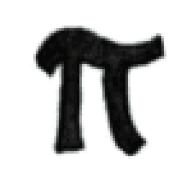
No, they are glued together and that is very much fact. The 2 is the coefficient of the brackets and must be treated as a part of them, there is no getting around that. Your mistake is treating the 2 as if it weren't glued to the brackets and inserting a multiplication symbol into it. There is no problem with the divide at all. Again, lets look at a different equation to prove I'm right (although the last one didn't go well). Also, I will end up seeming really patronising, so I apologise in advance, I just want to jump through every single hoop.JoshGod said:There is something you are missunderstanding which is that the 2 and the (9+3) are not glued together, they do not have brackets around them, the problem is due to peoples misinterpretation with the divide, however if we rewrite the equation to change it all into multiplication it becomes clearer.The Unworthy Gentleman said:48 ÷ (9+3)2
It makes no difference to the way the equation works in the second form, but makes drastic changes to the way the equation works in the first one.
48÷2(9+3)
=48÷2*(9+3)
as ÷2 = *0.5
48÷2*(9+3)
=48*0.5*(9+3)
=48*0.5*12
=48*6
=288
2x
It's plain to see that the coefficient of x is 2, correct? And that 2x can be rewritten as 2(x)? Because 2*x is 2x. So:
20 ÷ 2x can be rewritten as 20 ÷ 2(x)
So, with the same principle you applied to before you could say that
20 ÷ 2x = (20 ÷ 2)(x)
If x = 4 then
20 ÷ 2(4) = (20 ÷ 2)(4)
2.5 =/= 40
So you can't separate the coefficient from it's partner because they are very much glued together.

Well, this is where I love algebra
Let's try this
48÷x(9+3)=2
BEDMAS
Brackets
48÷x(12)=2
Simplify
48/12x=2
Multiply both sides by 12x
48=24x
divide both sides by 24
2=x
Done
Let's try that again
48÷x(9+3)=288
48÷x(12)=2
48/12x=288
48=3456x
x=0.0138888888888889
That doesn't work at all
Behold the awesome might of algebra!
You change an exponent to multiplication for no reason what so ever. Doesn't matter if that's how you solve it, exponents exist for a reason damnit!
Let's try this
48÷x(9+3)=2
BEDMAS
Brackets
48÷x(12)=2
Simplify
48/12x=2
Multiply both sides by 12x
48=24x
divide both sides by 24
2=x
Done
Let's try that again
48÷x(9+3)=288
48÷x(12)=2
48/12x=288
48=3456x
x=0.0138888888888889
That doesn't work at all
Behold the awesome might of algebra!
No, you're wrong in one step, 48/2(12) is not the same as 48/2*12automatron said:Actually following BEDMAS it's still 288
48/2(9+3)
Brackets first
so 48/2(12)
or 48/2*12
read from left to right:
becomes 24*12
or 288
You change an exponent to multiplication for no reason what so ever. Doesn't matter if that's how you solve it, exponents exist for a reason damnit!

You're adding a operation that wasn't originally there and changing the answer.JoshGod said:There is something you are missunderstanding which is that the 2 and the (9+3) are not glued together, they do not have brackets around them, the problem is due to peoples misinterpretation with the divide, however if we rewrite the equation to change it all into multiplication it becomes clearer.The Unworthy Gentleman said:48 ÷ (9+3)2
It makes no difference to the way the equation works in the second form, but makes drastic changes to the way the equation works in the first one.
48÷2(9+3)
=48÷2*(9+3)
as ÷2 = *0.5
48÷2*(9+3)
=48*0.5*(9+3)
=48*0.5*12
=48*6
=288

No, 48 / x^2 is not 48 / x *x . It's 48 / (x * x). Really. Like in 8/2^2 is 8/4 = 2 and 8/2*2 is 8.The Unworthy Gentleman said:Glademaster said:Both answers are fine more brackets are needed it doesn't get much simpler than that. You can do the brackets first then do order of operation or the way you are doing it.I don't think I understand you. For 48 ÷ (9+3)^2 you would haveThomas Rembrandt said:Um, 48 / (9 + 3)^2 would be 48 / (12 * 12) but not 48 / 12 * 12 .
48 / (1+1)^2 would be 48 / (2 *(1 +1)) but not 48 / 2 * 2 . See? As in 48 / 2*(9+3) ?
x / y *z is not the same as x / (y*z).
48 ÷ (9+3)(9+3)
= 48 ÷ (12)(12)
= 48 ÷ 144
but you couldn't have
(48 ÷ (9+3))^2
= 4^2
= 16
Which is what I was saying. And I very much understand that last little bit, but that's not what the question is, nor is it the problem. The problem is that people are overlooking the fact that there are 2 sets of (9+3) and are thinking that there is a half set of 48. The two is a part of the brackets and is nothing else, which is what I'm trying to tell people. Unlike other questions, this one is not ambiguous. The 2 is a part of the brackets.

Basically this:dday4you said:explain?The Stonker said:


48/2(12) is different to 48/2*12intheweeds said:well if it were a statement in java, the brackets resolve first, leaving you with:
48/2(12)
now you have division and multiplication left to resolve. Since they are equal in priority, they resolve left to right. So:
24*12 = 288
I would assume programming languages use the same math as math, but i haven't been in high school for a very long time, i wouldn't remember exactly.
Brackets first! Including coefficients of brackets!

Easy, 1337 and 42 is the answer to everything.dday4you said:explain?The Stonker said:
My issue is not with the division symbol at all. My issue is that people are dismissing coefficients altogether. The 2 is a coefficient of (9+3) and not as something to divide the 48 by.Glademaster said:Right so it can be read as 48/2*(9+3) which is 48/2*12 then with order of operations taking / as standard division symbol and not a fraction line it is 288. You are taking it as though it would be a fraction line so we have 48 over 2*12 which does give 2. So yes it is ambiguous. You can chop and change it whatever way you like but standard order does not favour you but algebra shows you as right. What we need is more brackets and stop this shit everytime someone rehashes this flamebaiting thread.
This is why the answer must be 2. If the coefficient is disregarded and a function is added in like dividing the 48 by 2 then the answer will be changed drastically.2x
It's plain to see that the coefficient of x is 2, correct? And that 2x can be rewritten as 2(x)? Because 2*x is 2x. So:
20 ÷ 2x can be rewritten as 20 ÷ 2(x)
So, with the same principle you applied to before you could say that
20 ÷ 2x = (20 ÷ 2)(x)
If x = 4 then
20 ÷ 2(4) = (20 ÷ 2)(4)
2.5 =/= 40
So you can't separate the coefficient from it's partner because they are very much glued together.
No he is absolutly right. Division by 2 is equal to multiplication by 0.5 . And x *y*z = x*z*y.ACman said:You're adding a operation that wasn't originally there and changing the answer.JoshGod said:There is something you are missunderstanding which is that the 2 and the (9+3) are not glued together, they do not have brackets around them, the problem is due to peoples misinterpretation with the divide, however if we rewrite the equation to change it all into multiplication it becomes clearer.The Unworthy Gentleman said:48 ÷ (9+3)2
It makes no difference to the way the equation works in the second form, but makes drastic changes to the way the equation works in the first one.
48÷2(9+3)
=48÷2*(9+3)
as ÷2 = *0.5
48÷2*(9+3)
=48*0.5*(9+3)
=48*0.5*12
=48*6
=288
48 * 0.5* 12 = 48*12*0.5 = 288

If there is no bracket around the 2(9+3) then how is that any different from writing 2*(9+3), moreover did you read my method, because when you rewrite ÷2 as *0.5 it doesn't matter how you do it as it becomes 288.The Unworthy Gentleman said:No, they are glued together and that is very much fact. The 2 is the coefficient of the brackets and must be treated as a part of them, there is no getting around that. Your mistake is treating the 2 as if it weren't glued to the brackets and inserting a multiplication symbol into it. There is no problem with the divide at all. Again, lets look at a different equation to prove I'm right (although the last one didn't go well). Also, I will end up seeming really patronising, so I apologise in advance, I just want to jump through every single hoop.JoshGod said:There is something you are missunderstanding which is that the 2 and the (9+3) are not glued together, they do not have brackets around them, the problem is due to peoples misinterpretation with the divide, however if we rewrite the equation to change it all into multiplication it becomes clearer.The Unworthy Gentleman said:48 ÷ (9+3)2
It makes no difference to the way the equation works in the second form, but makes drastic changes to the way the equation works in the first one.
48÷2(9+3)
=48÷2*(9+3)
as ÷2 = *0.5
48÷2*(9+3)
=48*0.5*(9+3)
=48*0.5*12
=48*6
=288
2x
It's plain to see that the coefficient of x is 2, correct? And that 2x can be rewritten as 2(x)? Because 2*x is 2x. So:
20 ÷ 2x can be rewritten as 20 ÷ 2(x)
So, with the same principle you applied to before you could say that
20 ÷ 2x = (20 ÷ 2)(x)
If x = 4 then
20 ÷ 2(4) = (20 ÷ 2)(4)
2.5 =/= 40
So you can't separate the coefficient from it's partner because they are very much glued together.
EDIT; i dont mean to sound like an ass, its just you didnt comment on my solution.