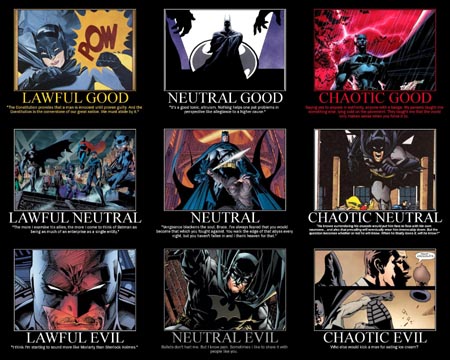
From wikipedia, here. http://en.wikipedia.org/wiki/Alignment_(Dungeons_&_Dragons). OMG, someone who agrees with me. 
Alignment is only a tool for guiding gameplay, not an immutable declaration of how a character must act, and is used only as a guideline. Still, characters in a party should have compatible alignments - Lawful Good characters are compatible with Lawful Evil characters if they have a common goal, but the addition of a Chaotic Evil character may tear the party apart. Characters may even have some influence on the alignment of their companions - a Lawful Good leader may influence their companions to act in a more noble fashion. The authors of Dungeon Master For Dummies have found that a party of good or neutral characters works better: the impetus for adventures is easier, group dynamics are smoother, and it allows the "heroic aspects of D&D [to] shine through".[5]
Alignment is only a tool for guiding gameplay, not an immutable declaration of how a character must act, and is used only as a guideline. Still, characters in a party should have compatible alignments - Lawful Good characters are compatible with Lawful Evil characters if they have a common goal, but the addition of a Chaotic Evil character may tear the party apart. Characters may even have some influence on the alignment of their companions - a Lawful Good leader may influence their companions to act in a more noble fashion. The authors of Dungeon Master For Dummies have found that a party of good or neutral characters works better: the impetus for adventures is easier, group dynamics are smoother, and it allows the "heroic aspects of D&D [to] shine through".[5]