drummond13 said:
Of course you can change the words and symbols if you want, but the concepts behind them remain constant. Sure, you can call "addition" something else and "subtraction" something else (and other languages do), but that doesn't change the fact that there are such things as what we call addition and subtraction.
"Addition" and "multiplication" are extremely common operations (while "subtraction" and "division" are not so much), they even have their own, specific, definitions. The symbols that denote those two operations are commonly used, as well, but beyond that everything is defined by the source material. The operands are not necessarily numbers, for instance. They also could be vectors, n-dimensional matrices, other sets, polynomials, functions... maybe even whole other Theories, if you want to go meta.
As for the core operation itself, addition for the layman is quite different from addition in, say, ring Z/Z[sub]14[/sub], to say nothing of multiplication (yay for Zero Divisors). The things we call "addition" and "subtraction" in everyday life we use with an implied qualifier "in the ring of Real numbers" or "integers" or somesuch, depending on context.
Look up "Algebra" for the general information on groups or "Ring theory" to go straight to Rings. This is common university-level material.
drummond13 said:
And sufficiently advanced math is magic? I suppose it must look like it to you.
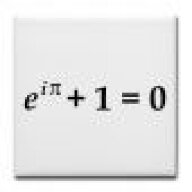
I'm the wizard, I do the magic and it's glorious. Even the simplest math tricks - such as "0 is even" or "0.(9) = 1" or "
e[sup]i*Pi[/sup] + 1 = 0" or "Monty Hall, switch" - never fail to baffle hundreds of math-challenged individuals. Shazam.