1) Kid caused a situation that warranted police response.
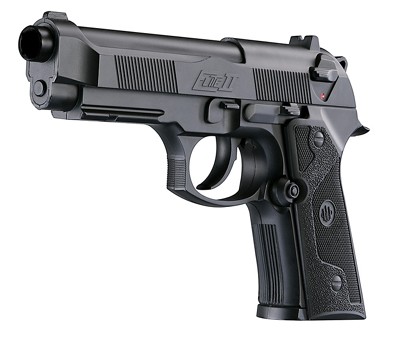
2) Kid brandishes a pellet gun that, in some cases, can be indistinguishable from the real counterpart.
3) Police tell the kid to drop what they perceive as a live firearm, multiple times, to which he ignores them.
4) Kid starts aiming perceived weapon at armed officers, police respond to perceived threat by eliminating the threat by three (likely) 9mm rounds to center-mass.
Barring any revelatory evidence, the police took the best course of action that the situation allowed. They followed their training which instructed them to preserve innocent life to the best of their abilities by eliminating a threat, to which they did. I would say they should be proud of themselves for attempting to avert a possible crisis and/or massacre, but the revelation to them that it wasn't a live weapon that the kid had, but a pellet gun will be exceptionally hard on them. Now they have to live with not only the realization that they killed a minor, but that the weapon they thought he had wasn't even a real weapon at all, a self-inflicting punishment I wouldn't wish upon them.
Now, a word regarding other commenter theories...
1) "They should have talked him down / shot to injure him!". Sorry, but Hollywood police tactics don't work in the real world. Negotiating isn't always going to get the suspect to lower their weapon, not everyone is Samuel Jackson (Film: The Negotiator) or Commander Shepard (Game: Mass Effect).
Police are trained to fire center-mass for two main reasons: 1 - the torso is the largest and thickest portion of the human body. Not only does that make aiming at it easier, it also lessens the chance of a bullet passing through the body and striking someone behind him. 2 - There are many arteries and vital places in your arms and legs that, if severed or wounded, can cause an individual to bleed-out in mere moments, all the while they are suffering excruciating pain and might still be capable of discharging their weapon at either the police or innocents.
2) "They should have used tazers or rubber bullets!". Tazers and rubber-rounds are classified as 'Less Than Lethal'. Want to know why? Because they don't have the same effectiveness on impact that a lethal response has. Just because a rubber round knocks you on your butt, at best, doesn't mean that your finger that is on the trigger won't be able to squeeze and injure/kill someone. Tazers also cause muscle contractions by the electrical current, making everything (fingers included) tighten. Thus, if your finger is on the trigger, your weapon will discharge.
2-b) "They should have used rubber rounds on his head to incapacitate / on his arm to disarm him!". Again, sorry, but Hollywood tactics don't work here. The body perceives pain in two different ways generally. 1 - Injuries to the extremities (head included) can cause muscle contractions, resulting in the suspect squeezing the trigger. This is on top of the fact that it isn't nearly as easy to dislodge a weapon from a suspects grasp as movies show it. 2 - Penetrating wounds (such as a knife or gunshot wound) to the torso causes the body to go into a 'crisis mode' where it immediately rushes all control and blood flow to the torso, trying to protect vital organs. This causes muscles and extremities to lose control and go limp, reducing the chance of the suspect discharging his weapon.
3) "Why did they fire more than once?! Overkill!". When police respond to dangerous situation, one where innocents or themselves could be injured or killed by the suspect, they do not mess around. When a situation reaches a point that it warrants an armed response by the police, if they are provoked, they are no longer trying to 'disarm the threat', but to eliminate it by any means necessary to protect innocent lives. One gunshot is not a guaranteed kill, if the bullet even strikes the target. Adrenaline, certain drugs, or a combination of both can make some individuals nearly disregard center-mass 9mm handgun rounds, so one shot sometimes will not cut it. Police are trained to fire until the threat is eliminated, so three rounds isn't overkill at all. There is also the factor that, likely, one officer wasn't the only shooter.
4) "They should have waited until he actually fired before shooting him!". I'm sorry, but if you actually believe this, you're an idiot. So we should wait until he fires at either an officer or an innocent, very likely killing them in the process, before police attempt to diffuse the situation? I'd ask you to imagine a situation where someone you love dearly, be they your wife, closest friend, son or whatever, is taken hostage by your neighbor gone nuts. By that train of thought, even if officers had a clean shot that could diffuse the situation with the subject's death, they should wait until your loved one has a bullet to their brain before they respond. No. The police motto of 'To Protect and Serve' doesn't do the dead any justice, since the innocent person that got shot because they needed justification in order to respond doesn't need any protecting anymore.
5) "Stupid pigs, always lovin the chance to cap off people. Thugs in uniform!". In response to this, I'd ask you to read this article below.
http://www.cnn.com/2012/01/05/justice/utah-officers-shot/index.html?hpt=ju_c2
Yes, some cops are bad apples and give the rest of them bad names. There are also a lot of other officers out there who firmly believe in 'To Protect and Serve' and will try as hard as they can to do their duties. Unfortunately, society has decided that the instant we see a news story about a single bad cop at the entire other end of the country, we need to paint every cop as a crook. Many of them are just doing their jobs, while some others truly take the duties and motif of their office as their life code. It is only tragic that a few bad seeds can destroy the public image that the better of them deserve.