

Your video game hot take(s) thread
- Thread starter Dany_the_penguin
- Start date
Recommended Videos

- Feb 7, 2011
- 9,050
- 3,730
- 118
- Country
- 'Merica
- Gender
- 3 children in a trench coat
All they have to do is pronounce it "Double Knockout" and it's a great name for a tag fighting game.2xko is still a stupid ass name for a fighting game
Bethesda needs a trip to the Burn ward after that.And somehow still a better game than Starfield.
That still sounds wack.All they have to do is pronounce it "Double Knockout" and it's a great name for a tag fighting game.

Scripted for gunshots, ragdoll for explosions.Ragdoll physics are bad because the bodies flop around too much. I'd rather have scripted "death" animations and throws. Even if there aren't very many of them.
- Apr 1, 2009
- 16,570
- 5,147
- 118
- Gender
- Whatever, just wash your hands.
Scripted for gunshots, gibs for explosions.Scripted for gunshots, ragdoll for explosions.
Depends on the explosion but fair.Scripted for gunshots, gibs for explosions.

I think ragdoll is generally ok if they don't act as physics objects for the player. If they just fall over and stay where they are after a second it's fine, but when they get caught on the player's feet like a empty shopping bag it gets silly.Ragdoll physics are bad because the bodies flop around too much. I'd rather have scripted "death" animations and throws. Even if there aren't very many of them.


I kinda hate the prevalence of text floating next to interactable hotspots because it preempts too much and kills muh immersion, especially in horror games, and I miss the elegance and subtlety of merely having your character turn their head or at least having the thing glint unnaturally.
I wouldn't mind as much if not every prompt in games was the same minimalistic white text. If it's Silent Hill, give me some typewriter or handwritten text.View attachment 13876
I kinda hate the prevalence of text floating next to interactable hotspots because it preempts too much and kills muh immersion, especially in horror games, and I miss the elegance and subtlety of merely having your character turn their head or at least having the thing glint unnaturally.
I think "Press A to Pray" takes me out no matter the font. I'd just rather find out what the thing does by interacting with it. A lot of the atmosphere from OG Resi and SH came from their HUDless design. And using the teeny little white text for everything like you're trying not to draw too much attention or be too much of a bother has the opposite effect.I wouldn't mind as much if not every prompt in games was the same minimalistic white text. If it's Silent Hill, give me some typewriter or handwritten text.
Would just the button prompt be a good compromise? That telegraphs that you can interact with the item but it won't tell you why. Or maybe for a game like this you need something that hints at it by the environment like the lantern could be lit or there could be subtle fog around the shrine.I think "Press A to Pray" takes me out no matter the font. I'd just rather find out what the thing does by interacting with it. A lot of the atmosphere from OG Resi and SH came from their HUDless design. And using the teeny little white text for everything like you're trying not to draw too much attention or be too much of a bother has the opposite effect.
OG Resident Evil would have anything of interest glint or otherwise stand out the way stuff that's definitely going to move would stand out in old cartoons. In SH the character's head would tilt in that direction. Granted there was an element of needle in the haystack. But man seeing James or Heather's head turn to notice something before me was always a bit unnerving. Using light cues, sound cues, even that yellow paint that RE7-forwards loves so much, is a more elegant solution than a bunch of text prompts on screen.Would just the button prompt be a good compromise? That telegraphs that you can interact with the item but it won't tell you why. Or maybe for a game like this you need something that hints at it by the environment like the lantern could be lit or there could be subtle fog around the shrine.
Actually SHF is even more cluttered: when you first discover a save station the character goes "Huh, maybe I should PRAY" before you get two prompts telling you how to PRAY and another letting you know you've updated your in-universe Wikipedia. Weak! This veers into the Ubisoft school of design.


Last edited:
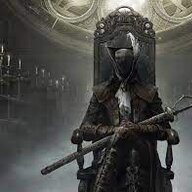
Great news: I have figured out how difficulty settings should work across games. This is a result of careful analysis and research (i.e., thinking about it during a sh**-shower-shave).
And by games I am referring to single player video games that involve both platforming and/or combat AND some sort of narrative with an end game state, because that's what I play. Walking sims, visual novels, RTS, city builders, fighting games- not my bag.
I am also answering the age-old question of "but must all video games have difficulty settings" with a resounding yes, because I've figured out how to do it.
Here's how it goes:
Each video game must have the following three difficulty settings:
Normal
This is what is often called the "intended" difficulty, the one that developers primarily focus their tuning for. It is, of course, the default setting. And because in this utopia I'm proposing, we wouldn't even have to ask players to select a difficulty setting when they start, because we'll know that it will start in Normal and we can change when we want.
I think one of the reasons changing difficulty was so hard in older games is because of checkpoint saves and auto saving- it would be hard to program around a player futzing with difficulty settings during a fight or level that is supposed to be an encapsulated experience (e.g., multi-phased boss fights). But now that games have figured that out and you can save whenever (unless you're playing a crap game or one that fans defend as being "retro," which is the same thing), we can just change difficulty settings when we want and that should be fine.
Easy
Enemies are less aggressive AND they have less health AND they deal less damage. Platforming is more forgiving- if there are procedurally generated rooms with obstacles, there are just less obstacles. If it's a section where you have to time our jumps in between baddies shooting things at you, there are longer intervals in between shots. Ganks are less ganky, and bosses with more than 2 phases have one less phase (unless those phases are story-relevant). Of course, not every single game would do it in all these exact ways but these sorts of common practices would make it clearer on what to expect and, more importantly, they just make sense, and are more engaging than simple health sponginess. And I've seen them done, so I'm not asking for much, here.
The goal of Easy is that players who still want to engage in the mechanics can- they're still fighting, jumping, just with less struggle.
Hard
Opposite of easy, I mean it's just that simple. The goal of Hard is for players who find Normal too boring.
Not only would this be how the three settings work, but this is what they're called in all games. Easy, Normal (which is default), and Hard. Standards, dependability, and consistency across QA teams. I really do feel this would be the balance between quality control and creativity- none of this would impede in game design, gameplay innovation, etc.
These three settings would be universal and consistent, but they are minimum. Additional settings are where games can go nuts. An extra hard mode that unlocks when you've beaten the game? Sure. An extra easy mode for players who literally just want to "experience the story?" Fine, up to the devs- but not mandatory! (I believe this is basically what the Lies of P update added, where there are easier settings but you still have to fight).
More minute settings for specific elements of the gameplay? Sure, be my guest. I'm playing Persona 5 after having played Persona 4 and to my surprise, 5 has less settings options than 4 and I just don't know how to feel about that. 4 had Easy and Very Easy, and individual settings on how much money and exp you can earn, which I took advantage of to minimize grinding. I am annoyed 5 doesn't have that but I haven't gotten far enough yet for it to effect my game.
Accessibility- of course, absolutely. Color blindness and audio cues, go nuts.
I think platforming games should have trial-run options. Like a mode called "safe" where you don't die if you fall, allowing you to "practice" the room or level, but completing it in "safe" wouldn't count towards game progression. If my s-s-s was longer I'd have come up with similar examples of hyper-specific difficulty related settings that allow players to progress through the game while still maintaining challenge and engagement.
Because that is really what I'm going for here. I want everybody to be able to play cool games, but to play them.
In anticipation of some follow-up questions:
"But [insert game] already does this!"
Cool! I'm not proposing any new thing, I'm proposing consistency and standardization. Of course these ideas have all come from games I've played and I just want more games to adopt them.
"Dark Souls Hollow Knight blah blah"
Yes they would all have these options and they'd be better for it. I concede that maybe I wouldn't have remembered or felt as strongly about Bloodborne or Sekiro as I did if I were allowed to drop difficulty but I'm OK with that because as much as I love those games, some parts were just bullshit anyway and just because I had the energy at the time to keep bashing my head against the wall in the cursed chalice dungeon doesn't mean it was good.
"Game dev already takes a long time and is expensive"
Cry me a river. Adding this would be better then extra poison areas, boss fights that are like a previous boss fight but now there's two at the same time, and a roguelike where getting to the end isn't actually the end it turns out! Plus, once something becomes a standard and if there as even any halfway decent project management in place, it would be the easiest part of projected budget and schedule.
Thank you for coming to my presentation.
And by games I am referring to single player video games that involve both platforming and/or combat AND some sort of narrative with an end game state, because that's what I play. Walking sims, visual novels, RTS, city builders, fighting games- not my bag.
I am also answering the age-old question of "but must all video games have difficulty settings" with a resounding yes, because I've figured out how to do it.
Here's how it goes:
Each video game must have the following three difficulty settings:
Normal
This is what is often called the "intended" difficulty, the one that developers primarily focus their tuning for. It is, of course, the default setting. And because in this utopia I'm proposing, we wouldn't even have to ask players to select a difficulty setting when they start, because we'll know that it will start in Normal and we can change when we want.
I think one of the reasons changing difficulty was so hard in older games is because of checkpoint saves and auto saving- it would be hard to program around a player futzing with difficulty settings during a fight or level that is supposed to be an encapsulated experience (e.g., multi-phased boss fights). But now that games have figured that out and you can save whenever (unless you're playing a crap game or one that fans defend as being "retro," which is the same thing), we can just change difficulty settings when we want and that should be fine.
Easy
Enemies are less aggressive AND they have less health AND they deal less damage. Platforming is more forgiving- if there are procedurally generated rooms with obstacles, there are just less obstacles. If it's a section where you have to time our jumps in between baddies shooting things at you, there are longer intervals in between shots. Ganks are less ganky, and bosses with more than 2 phases have one less phase (unless those phases are story-relevant). Of course, not every single game would do it in all these exact ways but these sorts of common practices would make it clearer on what to expect and, more importantly, they just make sense, and are more engaging than simple health sponginess. And I've seen them done, so I'm not asking for much, here.
The goal of Easy is that players who still want to engage in the mechanics can- they're still fighting, jumping, just with less struggle.
Hard
Opposite of easy, I mean it's just that simple. The goal of Hard is for players who find Normal too boring.
Not only would this be how the three settings work, but this is what they're called in all games. Easy, Normal (which is default), and Hard. Standards, dependability, and consistency across QA teams. I really do feel this would be the balance between quality control and creativity- none of this would impede in game design, gameplay innovation, etc.
These three settings would be universal and consistent, but they are minimum. Additional settings are where games can go nuts. An extra hard mode that unlocks when you've beaten the game? Sure. An extra easy mode for players who literally just want to "experience the story?" Fine, up to the devs- but not mandatory! (I believe this is basically what the Lies of P update added, where there are easier settings but you still have to fight).
More minute settings for specific elements of the gameplay? Sure, be my guest. I'm playing Persona 5 after having played Persona 4 and to my surprise, 5 has less settings options than 4 and I just don't know how to feel about that. 4 had Easy and Very Easy, and individual settings on how much money and exp you can earn, which I took advantage of to minimize grinding. I am annoyed 5 doesn't have that but I haven't gotten far enough yet for it to effect my game.
Accessibility- of course, absolutely. Color blindness and audio cues, go nuts.
I think platforming games should have trial-run options. Like a mode called "safe" where you don't die if you fall, allowing you to "practice" the room or level, but completing it in "safe" wouldn't count towards game progression. If my s-s-s was longer I'd have come up with similar examples of hyper-specific difficulty related settings that allow players to progress through the game while still maintaining challenge and engagement.
Because that is really what I'm going for here. I want everybody to be able to play cool games, but to play them.
In anticipation of some follow-up questions:
"But [insert game] already does this!"
Cool! I'm not proposing any new thing, I'm proposing consistency and standardization. Of course these ideas have all come from games I've played and I just want more games to adopt them.
"Dark Souls Hollow Knight blah blah"
Yes they would all have these options and they'd be better for it. I concede that maybe I wouldn't have remembered or felt as strongly about Bloodborne or Sekiro as I did if I were allowed to drop difficulty but I'm OK with that because as much as I love those games, some parts were just bullshit anyway and just because I had the energy at the time to keep bashing my head against the wall in the cursed chalice dungeon doesn't mean it was good.
"Game dev already takes a long time and is expensive"
Cry me a river. Adding this would be better then extra poison areas, boss fights that are like a previous boss fight but now there's two at the same time, and a roguelike where getting to the end isn't actually the end it turns out! Plus, once something becomes a standard and if there as even any halfway decent project management in place, it would be the easiest part of projected budget and schedule.
Thank you for coming to my presentation.
There's already about a thousand times more video games than a person can complete in a lifetime, why does every game have to cater to every player? I don't see why there can't be games for people who want the game to set the standard and force them to meet it or give up.Great news: I have figured out how difficulty settings should work across games. This is a result of careful analysis and research (i.e., thinking about it during a sh**-shower-shave).
And by games I am referring to single player video games that involve both platforming and/or combat AND some sort of narrative with an end game state, because that's what I play. Walking sims, visual novels, RTS, city builders, fighting games- not my bag.
I am also answering the age-old question of "but must all video games have difficulty settings" with a resounding yes, because I've figured out how to do it.
Here's how it goes:
Each video game must have the following three difficulty settings:
Normal
This is what is often called the "intended" difficulty, the one that developers primarily focus their tuning for. It is, of course, the default setting. And because in this utopia I'm proposing, we wouldn't even have to ask players to select a difficulty setting when they start, because we'll know that it will start in Normal and we can change when we want.
I think one of the reasons changing difficulty was so hard in older games is because of checkpoint saves and auto saving- it would be hard to program around a player futzing with difficulty settings during a fight or level that is supposed to be an encapsulated experience (e.g., multi-phased boss fights). But now that games have figured that out and you can save whenever (unless you're playing a crap game or one that fans defend as being "retro," which is the same thing), we can just change difficulty settings when we want and that should be fine.
Easy
Enemies are less aggressive AND they have less health AND they deal less damage. Platforming is more forgiving- if there are procedurally generated rooms with obstacles, there are just less obstacles. If it's a section where you have to time our jumps in between baddies shooting things at you, there are longer intervals in between shots. Ganks are less ganky, and bosses with more than 2 phases have one less phase (unless those phases are story-relevant). Of course, not every single game would do it in all these exact ways but these sorts of common practices would make it clearer on what to expect and, more importantly, they just make sense, and are more engaging than simple health sponginess. And I've seen them done, so I'm not asking for much, here.
The goal of Easy is that players who still want to engage in the mechanics can- they're still fighting, jumping, just with less struggle.
Hard
Opposite of easy, I mean it's just that simple. The goal of Hard is for players who find Normal too boring.
Not only would this be how the three settings work, but this is what they're called in all games. Easy, Normal (which is default), and Hard. Standards, dependability, and consistency across QA teams. I really do feel this would be the balance between quality control and creativity- none of this would impede in game design, gameplay innovation, etc.
These three settings would be universal and consistent, but they are minimum. Additional settings are where games can go nuts. An extra hard mode that unlocks when you've beaten the game? Sure. An extra easy mode for players who literally just want to "experience the story?" Fine, up to the devs- but not mandatory! (I believe this is basically what the Lies of P update added, where there are easier settings but you still have to fight).
More minute settings for specific elements of the gameplay? Sure, be my guest. I'm playing Persona 5 after having played Persona 4 and to my surprise, 5 has less settings options than 4 and I just don't know how to feel about that. 4 had Easy and Very Easy, and individual settings on how much money and exp you can earn, which I took advantage of to minimize grinding. I am annoyed 5 doesn't have that but I haven't gotten far enough yet for it to effect my game.
Accessibility- of course, absolutely. Color blindness and audio cues, go nuts.
I think platforming games should have trial-run options. Like a mode called "safe" where you don't die if you fall, allowing you to "practice" the room or level, but completing it in "safe" wouldn't count towards game progression. If my s-s-s was longer I'd have come up with similar examples of hyper-specific difficulty related settings that allow players to progress through the game while still maintaining challenge and engagement.
Because that is really what I'm going for here. I want everybody to be able to play cool games, but to play them.
In anticipation of some follow-up questions:
"But [insert game] already does this!"
Cool! I'm not proposing any new thing, I'm proposing consistency and standardization. Of course these ideas have all come from games I've played and I just want more games to adopt them.
"Dark Souls Hollow Knight blah blah"
Yes they would all have these options and they'd be better for it. I concede that maybe I wouldn't have remembered or felt as strongly about Bloodborne or Sekiro as I did if I were allowed to drop difficulty but I'm OK with that because as much as I love those games, some parts were just bullshit anyway and just because I had the energy at the time to keep bashing my head against the wall in the cursed chalice dungeon doesn't mean it was good.
"Game dev already takes a long time and is expensive"
Cry me a river. Adding this would be better then extra poison areas, boss fights that are like a previous boss fight but now there's two at the same time, and a roguelike where getting to the end isn't actually the end it turns out! Plus, once something becomes a standard and if there as even any halfway decent project management in place, it would be the easiest part of projected budget and schedule.
Thank you for coming to my presentation.

In addition, what's that saying about what happens if you try to please everyone?There's already about a thousand times more video games than a person can complete in a lifetime, why does every game have to cater to every player? I don't see why there can't be games for people who want the game to set the standard and force them to meet it or give up.
- Apr 1, 2009
- 16,570
- 5,147
- 118
- Gender
- Whatever, just wash your hands.
Something something something "go woke go broke" I'm sure. >.>In addition, what's that saying about what happens if you try to please everyone?
Fortunately, I never declared that "every game has to cater to every player." I explicitly listed entire styles and genres I excluded from my consideration for this reason.There's already about a thousand times more video games than a person can complete in a lifetime, why does every game have to cater to every player? I don't see why there can't be games for people who want the game to set the standard and force them to meet it or give up.
Games already do a lot of things to "cater" to more players, like common control mappings, UI styles, and sets of tropes. This includes difficulty settings already.
These usually don't bother me, but whatever. The immersion is never lessened for me. It rarely ever does.I kinda hate the prevalence of text floating next to interactable hotspots because it preempts too much and kills muh immersion, especially in horror games, and I miss the elegance and subtlety of merely having your character turn their head or at least having the thing glint unnaturally.