WTF? Jim, you serious? "Game can be good with a weak story"! Are you F-ing serious?! Most pathetic piece of argument ever! wow! Show me a good game that has a weak story! You gonna use Angry Birds maybe?! Show me a single good game without or with weak story!

The Good, the Bad, and the Sequel
- Thread starter Extra Consideration
- Start date
Recommended Videos
'Good?' or 'Successful?'AJey said:WTF? Jim, you serious? "Game can be good with a weak story"! Are you F-ing serious?! Most pathetic piece of argument ever! wow! Show me a good game that has a weak story! You gonna use Angry Birds maybe?! Show me a single good game without or with weak story!
Because uh, Counterstrike comes to mind. I don't like Counterstrike, but a very large group of people do and have for a very long time. Also 'good story' is pretty subjective--I wouldn't say Punch Out had a good story, but the game was a blast. Hell, the entire Street Fighter franchise has a 'storyline' so laughable that you literally probably shouldn't know it, but remains an excellent franchise for what it is. But of course, I could list games like this all day. If it's something as subjective as how much you 'like' them you're just going to shoot them down because they're not your kind of games.

Reading the first post by Yahtzee it occured to me that there are several companies that I immediately identify as "good" and a whole lot more that I dislike. However, as far as individual developers go I can't think of anyone.
The good: Firaxis, Ironclad Games and Remedy Entertainment
The bad: Bioware and Bethesda Softworks
The sequels: Treyarch
The good: Firaxis, Ironclad Games and Remedy Entertainment
The bad: Bioware and Bethesda Softworks
The sequels: Treyarch

I bought my first 42 inch tv about 4 years ago and have used it every day for movies, large gaming marathons. It was $999 4 years ago and the brand is a soniq. If I could I would buy a top of the line tv if I could but being at uni and working part time I cant afford it. It's not the brand thats the problem its how its treated. The same can be said for games. If the developer treats the game right and puts serious effort into it's development it will show and people will buy the game (case in point: supreme commander). I found myself agreeing with Sterling above the other 2Recor55 said:I just wanted to adress yahtzees point of point that people see cheaper as inferior. Ive worked at an electronics store for 2 years now and if i have learnt one thing its that people dont give a dam about quality or service when they can get a product of $20 cheaper over the internet. Sure there are a select few with triple digit IQs who can make the link between price and quality but they are so few in between and when they do show up they often cant aford the extra hundred bucks for a Panasonic tv over a Soniq.
In summation. PRICE IS EVERYTHING.

First of all, Jim: even though the way you market yourself here on the Escapist doesn't reallly do it for me (although your talent for coming about as an obnoxious asshole is obviously admirable), but it's nice to see that you dó know what you're talking about, most of the time.
I suspect that you have this 'style' to distinguish yourself from the other serious business fellows over here, but I certainly wouldn't mind you doing more texty stuff on the Escapist. How about a weekly column? As long as you keep writing like this, you can even call me stupid once in a while.
Also, on topic, concerning the differentiated prices. This seems like a nice idea, but there is another objection, next to the one Yahtzee mentioned: the budget developers nowadays need to come up with a high quality game. One of the reasons that we see less original titles is because that budget increased massively in the last few years, and most games simply need a few full priced buyers; some 'informed' gamers, but also (or especially) ignorant moms who like the pretty picture on the cover.
So, if we want more original, non-se/prequels, what we actually need is a cheaper way to make games that are on par with what the audience expects. I highly doubt that we are simply going to lower that bar, but I think it would be a great step forward if the next console generation doesn't have better graphics than what we have on the x360/ps3, like the Wii U is doing. The Wii has proven that it's very doable to make relatively cheap games for it (even the better ones cost not nearly as much as a Gears of War 3). So maybe, in a few years we can make ps3 games with a Wii game's budget? With technological developments and consolemakers that design their devices so they are easy to work with, this should be possible. Most people agree that it's fine what we now have on a graphic level, so.. who will give Sony and Microsoft a call?
I suspect that you have this 'style' to distinguish yourself from the other serious business fellows over here, but I certainly wouldn't mind you doing more texty stuff on the Escapist. How about a weekly column? As long as you keep writing like this, you can even call me stupid once in a while.
Also, on topic, concerning the differentiated prices. This seems like a nice idea, but there is another objection, next to the one Yahtzee mentioned: the budget developers nowadays need to come up with a high quality game. One of the reasons that we see less original titles is because that budget increased massively in the last few years, and most games simply need a few full priced buyers; some 'informed' gamers, but also (or especially) ignorant moms who like the pretty picture on the cover.
So, if we want more original, non-se/prequels, what we actually need is a cheaper way to make games that are on par with what the audience expects. I highly doubt that we are simply going to lower that bar, but I think it would be a great step forward if the next console generation doesn't have better graphics than what we have on the x360/ps3, like the Wii U is doing. The Wii has proven that it's very doable to make relatively cheap games for it (even the better ones cost not nearly as much as a Gears of War 3). So maybe, in a few years we can make ps3 games with a Wii game's budget? With technological developments and consolemakers that design their devices so they are easy to work with, this should be possible. Most people agree that it's fine what we now have on a graphic level, so.. who will give Sony and Microsoft a call?

And? So what? That's the whole point of the tiered pricing concept, to stop people buying sequels and get them buying IP's instead. Besides, if Super Fun Game 2 is actually, genuinely good, people will buy it, regardless. Hell, history has shown that even if it is bad, people will buy it (assuming the first one was well-received).mjc0961 said:Another big problem I can instantly see with the new IPs not being $60 is this: Super Fun Game comes out for $40 and is a huge hit. So they make Super Fun Game 2 but now that it's an established brand, here comes the $60 price point, followed swiftly by ranting gamers promising boycotts and other nonsense. "The first one was $40 but now they're just in it for the money and not the games!" or other shit like that. Not that it will matter too much I guess, because those kinds of "boycotts" always fall flat, but it will still be annoying.
You know, this is an interesting case for the argument for "superstar" developers. As much as I'm well aware that videogame design is a collaborative venture, the development is still controlled by one person, and it's that one person that we're arguing whether or not should be held in higher esteem by the community compared to their franchises. Perhaps in order for them to start getting a bit more recognition, they should start putting their names in the game titles. I mean, I have a lot of respect for Sid Meier, but I'm 100% certain that I would barely even know the guy if it weren't for the fact that his name was in his games' titles.CrystalShadow said:There's also Sid Meier, famous pretty much entirely for the Civilization series.
To that you can add perhaps Chris Sawyer, but looking back on it, that's actually a pretty bizarre case;
For instance, his most famous game, Transport Tycoon, is actually called Chris Sawyer's Transport Tycoon.
Similarly, it's Chris Sawyer's Rollercoaster Tycoon, not simply Rollercoaster Tycoon. (Up until Rollercoaster Tycoon 3 that is.)
So... His name is well-known by virtue of the fact that he's used it as part of the game title for most of his games.
But... There's more to this than just some arrogant game developer who thinks he's more important than his development team;
Despite his games being considered mainstream titles at the time, Chris Sawyer, in a modern context, would actually have more in common with an Indy developer.
Believe it or not, Transport Tycoon was created by Chris Sawyer on his own - He did all the programming, game design, (and most of the art.- correction, some of the art) The only thing he didn't do was the music...
So when he calls his games "Chris Sawyer's ... " , that's meant far more literally than you might think.
For all intents and purposes he's a one man team.
Of course, it comes down to whether or not we think the lead designer should be held in the same sort of regard as a movie director is, above the rest of the development team.
The only times I have issues wrapping my head around one game title having a dozen sequels is when the games no longer have anything in common with their root besides one or two item names and maybe how combat plays out. How can it be SUPER AWESOME EPIC MAGIC GAME 15 when number eight and on had completely different settings and no mention at all of previous incarnations? Why not call it SUPER AWESOME EPIC TECH GAME when the magic is now replaced by impossibly advanced technology? Oh, right... The first thing people see is the name, so if it's not SAEM it can't possibly be as good despite being from the same people.
Of course sequels can really help in setting the bar higher for future games, especially when introducing the setting to a more advanced platform because it's taking advantage of the dedicated fanbase. It can be a way for the teams to try out new ways of delivering stories and trying new tricks without fear of being snubbed right off the bat for being something unheard of.
And one last point before I go crazy: There isn't a 100% relation between the familiarity of a game, the price, and the willingness fro gamers to buy said games. Some gamers just can't afford ANY game, no matter how familiar or hyped it is, for the $60 it's marked for. In that case, all the person can do is wait for the game to go on sale or get it for free from a friend.
Of course sequels can really help in setting the bar higher for future games, especially when introducing the setting to a more advanced platform because it's taking advantage of the dedicated fanbase. It can be a way for the teams to try out new ways of delivering stories and trying new tricks without fear of being snubbed right off the bat for being something unheard of.
And one last point before I go crazy: There isn't a 100% relation between the familiarity of a game, the price, and the willingness fro gamers to buy said games. Some gamers just can't afford ANY game, no matter how familiar or hyped it is, for the $60 it's marked for. In that case, all the person can do is wait for the game to go on sale or get it for free from a friend.

With regards to the tiered pricing model, there are other problems:Extra Consideration said:Extra Consideration: The Good, the Bad, and the Sequel
How could the industry best make use of sequels?
Read Full Article
1. Reversal: After this model has been established, people have learned to associate the $60 price tag with "guaranteed hit." So, I deftly release my no-name game at $60. The price becomes part of the marketing and "hype," and those psychological associations can be exploited in reverse.
2. The only way to introduce a system like this is for known and loved IPs to be the first to lower their prices, so that people see it's not a statement on quality. See the problem? Those are the games that are "supposed" to be $60, and know that they can sell for that, and we're expecting them to leave money on the table.
3. Especially at first, lower pricing isn't going to increase innovation. It's going to push developers/publishers toward "guaranteed hits" even more, as they have to move more units to turn the same profit. It's also going to lead to a cutting of development costs, which could represent the dip in quality we'd be saying won't happen.
But certainly something has to happen. Consoles are quickly becoming "one trick horses"--they play games, and maybe video discs, but any other functionality is a gimmick. Hell, even alarm clocks have played music for decades now. Tack on the near-prohibitive cost of a console, during a time when you can easily "bet on the wrong horse" and get stuck with a dud, paying $60 for each game is stupid.
Basically, while I agree that the $60 price point isn't sustainable, tiered pricing isn't the answer. Lowering the price point is. And I feel the mobile market is already making this happen, as people are learning (and re-learning) that they can have a ton of fun with a game that isn't on some futuristic console.

I never understood the people that brought as argument as today's games beeing mediocre is the sequel disease. Sequels existed since the first games arrived around.
Let's take the year 1996(win 95 new and somehow a new age in PC gaming also).By that time many games that I loved had atleast 4-5 sequels: Might and Magic 6,Wizardry 8,Ultima 7,Lands of lore 3 just to make a few names of the top of my hat.
So no having sequels doesn't take away from the arrival of new IPs or different games. The problems comes from smaller developers that are in just for the quick cash and make a copy cat of a famous game.
Let's take the year 1996(win 95 new and somehow a new age in PC gaming also).By that time many games that I loved had atleast 4-5 sequels: Might and Magic 6,Wizardry 8,Ultima 7,Lands of lore 3 just to make a few names of the top of my hat.
So no having sequels doesn't take away from the arrival of new IPs or different games. The problems comes from smaller developers that are in just for the quick cash and make a copy cat of a famous game.

Great article, I was wondering when these would be coming back.
My opinion is that sequels can be fine, if not abused. As was brought up in the article, if a story does not warrant a second part then it should not have one. A new story should be started which retains similar themes, and perhaps with some ties to the original story. But I think the biggest factor is the release date. Sequels should be timed correctly. Too early and consumers will grow tired of the series but too late and the game may fail to be relevant. There should be enough time for people to actually want a sequel, and for the game development to incubate for a long enough time, so the game is at a level of quality so it could stand on it's own instead of just taking the same technology and features of the previous game and recycling them. Assassin's Creed is in danger of doing this. Although I love the games, they are starting to seem like they are repeating themselves a little too much for my liking. Hopefully after Revelations they will start over with new technology, and also give the franchise a cool down period so people actually miss the series. Also that will give the studio more time to make sure the game is good.
And although Jim's idea of a tiered pricing system does look appealing I don't think it will solve the problem of too many sequels. If you have an IP which has proven itself to be successful enough to warrant a sequel, then it will give publishers and developers incentive to create them instead of a new IP. They would see it as a chance to charge the highest price they can, with the least work possible since they don't have to create a totally new game.
My opinion is that sequels can be fine, if not abused. As was brought up in the article, if a story does not warrant a second part then it should not have one. A new story should be started which retains similar themes, and perhaps with some ties to the original story. But I think the biggest factor is the release date. Sequels should be timed correctly. Too early and consumers will grow tired of the series but too late and the game may fail to be relevant. There should be enough time for people to actually want a sequel, and for the game development to incubate for a long enough time, so the game is at a level of quality so it could stand on it's own instead of just taking the same technology and features of the previous game and recycling them. Assassin's Creed is in danger of doing this. Although I love the games, they are starting to seem like they are repeating themselves a little too much for my liking. Hopefully after Revelations they will start over with new technology, and also give the franchise a cool down period so people actually miss the series. Also that will give the studio more time to make sure the game is good.
And although Jim's idea of a tiered pricing system does look appealing I don't think it will solve the problem of too many sequels. If you have an IP which has proven itself to be successful enough to warrant a sequel, then it will give publishers and developers incentive to create them instead of a new IP. They would see it as a chance to charge the highest price they can, with the least work possible since they don't have to create a totally new game.
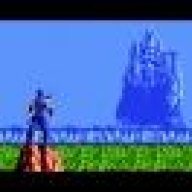
What is a videogame franchise? What does a franchise mean?
For Castlevania, it means gothic horror action-adventure. Maybe it's a side-scroller, maybe it's in 3D, maybe it's more adventure than straight linear action. Dracula will show up somewhere. But there's some wiggle room.
For Mario, it means silly plumber rescues princess in brightly-coloured worlds with lots of weird gameplay tweaks framed by a largely nonsensical story. Nintendo has done a lot with that formula in the past.
For Final Fantasy, it's very fluid: it means heavy on storytelling, some form of semi-turn-based battles, stat upgrades, and... well, not a whole lot else. A few basic gameplay style standards are pretty much all it means. It also means, though, that it's Square's flagship series and they'll put all they've got into it. Whether it's for better or worse, that's a matter of individual taste, but you know that they've thrown all their guns at it.
For Mega Man, it's almost the total opposite: it's very tight and rigid. Mega Man fights a series of bosses each weak to one other's weapon. Then he uses them all in a series of stages to attack the final boss. Stepping too far away from that strict formula results in lost sales, because the fans want exactly that.
It's a fluid and fluffy description and it really doesn't mean anything more than what anyone takes it to mean, but it's why the opinion on sequels goes so far in all directions. Everyone - marketers, CEOs, programmers, players - seems to have strict and often-conflicting opinions on what a sequel should be. And once a franchise has an identity, it tends to codify a lot of those requirements.
The trick, of course, comes in how a franchise gets that identity. And one game can't create that, no matter how good it is. Sometimes everyone involved (even the players, as mentioned above) are desperate to pigeonhole everything that comes out as soon as possible - perhaps to make it easier to categorise (and either embrace or reject), perhaps to predict how valuable it will be, perhaps other reasons altogether.
The time when a franchise is indelibly associated with a "brand identity", as it were, is hard to pin down, and probably isn't any more specific than "I know it when I see it."
For Castlevania, it means gothic horror action-adventure. Maybe it's a side-scroller, maybe it's in 3D, maybe it's more adventure than straight linear action. Dracula will show up somewhere. But there's some wiggle room.
For Mario, it means silly plumber rescues princess in brightly-coloured worlds with lots of weird gameplay tweaks framed by a largely nonsensical story. Nintendo has done a lot with that formula in the past.
For Final Fantasy, it's very fluid: it means heavy on storytelling, some form of semi-turn-based battles, stat upgrades, and... well, not a whole lot else. A few basic gameplay style standards are pretty much all it means. It also means, though, that it's Square's flagship series and they'll put all they've got into it. Whether it's for better or worse, that's a matter of individual taste, but you know that they've thrown all their guns at it.
For Mega Man, it's almost the total opposite: it's very tight and rigid. Mega Man fights a series of bosses each weak to one other's weapon. Then he uses them all in a series of stages to attack the final boss. Stepping too far away from that strict formula results in lost sales, because the fans want exactly that.
It's a fluid and fluffy description and it really doesn't mean anything more than what anyone takes it to mean, but it's why the opinion on sequels goes so far in all directions. Everyone - marketers, CEOs, programmers, players - seems to have strict and often-conflicting opinions on what a sequel should be. And once a franchise has an identity, it tends to codify a lot of those requirements.
The trick, of course, comes in how a franchise gets that identity. And one game can't create that, no matter how good it is. Sometimes everyone involved (even the players, as mentioned above) are desperate to pigeonhole everything that comes out as soon as possible - perhaps to make it easier to categorise (and either embrace or reject), perhaps to predict how valuable it will be, perhaps other reasons altogether.
The time when a franchise is indelibly associated with a "brand identity", as it were, is hard to pin down, and probably isn't any more specific than "I know it when I see it."

I don't know what you're smoking with the "Narbacular Drop 2" stuff, but Portal (the first instalment in a franchise, number 1 etc) and Painkiller are easily up there in hit top 5 games.OutrageousEmu said:Once again, the hypocrite shows his true face. Every single bloody one of Yahtzees favourite games is a sequel. Every single one. Narbacular Drop 2 (AKA Portal). Silent Hill 2. Prince of Persia 4. Spider Man 2. Dizzy 4. Half Life 2. Saints Row 2. He can't name a single first game in a series he likes.
Fuck it, if you took any list of best games of all time, any list at all, lists qualifed as the creme de la creme, the games that make up the best of the best of the best this industry has ever produced, sequels will make at least 90%. At least. On the other hand? You look at the worst games ever made. Daikatanna. Naughty Bear. Deadly Towers. Original IPs.
Here's a thought Adam Sessler brought up with Assassin's Creed and Call of Duty: Sequel Fatigue. Coming out with a Madden-esque formula of "a yearly game" has never set right with me. I live with it on WWE games, but I can barely tolerate the idea that "oh, another Mario's coming out, or another Assassin's Creed is coming." I recently put Brotherhood on Gamefly after some reticence, only to backtrack. I took a look at the boxart for Revelations and found "Ezio blablablabla" and grimaced. I originally thought the reason II sold was because it put the Assassin's Creed engine into a wholly new setting (like FF), and it could sell on it's physics and historical setting. Sadly, they seem to be burdened to a character, instead of saying, "Let's try 17th century France or 19th Century England." What's the point of building an "ancestral epic" when you constantly drum out the same guy from the same period all in the span of a yearly cycle?
Tiered pricing can work, but I fear games don't have a long enough shelf life (5-6 hours) to justify being at the high mark. JRPGs/Anime Fantasy Adventures that span a week or month's time with no trouble not only have the longest playtime, but also tend to have the smallest budget. The crux of the issue being this:
1. We are a niche developer (barring Square Enix)
2. We can't afford to spend money on pretty stuff like everyone else
3. We make the longest genre of games (without fail), but does that carry quality as well?
4. Do we keep our price at $60 and run the risk of selling absolutely nothing to get our investment, or hope that the lower price gets us notoriety and sell on word of mouth?
Companies sell based on their profit margin. Would game developers like Atlus or NIS sell 3x the copies to make up for a $20 price tag?
Tiered pricing can work, but I fear games don't have a long enough shelf life (5-6 hours) to justify being at the high mark. JRPGs/Anime Fantasy Adventures that span a week or month's time with no trouble not only have the longest playtime, but also tend to have the smallest budget. The crux of the issue being this:
1. We are a niche developer (barring Square Enix)
2. We can't afford to spend money on pretty stuff like everyone else
3. We make the longest genre of games (without fail), but does that carry quality as well?
4. Do we keep our price at $60 and run the risk of selling absolutely nothing to get our investment, or hope that the lower price gets us notoriety and sell on word of mouth?
Companies sell based on their profit margin. Would game developers like Atlus or NIS sell 3x the copies to make up for a $20 price tag?

Because boycotting a sequel always works. If half the people that were constantly saying they would boycott MW2 actually wouldn't bought it, there would be no MW3. Unsurprising enough, it was the best selling game of the year.mjc0961 said:Another big problem I can instantly see with the new IPs not being $60 is this: Super Fun Game comes out for $40 and is a huge hit. So they make Super Fun Game 2 but now that it's an established brand, here comes the $60 price point, followed swiftly by ranting gamers promising boycotts and other nonsense. "The first one was $40 but now they're just in it for the money and not the games!" or other shit like that.
I actually like the idea. Gamers would be more interested in taking risks with Darksiders, Portal, Singularity or Valkirie Chronicles if those games were released at a lower price point. That is why many of those games get a lot more sales during black friday or discounts.
There is a reason for that. As they say in the article, its hard to mess up a sequel. They just have to build on top of the original and they already have a base following already into the next game... One would argue that MK9 is better than MK1, SF4 is better than SF2 and COD7 is better than COD1, but it is pointless to compare a game without the proper historical context. "Playing MK1 and MK9 now, at the same time, I realize MK9 is better" is not the same as "Playing MK1 was it was released and MK9 when it was released, I realize MK9 is better".OutrageousEmu said:Fuck it, if you took any list of best games of all time, any list at all, lists qualifed as the creme de la creme, the games that make up the best of the best of the best this industry has ever produced, sequels will make at least 90%. At least. On the other hand? You look at the worst games ever made. Daikatanna. Naughty Bear. Deadly Towers. Original IPs.
On the other hand, every sequel you praise so much, the real creme de la creme games, every single one of those sequels started as new IP. At one point in history they tried something new and were rewarded for it with a successful franchise and a legacy. And every new IP that you loathe about, that are so bad that are horrible; are not bad because they are new IPs, they are just bad; and the reason they are unlikely to get sequels is because they are bad.
By the way, you are wrong if you believe original IPs are the only games that can be bad: Link The Faces of Evil, Bubsy 3D, Leisure Suit Larry: Box Office Bust, Final Fantasy XIV and Tony Hawk: Ride are among the worst games ever done. Every one of them was a sequel to a successful franchise.
Let me put it this way. You show me any game from the 80s or earlier that has a good story. Any game...AJey said:WTF? Jim, you serious? "Game can be good with a weak story"! Are you F-ing serious?! Most pathetic piece of argument ever! wow! Show me a good game that has a weak story! You gonna use Angry Birds maybe?! Show me a single good game without or with weak story!
Now think of any game released during that time that were actually good: Mario 1 and 2, Megaman 1 and 2, Street Fighter 1 and 2, Wolfestein, Pacman, Galaga, Tetris, etc. Any game in that group is an example of games that are good but have almost no story. And that not even counting more modern games.
Story is games is almost always weak... Other than RPG, most games stories is more like a premise (save your girlfriend, get the MacGuffin, shoot everyone before they shoot you). Most modern games focus on setting to set them apart, more than story.


I would say there are more bad sequels than bad new IPs, because there are more sequels than new IPs anyway, but that discussion would get us nowhere.OutrageousEmu said:I'd wager there are more flat out terrible new IP's than sequels, but it would depend what we're counting liscenced games as.hermes200 said:
Of course a sequel needs an IP first, but that doesn't mean every single game has to be a new IP. I think of it as a flower in a garden. Creating a new IP is the planting of the seeds and watching the first shoots of green emerge. With love and care, this flower can blossom into something beautiful with its sequels. Of course, even the best kept flower needs to die eventually. What we need to ask ourselves is "when have these flowers bloomed to their fullest and are ready to die?". Any man who says after its just sprouted is an idiot.
I think of game IPs the same way I think of movie IPs and book IPs. Unless a story is meant to be told as a series, the idea of continuing something beyond his welcoming point is diluting the impact of the original.
Would it make any good if someone decided to make a sequel of Fight Club? Maybe invent some contrived way to make Brad Pitt's character return... Would that make the original any good, or would it actually retroactively hurt its impact? Didn't we learn something from the Matrix sequels? Was the franchise improved by the introduction of the Vampires in the Matrix or the midiclorians in Star Wars? Or was it cheapen? The moment Tom Hanks dies in Philadelphia is a powerful moment. Does it makes sense to make him return in Philadelphia 2? Maybe Romeo and Juliet 2 would be a good idea.
My point is, some games (Final Fantasy X, God of War, etc) are made to be one time only experiences, and either executive meddling or fanbase hunger for more makes them jam a sequel, hurting the original idea in the process. My point is: I liked Bioshock, and I liked that the main character ends up dying in the end... even if it means I would never return to Rapture, ever...
My point is, some games (Final Fantasy X, God of War, etc) are made to be one time only experiences, and either executive meddling or fanbase hunger for more makes them jam a sequel, hurting the original idea in the process. My point is: I liked Bioshock, and I liked that the main character ends up dying in the end... even if it means I would never return to Rapture, ever...
I find the idea of trusting designers over franchises to be a backwards notion. True it saves you the heartache of discovering something like Bioshock 2 is a shadow of the original because superstar Ken Levine wasn't involved, but a specific designer's involvement is NO guarantee that a game will be good.
It's even more confusing because Yahtzee himself has seen this happen several times.
Warren Spector - Co-creator of several legendary games for the PC made Epic Mickey a showcase of mediocrity. What's worse is he tried defending legitimate criticism after the fact.
Tim Schafer - One of Yahtzee's bomb shelter mates come the apocolypse made Brutal Legend, which isn't necessarily a bad game but you'd be hard-pressed to find anyone who would say it was exactly what they wanted OR what they thought they'd get from Double Fine.
Goichi Suda (ugh, Suda 51) - Has been slowly eroding away whatever creativity existed in Killer 7 by making 1) a bland sequel to No More Heroes and 2) a bland collaboration with other 'superstars'. Speaking of,
Shinji Mikami - You could argue that his games only became really good with Resident Evil 4. That's a lot of tripe to slop through to get to the tenderloin.
Hideo Kojima- Has been slowly going mad for over a decade.
Peter Molyneux - ...Does anything more need to be said?
The point is, every designer will eventually make at least one bad game eventually. What's more is that when they do it usually stings more than if a team (or more likely a publisher) is to blame.
It's even more confusing because Yahtzee himself has seen this happen several times.
Warren Spector - Co-creator of several legendary games for the PC made Epic Mickey a showcase of mediocrity. What's worse is he tried defending legitimate criticism after the fact.
Tim Schafer - One of Yahtzee's bomb shelter mates come the apocolypse made Brutal Legend, which isn't necessarily a bad game but you'd be hard-pressed to find anyone who would say it was exactly what they wanted OR what they thought they'd get from Double Fine.
Goichi Suda (ugh, Suda 51) - Has been slowly eroding away whatever creativity existed in Killer 7 by making 1) a bland sequel to No More Heroes and 2) a bland collaboration with other 'superstars'. Speaking of,
Shinji Mikami - You could argue that his games only became really good with Resident Evil 4. That's a lot of tripe to slop through to get to the tenderloin.
Hideo Kojima- Has been slowly going mad for over a decade.
Peter Molyneux - ...Does anything more need to be said?
The point is, every designer will eventually make at least one bad game eventually. What's more is that when they do it usually stings more than if a team (or more likely a publisher) is to blame.

Yahtzee:
There has never been a case of a sequel being better than the original if the original had an entirely self-contained story and no sequel hook, unless (in the case of games) there's a significant technology upgrade between titles that allows for stronger gameplay.
That is so true because books aren't completely narrative based and are one of the form of entertainment that not only regularly has good sequels(Disc World for example) but sequels are openly cheered and encouraged. I mean without game play mechanics there is just no way to improve in a sequel, it's not like Terminator 2, Toy Story 2, Toy Story 3, Army of Darkness, or the Dark Knight were any good. I'm done with sarcasm story can improve in sequels, in fact it's nice to be able to watch something that doesn't have to spend to much time in the first act. Sure sequels commonly suck but so do most stories in general. Also for examples of better then the first story or at least equal in game sequels, Devil May Cry 3, any Mario game, Monkey Treasure Island, Mass Effect.
There has never been a case of a sequel being better than the original if the original had an entirely self-contained story and no sequel hook, unless (in the case of games) there's a significant technology upgrade between titles that allows for stronger gameplay.
That is so true because books aren't completely narrative based and are one of the form of entertainment that not only regularly has good sequels(Disc World for example) but sequels are openly cheered and encouraged. I mean without game play mechanics there is just no way to improve in a sequel, it's not like Terminator 2, Toy Story 2, Toy Story 3, Army of Darkness, or the Dark Knight were any good. I'm done with sarcasm story can improve in sequels, in fact it's nice to be able to watch something that doesn't have to spend to much time in the first act. Sure sequels commonly suck but so do most stories in general. Also for examples of better then the first story or at least equal in game sequels, Devil May Cry 3, any Mario game, Monkey Treasure Island, Mass Effect.